What is a limited slip differential
A limited slip differential, often called an LSD, is a device inside a vehicle’s axle or transaxle that helps the driven wheels rotate at slightly different speeds while still sending useful torque to both sides. When a driver asks “what is slip differential in a car,” the practical answer involves traction, cornering stability, and power delivery. An open differential can allow one tire to spin uselessly on slick pavement, while a limited slip unit resists that wheel-speed difference and keeps the vehicle moving. Understanding this component helps explain how a car behaves when accelerating out of a turn or crossing uneven, low-grip surfaces.
Meaning
In automotive use, a limited slip differential is a torque-distributing component that permits the driven wheels to turn at different rates but limits how large that speed difference can become. A normal open differential sends engine power along the path of least resistance, which can leave one wheel spinning while the opposite tire receives little useful drive. A limited slip design adds friction, gears, or a fluid coupling that biases torque toward the tire with more grip, improving forward progress on wet roads, gravel, or mixed traction surfaces.
The phrase “slip differential” can be confusing because the unit is not trying to cause slip in ordinary driving. Instead, it manages the controlled speed difference needed for cornering, while reducing uncontrolled wheelspin. The axle or transaxle must allow an outside wheel to rotate faster than an inside wheel during a curve. A limited slip differential preserves that essential difference but restrains it when one tire would otherwise break loose, making the term describe the limit placed on that slip rather than the creation of it.
How it works
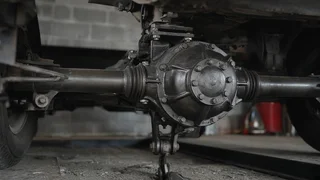
Mechanically, the differential uses a set of gears to allow the wheels to rotate at different speeds. In a clutch-type limited slip unit, spring pressure and side gears press clutch packs against the differential case when torque is applied. As one wheel tries to spin faster, the friction from those clutches resists the speed split and directs more torque across the axle. A gear-type or helical design uses interlocking worm gears that bind slightly under load, creating a similar torque-biasing effect without relying on wearable clutch material.
Driver feel and shift behavior can reveal how the differential is working. On a dry road, a limited slip unit is often subtle, with perhaps a slight tightening of the steering or a mild scrub from the rear axle during slow parking maneuvers. Under harder acceleration from a corner, the vehicle feels more settled because both drive wheels are helping to push the car forward. Transmission type and drivetrain layout affect where the differential sits, but the core principle remains the same: it manages wheel-speed difference so power does not escape through a single freely spinning tire.
Key differences
The key difference between an open differential and a limited slip differential is what happens when one driven wheel loses grip. An open unit sends nearly all torque to the slipping tire, reducing acceleration and potentially stopping the vehicle on a split-friction surface. A limited slip unit resists that imbalance, letting the tire with traction keep receiving torque. The result is a meaningful improvement in low-grip starts and corner-exit stability, though the exact amount of bias varies by the type of limited slip mechanism fitted to a specific axle or transaxle.
Limited slip designs are not all the same. A clutch-based unit responds to input torque and often requires a specific fluid specification to keep its friction plates working predictably, while a gear-driven design relies on mechanical leverage instead of clutch pack wear. A locking differential is another point of comparison: it can fully couple both wheels, which is aggressive for pavement, while a limited slip allows more progressive operation. Fitment also matters because a differential must match the axle housing, final-drive ratio, and intended vehicle use.
Understanding a problem
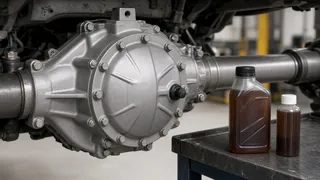
When a limited slip differential is not behaving normally, the symptom can resemble a transmission or axle issue. A groaning, chattering, or banging noise during slow turns often appears when the limited slip clutches are grabbing or the correct friction-modifier additive is missing from the gear oil. A service history check can show whether the axle has received the correct lubricant, because using the wrong fluid can immediately change how the differential locks and releases around corners.
A fault code or warning light alone does not prove the differential has failed. Many diagnostic codes point to a wheel-speed sensor, stability-control signal, or related drivetrain input rather than the internal differential itself. Manufacturer-dependent codes require vehicle-specific confirmation before repair options are chosen. If a tire diameter is mismatched or tire pressures differ sharply, the differential may work constantly and overheat. Inspecting tires, checking for leaks, and reviewing transmission or axle service records are sensible first steps before opening the differential or replacing internal parts.