Club Car Locking and Limited Slip Differential
A limited slip differential on a Club Car changes how torque reaches the rear tires when traction is uneven, while a true locking differential forces both drive wheels to turn together regardless of grip. These are different mechanisms with different manners on pavement, grass, mud, and hills. Understanding how each unit behaves helps an owner judge whether a particular axle option, retrofit, or observed drive feel matches the cart’s use, and why some vehicles will spin one tire while others keep both rear wheels pulling.
Essential answer
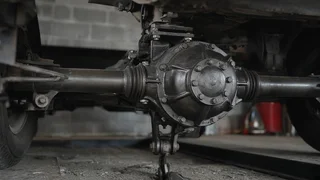
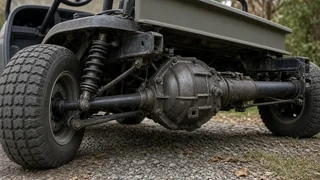
A limited slip unit allows a speed difference between the rear wheels but resists excessive slip by transferring some torque to the tire that still has traction. It does not create a permanent mechanical connection. On a golf cart, that softer coupling can preserve predictable steering and reduce tire scrub on firm surfaces, while improving forward progress on loose or slippery ground compared with a standard open differential that simply follows the path of least resistance.
A locking rear differential removes that speed difference when engaged, turning the axle into a more direct drive link between both wheels. In a locking configuration, torque does not automatically bias toward the wheel with less grip. Because the two rear tires rotate together, one tire with solid footing can keep the cart moving even if the opposite tire is on sand, wet grass, or lifted over a rut. Confirming whether a Club Car has a limited slip clutch pack, a mechanical locker, or an open carrier matters before judging symptoms or selecting service parts.