What Is a Heat Pump in an Electric Car?
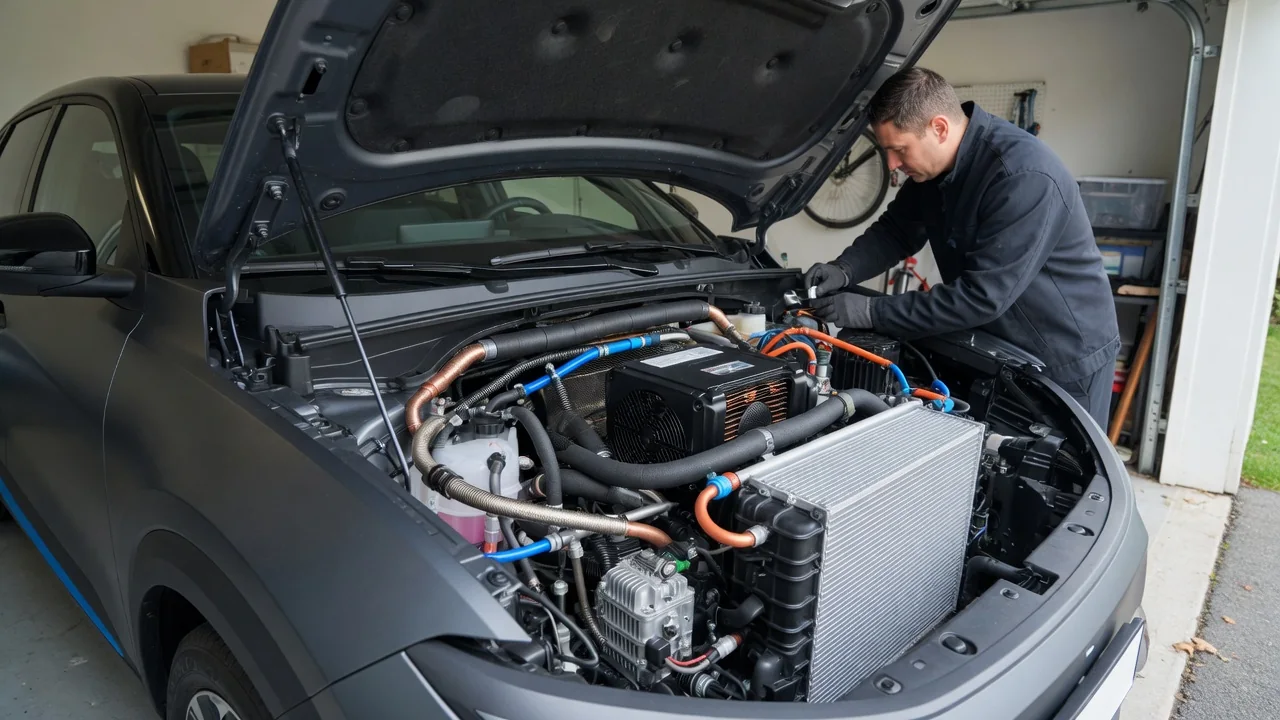
Drivers shopping for an EV often ask what is a heat pump in an electric car and why it matters. In short, it is a climate system that moves existing heat into the cabin rather than creating all of it from battery electricity. That difference shapes winter comfort, driving range, and how the car behaves on cold mornings.
Heat transfer
A heat pump works on the same refrigeration cycle as an air conditioner, only with the direction of heat flow reversible. An electric compressor pressurizes refrigerant, which becomes hot and releases that warmth through a heat exchanger feeding the cabin. The refrigerant then expands, turns cold, and absorbs heat from outside air before returning to the compressor. Because the system relocates thermal energy instead of generating it from scratch, the warmth delivered to the cabin can exceed the electrical energy the compressor consumes.
A gasoline car heats its cabin with waste heat from the engine, which an electric drivetrain produces in far smaller amounts. Many EV heat pump systems therefore scavenge whatever warmth is available, drawing from the motor, power electronics, or battery coolant loop as well as ambient air. How many sources are tied together varies by manufacturer, as do the valves and heat exchangers that route refrigerant and coolant. Some designs are simple reversible air conditioners, while others manage the entire vehicle's thermal needs through one integrated circuit.
Cold-weather limits
Outside air always contains some heat, but the colder it gets, the harder a heat pump must work to collect it. The temperature gap between the cold refrigerant and the ambient air shrinks, so less energy is absorbed per pass, and the compressor must run harder to deliver the same cabin warmth. Efficiency therefore declines steadily as temperatures fall. In deep cold, the advantage over a plain electric resistance heater narrows considerably, though the point where that happens depends on the refrigerant and system design.
For this reason, most vehicles pair the heat pump with a supplemental resistance heater that assists or takes over when conditions demand it. Frost can also form on the exterior heat exchanger in damp, near-freezing weather, and the system may briefly pause or reverse to clear it. A driver might notice slower warm-up on a bitter morning, a change in fan or compressor sound, or higher climate consumption on the energy display. How smoothly a vehicle blends these heat sources differs between models and software versions.
Energy use
A resistance heater converts electricity to heat at roughly a one-to-one ratio, so every unit of cabin warmth comes directly out of the battery. A heat pump spends electricity mainly on running the compressor and moving heat that already exists, so in mild to moderately cold weather it can deliver the same comfort for noticeably less energy. Since the traction battery powers both the wheels and the climate system, anything saved on heating remains available for driving, which is why the feature is associated with better winter range.
The size of that benefit depends heavily on how the car is used. Short trips are dominated by the initial warm-up of a cold cabin, when demand is highest, while long highway drives spend most of their time merely maintaining temperature. Mild winter climates favor a heat pump more than regions with prolonged severe cold. Many vehicles show climate consumption separately on a trip or energy screen, letting an owner compare heating draw across different conditions. Published range figures rarely capture these variations, so personal observation is more informative.
Everyday Use and Observations
In daily driving, a heat pump asks nothing special of the driver. The temperature is set as usual, and the car decides which heat source to use. What an owner may notice is a compressor hum while heating, even when parked, since the same component that cools in summer now runs in winter. Occasional vapor rising from the front of the car during a defrost cycle, or water dripping underneath, can be normal behavior for these systems rather than a sign of trouble.
A few habits help the system work at its best. Preconditioning the cabin while the car is still plugged in draws that initial warm-up energy from the grid instead of the battery. Heated seats and a heated steering wheel warm occupants directly with little power, allowing a lower cabin setting. Recirculation mode retains heat already in the cabin, though it may fog the windows in humid conditions. The availability of scheduled preconditioning and the way these features are controlled vary by vehicle, so the owner's manual is the right reference.
Limits and Next Steps
A heat pump reduces winter energy use but does not eliminate range loss in cold weather. Batteries themselves deliver less usable energy when cold, dense winter air and wet roads raise driving resistance, and the battery may need heating of its own. The system also adds complexity, with extra valves, sensors, and heat exchangers compared with a simple resistance heater. On some models it is standard, on others optional or limited to certain trim levels or model years, so equipment should be confirmed for the specific vehicle.
If heating seems weak, consumption rises sharply without a change in weather, or a climate warning appears, the cause should be investigated rather than assumed. Any stored fault code is evidence to interpret alongside other testing, not proof that a particular component has failed, and manufacturer-specific codes need vehicle-specific information to read correctly. Because these systems contain pressurized refrigerant and connect to high-voltage components, diagnosis and repair belong with a technician qualified to work on electric vehicles. Shoppers can also ask a dealer how a given model's system is configured.