What Is a Door Sill on a Car?
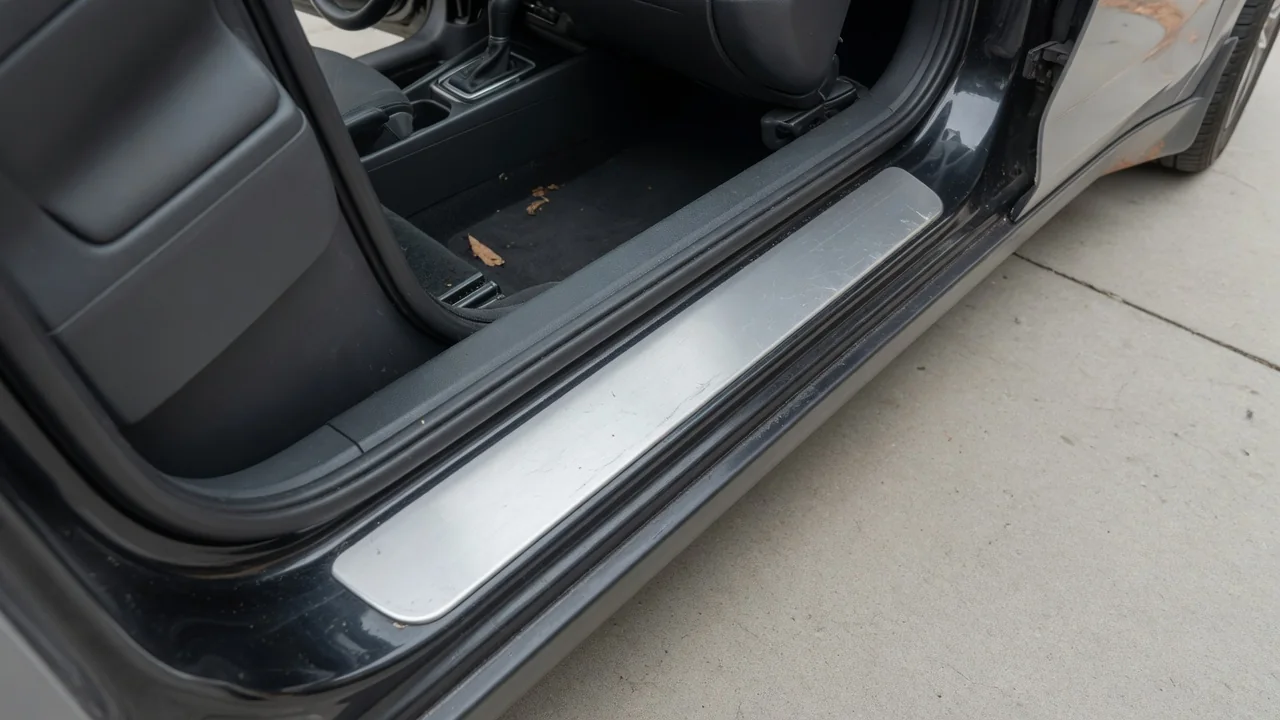
If you have ever wondered what is a door sill on a car, the answer is the strip of body structure you step over each time you get in or out. It forms the lower edge of the door opening, works as the entry threshold, and takes more scuffing than almost any other surface. Understanding where it sits, how it wears, and how to care for it helps protect both appearance and the metal underneath.
Location
Open any door and look down at the bottom of the opening. The door sill is the horizontal ledge running between the front and rear wheel arches, just inside the point where the closed door meets the body. On most vehicles it is the top surface of the rocker panel, a structural box section that ties the floor to the pillars. The painted sill is often covered near the cabin by a plastic or metal trim piece called a scuff plate or sill plate.
What you see varies by vehicle. A low sedan usually has a narrow sill close to the ground, while a pickup or SUV has a taller, wider threshold that may sit above a running board or side step. Some models place the weatherstrip on the body, others on the door, which changes how much of the sill stays exposed to road spray. Rear door openings and the cargo opening have comparable thresholds, and many hatchbacks fit a protective plate at the loading edge as well.
Wear
Because every occupant swings a foot across it, the sill collects damage that other panels rarely see. Shoe heels drag grit over the paint, leaving dull patches and fine scratches, and boots can chip the edge nearest the seat. Scuff plates are meant to absorb this contact, so their surface often looks scratched or faded long before the paint around them suffers. The driver's side usually shows the most wear simply because that door is used on every trip.
Wear matters beyond appearance because the sill sits low, where water, road salt and mud collect. A chip that exposes bare metal can begin to rust, and corrosion may also start from inside the rocker section if its drain holes become blocked with debris. Bubbling paint, brown staining along a seam, or a soft spot under the trim are signs worth a closer look. How quickly this develops depends on climate, how the body was protected at the factory, and how the vehicle has been used.
Cleaning
Sills are easy to miss during a wash because the closed doors hide them. Opening each door and wiping the threshold with a damp microfiber cloth and diluted car shampoo removes the gritty film that would otherwise be ground into the paint by the next shoe. A soft detailing brush helps lift dirt from the textured surface of a plastic scuff plate and from the channel beside the weatherstrip. Drying the area afterward prevents water spots and keeps moisture from sitting in the seams.
Material determines which products are sensible. Painted sills can be treated like any other body panel, including a coat of wax or sealant that makes later cleaning easier. Brushed aluminum or stainless plates mark easily with abrasive polishes, and illuminated sill plates contain wiring that should not be soaked. Avoid directing a pressure washer at the rubber seals or into the door opening, since water forced past them can reach carpet and electrical connectors. The owner's manual may list cleaners suited to the trim on your vehicle.
Everyday Use and Observations
In daily driving the sill does several quiet jobs. It gives the door seal a surface to press against, keeping wind noise, rain and dust out of the cabin, and it adds stiffness to the body between the front and rear wheels. Its height shapes how easy a vehicle is to enter: a tall threshold on an off-road truck demands a deliberate step, whereas a low, narrow sill on a compact car lets passengers slide in with little effort.
A few habits and observations help. Stepping over the sill rather than on it limits scuffing, and knocking snow or gravel from shoes before entering keeps abrasive material off the paint. Damp carpet near the threshold, a whistling noise at speed, or a door that needs extra force to close can point to a seal that is no longer seating properly against the sill. Clear protective film or aftermarket sill guards are common additions, though fit differs between models and should be checked before buying.
Limits and Next Steps
There is a limit to what an owner can judge by looking. Surface scratches on a scuff plate are cosmetic, and a worn plate can often be replaced as a trim item. Rust that has perforated the metal, or damage from an impact or from lifting the vehicle at the wrong point, is different because the rocker section contributes to body strength and crash protection. On many vehicles the designated jacking points sit along this lower edge, so their exact location should be confirmed in the manual.
When the sill shows bubbling paint, flaking metal, or distortion, a body shop inspection is the sensible next step, since the visible area may understate what is happening inside the box section. Repair methods range from localized refinishing to welding in new metal, and the right choice depends on the vehicle's construction and the extent of the damage. For minor chips, prompt touch-up limits the chance of corrosion spreading. Keeping drain openings clear and the threshold clean remains the simplest long-term protection for this hardworking part.