What Is a Car Door Striker?
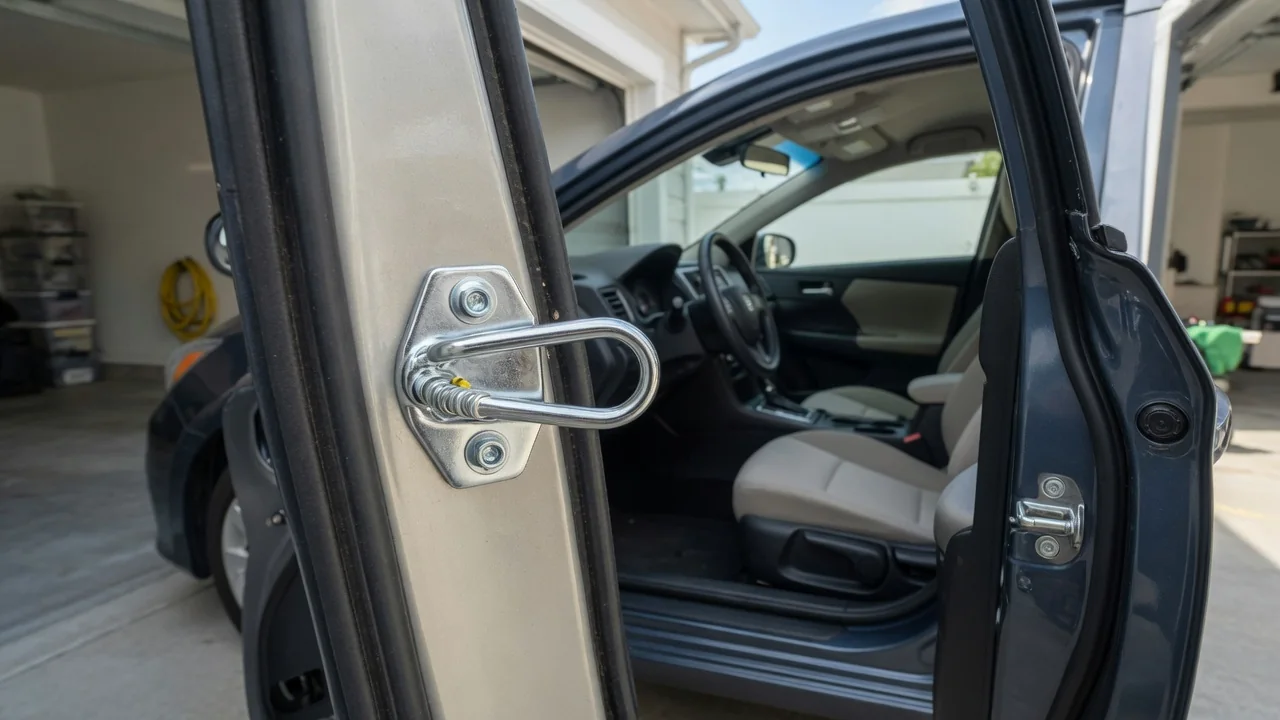
Anyone asking what is a car door striker is usually looking at a small metal loop or post on the body opening and wondering what it does. The striker is the fixed anchor the door latch grabs when the door closes. It holds the door shut, helps set its final position, and plays a quiet role in sealing, noise control, and crash safety.
Striker and latch
The striker is mounted to the body, typically on the pillar at the rear edge of the door opening, while the latch lives inside the door itself. As the door swings shut, a forked jaw inside the latch meets the striker, rotates around it, and locks in place. Pulling the handle releases that jaw so the door can swing free. The striker does no moving of its own; it simply gives the latch something strong and precisely located to hold onto.
Designs vary by vehicle and era. Many modern cars use a U-shaped steel loop on a plate, often with a plastic or rubber coating that quiets the contact. Older vehicles may use a single post or bolt-style striker. Most are fastened with large screws into a reinforced area of the pillar, and many latches offer two catch positions, so a door that is not fully shut is still held on a partial safety catch rather than swinging open.
Wear signs
Because the latch closes around the striker thousands of times, the contact surface gradually wears. A coated striker may show cracked, split, or missing plastic, exposing bare metal underneath. An uncoated one may develop a polished groove or a visible notch where the latch jaw rides. Rust around the mounting plate, or bright scrape marks above or below the loop, suggests the latch has been hitting off center rather than sliding cleanly into place.
Wear also shows up in how the door behaves. A door that needs a hard slam, bounces back, or catches only on the first position may not be meeting the striker correctly. Rattles over bumps, extra wind noise, or a door that shifts slightly when pushed from inside can point to looseness at the striker. These same symptoms can come from sagging hinges, a tired latch, or flattened weatherstripping, so the striker is one suspect rather than an automatic diagnosis.
Adjustment
The striker is also an alignment part. On many vehicles its mounting holes allow a small amount of movement up, down, in, and out before the fasteners are tightened. That adjustment range lets a body shop or technician set how far the door pulls in against its seals and whether its outer skin sits flush with the neighboring panel. Moving the striker inward generally makes the door close tighter; moving it outward relaxes the fit.
Adjustment has a narrow purpose, though. The striker should meet a door that already hangs correctly on its hinges, not lift or drag a drooping door into position. Using it to compensate for worn hinge pins tends to accelerate wear on both the latch and striker. Because this fastener is part of what keeps the door closed in a collision, tightening values and any adjustment limits should come from the service information for the specific vehicle rather than guesswork.
Everyday Use and Observations
A few simple observations reveal a lot. With the door open, the striker is easy to inspect for looseness, damaged coating, or uneven wear marks. Closing the door slowly while watching the gap shows whether the door rises or drops as the latch engages, which hints at a height mismatch. Comparing body lines and panel gaps against the door on the opposite side gives a useful reference for how flush and even the fit should look.
Sound and feel matter as well. A healthy door closes with a single solid thud and moderate effort, and the interior warning light or chime goes out promptly. A hollow clack, a double click, or a door-ajar warning that flickers on rough roads suggests the latch is not seating fully. Seasonal changes can affect this too, since cold-stiffened seals push back harder, so a marginal setup may only misbehave in winter.
Limits and Next Steps
There are limits to what a striker can fix. If the door visibly drops when opened, has play when lifted at its outer edge, or shows uneven gaps after an accident, the cause likely lies in the hinges or the body structure. A latch that sticks, fails to release, or will not hold on either catch position needs its own attention. Swapping or shifting the striker in those cases only masks the underlying fault.
A door that will not stay reliably closed is a safety concern, not a nuisance, and the vehicle should be checked before further driving. For lesser complaints such as rattles or wind noise, noting when the symptom occurs and what the striker looks like helps a technician narrow things down quickly. Replacement parts, fastener types, and any electronic door-ajar sensing differ between makes and models, so confirming details for the exact vehicle is the sensible next step.