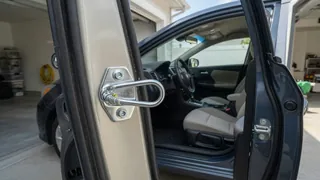
Car door striker replacement
A door that rattles, sags, or refuses to close securely often points past the latch itself to the metal loop mounted on the body pillar. The striker transfers closing force between the door and frame, so wear or movement here changes how the whole panel behaves. Replacing a worn car door striker plate is usually a straightforward repair, but an accurate diagnosis decides whether new hardware is enough or whether the real problem is alignment, hinge attachment, or mounting fastener fatigue.
Essential answer
Car door striker replacement means removing the loop or plate bolted to the door jamb and installing a fresh component in the same mounting location. The striker is the stationary half of the latch system; the rotating claw inside the door engages it and holds the panel closed. When the loop is grooved, loose, or shifted out of position, latch engagement becomes inconsistent, which can produce a hard-to-close condition, interior noise, or a warning light even though the latch itself still works.
Before buying parts, separate striker fatigue from door alignment. A grooved loop usually needs replacement, but a smooth striker that sits too far inward or outward may only need striker adjustment. Loosen mounting fasteners just enough to move the component, close the door gently to let the latch find its natural plane, then retighten. If the fastener holes are elongated or the body metal is deformed, a repair may require reinforcement, not simply a new plate.