Car Door Striker Plate
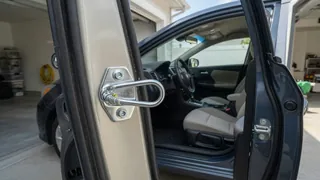
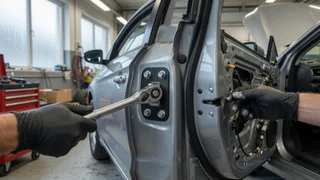
A car door striker plate is a hardened metal anchor bolted to the door opening, where the rotating latch claw catches when the door closes. This small component works like a fixed receiver: it converts the latch mechanism’s grip into a secure closure that resists opening under load. When a striker plate wears, loosens, or shifts, drivers often notice a door that rattles, sits high, or requires extra effort to shut. Understanding its role helps distinguish normal wear from alignment problems and guides practical repair decisions.
Essential answer
The striker plate car door assembly is the stationary half of the door-closing system. The door itself carries the latch mechanism, and the striker plate provides the rigid loop or post that the latch’s rotating jaw wraps around. When the door swings closed, the latch begins engaging with the striker as the two surfaces meet. That engagement pulls the door inward, holds it tightly against the weather seal, and transfers structural load from the door into the surrounding body pillar.
A striker plate for a car door is not merely a passive metal tab. Its position affects how fully the latch grabs the striker, and therefore how tightly the door seals. If the plate sits too far outward, closing effort rises because the latch and striker fight the seal and hinge geometry. If it sits inward, the door may close easily but bounce, vibrate, or allow wind noise. The striker’s contour also lets the latch cam over it gradually, which is why the part is typically smoothly curved or wrapped.