What Is a Catalytic Converter?
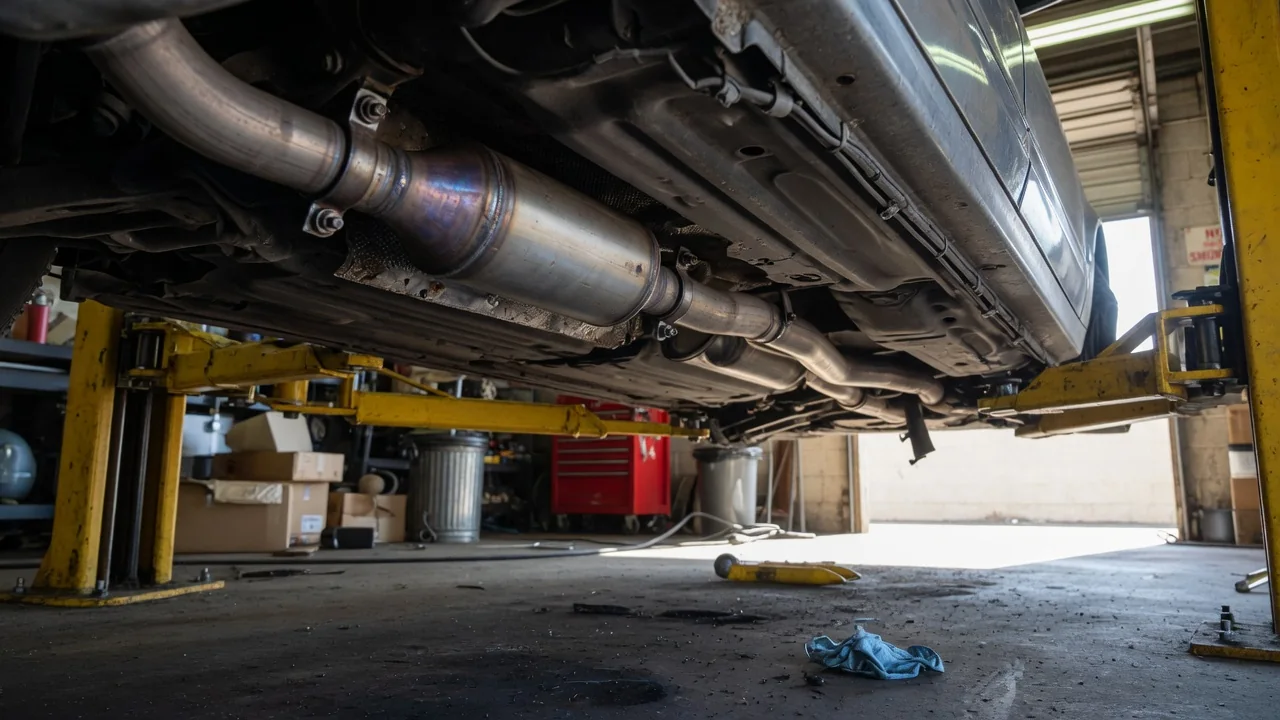
Anyone asking what is a catalytic converter is really asking how a car cleans up after its own combustion. It is a metal canister in the exhaust system that treats engine gases before they leave the tailpipe, using a coated internal structure to turn harmful byproducts into less harmful ones. The sections below explain how it works, why temperature matters, and which signs deserve attention.
Chemical conversion
Burning gasoline never goes perfectly. Along with water vapor and carbon dioxide, an engine produces carbon monoxide, unburned hydrocarbons and oxides of nitrogen. Inside the converter, exhaust passes through a ceramic or metallic honeycomb with thousands of narrow channels. Those channel walls carry a thin coating of precious metals, commonly platinum, palladium and rhodium. The metals act as catalysts, meaning they encourage reactions without being consumed themselves, which is why a healthy unit can keep working for a very long time.
On a typical gasoline car, the design is called a three-way converter because it handles three pollutants at once. Carbon monoxide and hydrocarbons are oxidized into carbon dioxide and water, while nitrogen oxides are reduced to plain nitrogen. That balance only works when the engine computer holds the air-fuel mixture close to its ideal ratio, guided by oxygen sensors in the exhaust stream. Diesel vehicles use different hardware, often combining an oxidation catalyst with a particulate filter and other treatment stages, so the layout varies by powertrain.
Heat
A catalyst does very little when it is cold. The reactions only become efficient once the honeycomb reaches its working temperature, often described as light-off. That is why the first minutes after a cold start produce a disproportionate share of a trip's emissions. To shorten that window, many manufacturers mount a converter close to the exhaust manifold, where the gases are hottest, and the engine computer may briefly adjust idle speed or ignition timing after startup to warm the unit faster.
Heat is also the converter's main enemy. If an engine misfires, raw fuel reaches the catalyst and burns there, pushing temperatures far beyond what the substrate is designed for and potentially melting the honeycomb. Heat shields surround the unit because its shell runs hot enough in normal use to ignite dry grass or leaves beneath a parked car. Drivers may hear light ticking from the exhaust as it cools after shutdown, which is ordinary metal contraction rather than a symptom of trouble.
Fault clues
The most common clue is a check engine light with a stored code pointing to catalyst efficiency. The computer compares readings from oxygen sensors before and after the converter, and when the downstream signal starts to resemble the upstream one, it flags reduced performance. That code is evidence to interpret, not a verdict. Exhaust leaks, aging sensors, wiring faults and fueling problems can produce similar readings, and code definitions can differ between manufacturers, so vehicle-specific confirmation matters before anything is replaced.
Physical symptoms offer other hints. A rattle from under the floor, especially at startup or over bumps, may mean the honeycomb has broken apart inside its shell. A sulfur or rotten-egg smell can suggest the catalyst is struggling with a rich mixture. Sluggish acceleration, poor high-speed power or an engine that feels choked can point to a restricted converter creating excess backpressure. Each of these has other possible causes, including loose heat shields and unrelated engine faults, so they are starting points for diagnosis.
Everyday Use and Observations
In normal driving, a working converter is invisible. There is nothing to adjust, no fluid to top off, and no routine attention the driver must give it. Its condition mostly reflects how well the engine ahead of it is running. Correct fueling, healthy ignition components and an engine that is not burning oil or leaking coolant into the cylinders all protect the catalyst, because oil ash and coolant residues can coat the precious metals and stop exhaust from reaching them.
Driving patterns play a part too. Repeated short trips may never bring the exhaust fully up to temperature, while longer drives let the system reach steady operating conditions. Owners might notice water dripping from the tailpipe on a cool morning, which is a normal byproduct of combustion and conversion condensing in the cold pipe. Where the converter sits, how many are fitted and how they are shielded differ widely between vehicles, and some designs leave the unit exposed enough to be a target for theft.
Limits and Next Steps
A converter can only treat what a properly running engine sends it. It cannot compensate for a persistent misfire, a badly rich mixture or heavy oil consumption, and those conditions will damage a replacement as surely as they damaged the original. For that reason, finding out why a catalyst failed matters as much as confirming that it did. Fitting a new unit without addressing the underlying cause often leads to the same warning light returning after a period of driving.
When a warning light or symptom appears, a sensible next step is a proper diagnosis that looks at live sensor data, fuel trim, exhaust integrity and, where needed, backpressure or temperature testing. A flashing check engine light indicates an active misfire and calls for prompt attention, since continued driving can overheat the catalyst. Emissions regulations, replacement part requirements and warranty coverage vary by region and vehicle, so the owner's manual and a qualified technician are the right references for specifics.