What Is a Car's Event Data Recorder?
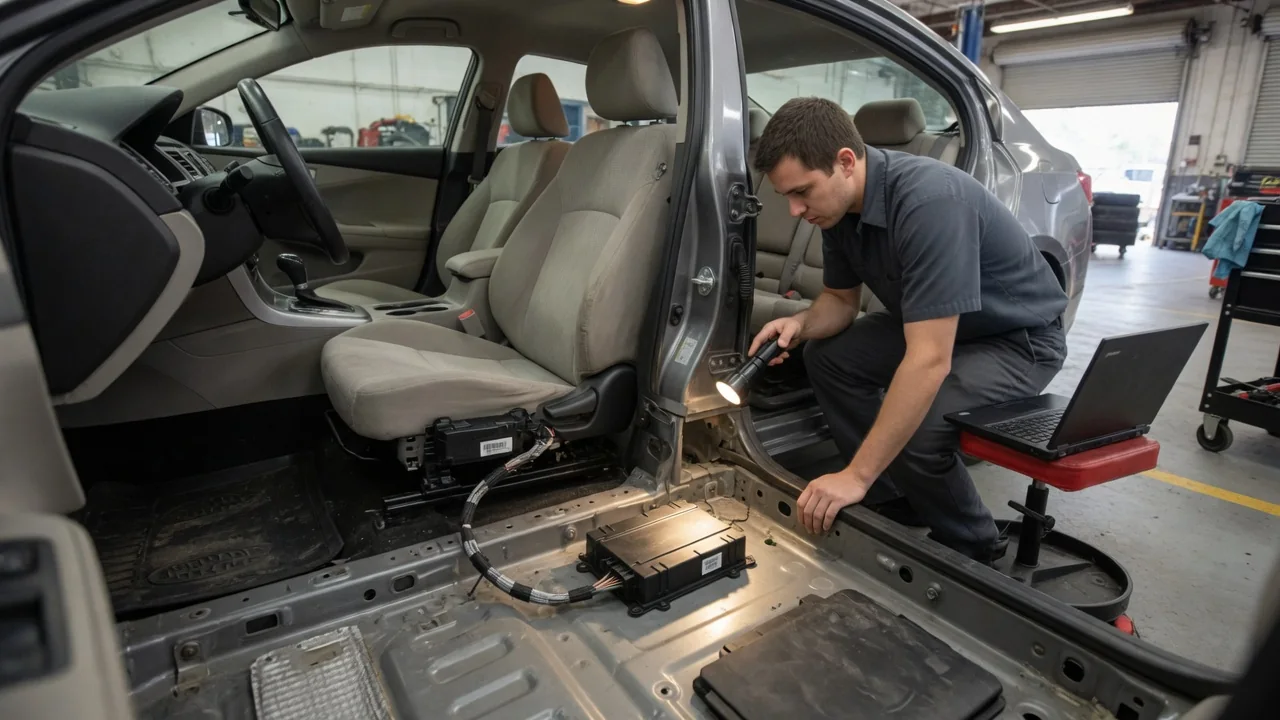
Many drivers wonder what is a car's event data recorder and whether it resembles an aircraft black box. In simple terms, it is a function built into a vehicle's electronics that saves a brief snapshot of technical information around a significant event, such as a collision. This article explains what the recorder does, what it does not capture, and where details differ between vehicles.
Basic purpose
An event data recorder, often shortened to EDR, is typically not a separate box but a function inside a control module, commonly the one that manages airbags and seat belt pretensioners. That module already watches crash sensors continuously to decide whether restraints should deploy. When it detects a sudden, severe change in vehicle motion, it stores a short record of what the sensors and related systems were reporting just before and during that moment, so the event can later be understood.
The purpose is technical rather than surveillance. Engineers use this kind of information to see how a restraint system behaved in a real impact, for example whether the vehicle was braking, how quickly speed changed, and whether seat belts were reported as buckled. Typical records may include vehicle speed, accelerator and brake application, and airbag deployment timing. The exact list of recorded parameters depends on the manufacturer, model year, and equipment, so no two vehicles should be assumed identical.
Data limitations
The recording window is short. A typical recorder keeps only a few seconds of data surrounding a triggering event, and it continuously overwrites the buffered information when nothing significant happens. It is generally not designed to log routine trips, store audio or video, or track a route over hours of driving. A hard stop at a traffic light or a pothole strike usually falls below the trigger threshold, though thresholds are calibrated by each manufacturer and may differ.
The stored values are also only as good as the sensors feeding them. Recorded speed normally comes from wheel speed signals, so spinning or locked wheels on ice can make the figure differ from true road speed. A seat belt status reflects the buckle switch, not how the belt was worn. Power loss during a severe impact can leave a record incomplete. For these reasons, the data is evidence to interpret alongside physical inspection, not a complete account of what happened.
Owner documentation
The owner's manual is the best first reference. Many manuals contain a section, often placed near the safety, restraint, or consumer information chapters, describing whether the vehicle has an event data recorder and the general categories of information it may store. Reading that statement tells you more about your particular vehicle than any general description, because it is written by the manufacturer for that model and reflects the equipment actually fitted.
Documentation commonly notes that reading the record requires special equipment and access to the vehicle or the module itself; a basic code reader plugged into the diagnostic port will generally not display it. Manuals may also describe other data systems separately, such as connected services, telematics, or infotainment storage, which work differently from the EDR. Questions about who may access the data depend on where you live and should be directed to the manufacturer's documentation or a qualified professional rather than assumed.
Everyday Use and Observations
In day-to-day driving, there is nothing to see or operate. The recorder has no switch, display, or menu, and it does not change how the car accelerates, brakes, or steers. The only related indicator most drivers notice is the airbag or supplemental restraint warning light, which illuminates briefly at startup as the module checks itself. If that light stays on, it points to a restraint system fault that needs diagnosis; it is not a sign that recording is taking place.
Drivers sometimes confuse the EDR with other devices. A dash camera, an insurance telematics plug-in, or a smartphone app that scores driving are separate products with their own storage and behavior. Likewise, the freeze-frame data saved with an engine fault code is an emissions diagnostic snapshot, not a crash record. After a collision with airbag deployment, a repair facility may explain that the restraint module must be replaced or serviced according to manufacturer procedures, which varies by vehicle.
Limits and Next Steps
General explanations can only go so far. Whether a specific vehicle has a recorder, what triggers it, how many events it can hold, and which parameters it saves all require vehicle-specific confirmation. Older vehicles may have limited capability or none, while newer ones with advanced driver assistance may store additional information in other modules. Treat any broad statement, including this one, as background rather than a description of your particular car.
If you want to know more, start with the manual's index, then ask the dealer or manufacturer's customer support what your model records. After a collision, avoid attempting to remove or power the restraint module yourself, since airbag components can be hazardous and mishandling may compromise the stored record. A trained technician or crash data specialist with the appropriate retrieval tools is the right resource, and questions about rights or obligations surrounding the data belong with a qualified legal adviser.