What Is a Car's Child-Safety Door Lock Switch?
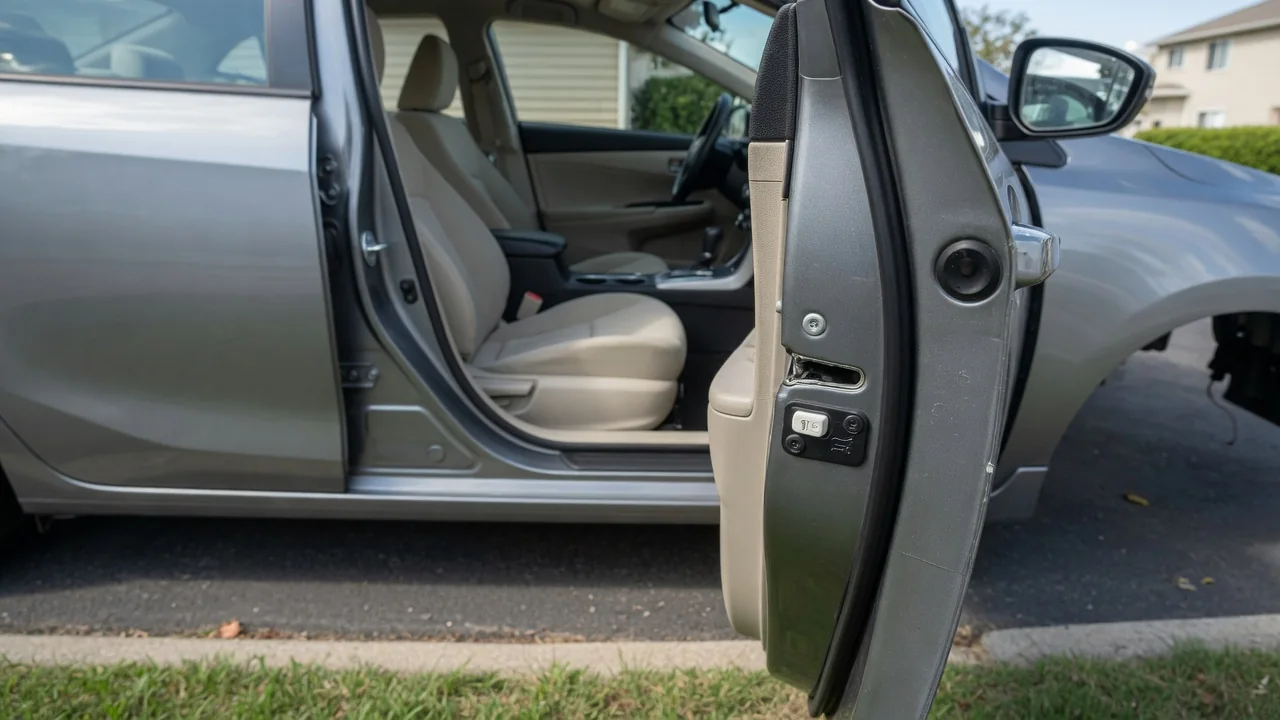
If you have ever wondered what is a car's child safety door lock switch, the short answer is simple: it is a small control that disables the inside handle on a rear door. With it engaged, a back-seat passenger cannot open that door from within, while the outside handle still works normally. Knowing where it sits and how it behaves prevents both accidents and confusion.
Setting
On many vehicles the child lock is a small lever or slotted switch set into the rear door's edge, visible only when the door is open. It usually sits near the latch and is often marked with a child icon or a padlock symbol. Moving the lever, or turning the slot with the ignition key or a flat tool, changes whether the inside handle is connected to the latch. Because each rear door has its own mechanical control, one side can be locked out while the other remains fully usable.
Other vehicles use an electric child lock controlled from the driver's seat, typically by a button on the door panel near the window switches. Some designs combine it with the rear window lockout, while others keep the two functions separate. A light on the button or a message in the instrument cluster may show when it is active. Since layouts and symbols differ between makes and model years, the owner's manual is the reliable reference for where the control is and which position means locked.
Verify operation
Checking the setting takes less than a minute and should be done before a child rides in the back. With the rear door open, set the control, close the door, and have an adult sitting inside pull the interior handle. The handle may move freely, but the door should stay shut. Then confirm that the same door opens from the outside handle once the vehicle is unlocked. Repeating the check on the opposite rear door matters, because mechanical switches are set independently and one is easily overlooked.
The same test confirms that the feature is off when adult passengers will be using the rear seat. If the inside handle opens the door, the lockout is disengaged. On electrically controlled systems, compare the indicator with what the handle does rather than trusting the light alone. Some vehicles require the ignition to be on before the button responds, and a few return to a default state under certain conditions, so a hands-on check after any change is the most dependable confirmation.
Driver awareness
The child lock changes how people get out of the car, so the driver needs to keep its status in mind. A rear passenger with the feature engaged depends on someone outside to open the door, which matters during drop-offs, at fuel stops, and especially after a breakdown or collision. Telling adult passengers in advance that their inside handle will not work avoids alarm and stops them from yanking on a handle that was never going to respond.
It also helps to understand what the feature does not do. It is separate from the central locking that secures the doors against entry from outside, and it does not by itself prevent a child from lowering a window; that is the job of the window lockout, where one is fitted. Drivers who share a vehicle, or pick up a rental or a used car, should check the rear doors early, since the previous user's setting stays in place on mechanical designs until someone changes it.
Everyday Use and Observations
In daily driving the feature is largely invisible. Families with young children often leave it engaged permanently and simply open the rear doors from outside at every stop. The inside handle may still pull through its normal travel with no added resistance, which is expected and not a sign of anything broken. Children quickly learn that the handle does nothing, and the driver gains confidence that a curious hand cannot open a door in traffic or in a busy parking lot.
The most common everyday surprise is a rear door that will not open from inside when no one remembers setting the lock. A lever can be nudged while cleaning the door jamb, loading cargo, or having the car detailed, and a console button can be pressed by accident. If the door opens normally from outside, the child lock is the first thing to look at. Checking the switch position takes moments and frequently settles what first appeared to be a faulty handle or latch.
Limits and Next Steps
A child lock is a supplement to supervision and proper restraint, not a replacement for either. It only governs the inside handle of the rear doors; it does nothing for front doors, a tailgate, or a child who has climbed out of a car seat. It also means rear occupants cannot let themselves out in an emergency, which is one more reason never to leave children alone in a vehicle. On models with sliding doors or power doors, the lockout may work differently, so vehicle-specific instructions matter.
If a rear door will not open from inside with the child lock clearly off, or will not open from either side, the cause lies elsewhere, possibly in the handle linkage, cable, or latch assembly. A switch that feels loose, refuses to stay in position, or an electric control that does not respond also deserves attention. Because door panels can house airbag components and wiring, diagnosis is best left to a qualified technician, who can confirm the actual fault rather than guessing at which part to replace.