What Happens When a New Car Fails a Factory Inspection?
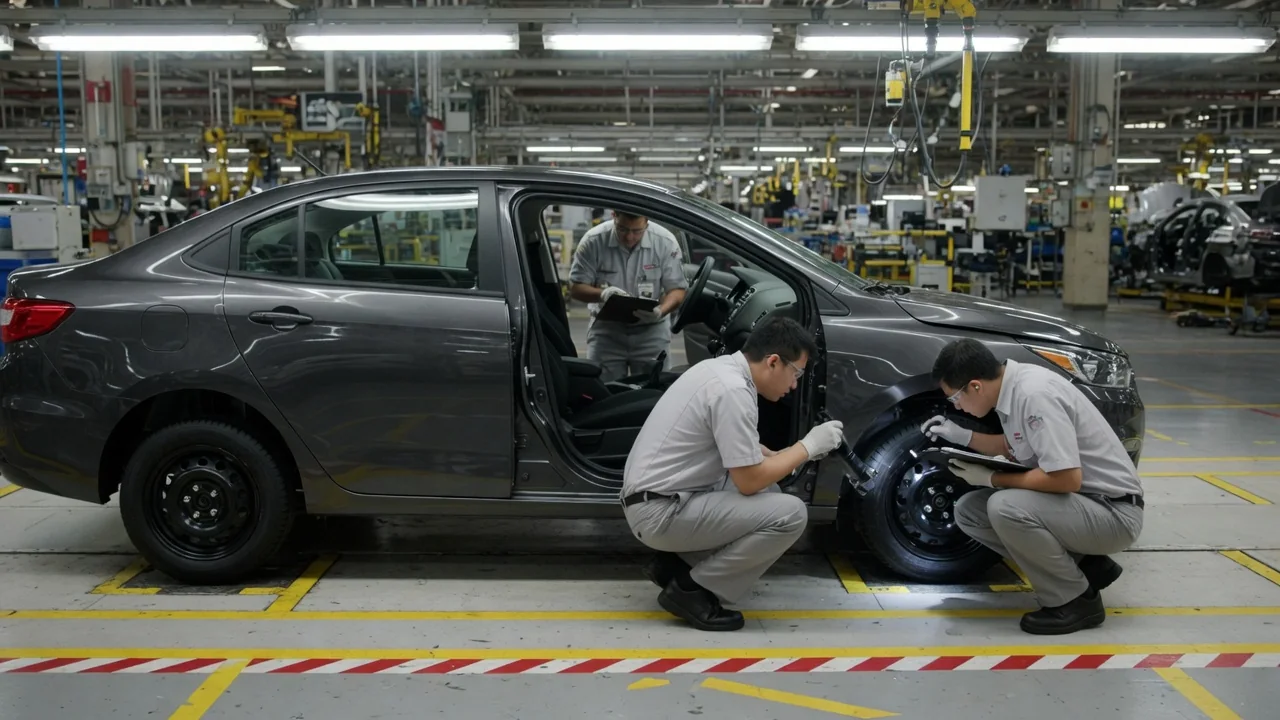
A new car that fails a factory inspection is usually neither scrapped nor shipped as-is. In most modern plants, a failed check starts a controlled sequence. The defect is recorded against that specific vehicle, the car is routed to a repair area, and the fix is verified before the vehicle can be released. Details differ between manufacturers and plants, but this general vehicle factory rework process explains what happens to a car that fails and why the outcome matters to buyers.
Defect recording: how a failure is documented
Inspections happen at several points, not only at the end of the line. Plants commonly run quality checks after body construction, after painting, and during final assembly. A vehicle then goes through end-of-line tests. These can include wheel alignment, headlamp aim, brake and roll testing, electrical system diagnostics, water leak testing, and a final visual review of paint, trim, and panel fit. Some checks are done by trained inspectors and others by automated stations. When either finds something outside the specification, that nonconformity is logged.
The record is normally tied to the vehicle identification number, so the defect follows that exact car through the plant. A typical entry describes the type of defect, where it is on the vehicle, the process or station likely responsible, and a severity classification. Many plants keep these records in a digital manufacturing system, sometimes with photos or test readings attached. Physical tags or markings on the car may also be used. The vehicle is flagged so it cannot be shipped until the issue is formally closed.
Recording matters beyond the single car. When defect data is collected across many vehicles, patterns become visible. The same fault repeating at one station can point to a tooling, process, or supplier part problem. Quality teams can use that information to check other vehicles built under the same conditions and to start a root cause investigation. Severity ratings also set priorities. Issues affecting safety or regulatory compliance are generally treated with the highest urgency.
Repair: how the defect is corrected
Where a repair happens depends on the size of the problem. A minor issue, such as a loose clip or an incompletely seated connector, may be fixed at or near the line by a team member or a nearby repair station. Larger problems usually send the vehicle to a dedicated repair or rework area away from the main line, so production keeps moving. Repair technicians are expected to follow documented procedures that specify approved methods, replacement parts, fastener torque, sealants, and other materials.
The work itself varies widely. A technician might replace a faulty module, switch, or trim piece, reconnect or reroute a wiring harness, or reload software to a control unit. Other jobs include adjusting alignment or panel gaps and resealing a water leak. Paint defects may be handled by polishing, by a localized spot repair, or by repainting a panel, depending on how deep and how large the flaw is. Some repairs require removing other components to gain access. Removal and reinstallation carry their own risk of new problems, which is why reassembly steps are part of the procedure.
Removed parts do not simply disappear. They may be quarantined, analyzed in-house, or returned to the supplier as evidence of a quality problem. Findings feed corrective actions on the production line, such as changing a work instruction, fixing equipment, or tightening a supplier requirement, so the defect does not keep recurring. How a plant handles a vehicle that cannot be brought to standard through normal repair depends on the manufacturer's own policies.
Recheck: confirming the fix before release
A repaired vehicle does not go straight back into the shipping flow. The corrected item is inspected again, often by someone other than the person who did the repair, or by the same automated test that caught the original fault. Functional problems call for functional retests. A sealing repair may need another water test, an electrical fix may need diagnostics run again, and an alignment adjustment may need fresh measurements.
A careful recheck also covers areas disturbed by the repair, not just the original defect. If interior panels or a dashboard section were removed for access, the systems behind them may be checked as well. The defect record is then updated with the repair performed, who did it, and the verification result. The defect is closed only once the recheck passes. If the car fails again, the cycle repeats and the issue may be escalated to engineering or quality specialists.
Many plants add another layer by pulling a sample of finished vehicles for detailed audits that look at the car from a customer's point of view. Reworked vehicles can be part of that sampling. After the car leaves the factory, transport inspections and the dealer's pre-delivery inspection add further checkpoints. Those later checks are separate from the factory's own release process.
Practical implications and limits
For buyers, the main point is that factory rework is a normal part of building cars, not a sign that a vehicle is inferior. A defect that was documented, repaired by an approved method, and verified is a managed outcome. Factory rework history is generally an internal record. Buyers typically do not receive it, and it is usually not shown on the window sticker or sales paperwork. Whether a particular car was reworked is therefore something most owners never learn.
The process has limits. No inspection system catches everything, and some problems only show up with use. Examples include intermittent electrical faults, noises that develop over time, or issues that depend on weather and driving conditions. Warranty coverage and recall procedures exist partly for this reason. Inspection methods, repair standards, and record keeping also differ between manufacturers and plants. This article describes general mechanisms, not the specific practices of any brand.
Owners can still take useful steps of their own. At delivery, it is worth looking over the paint in good light, checking panel gaps and trim fit, and confirming that lights, windows, locks, and infotainment functions work. You should also check that no warning lights stay on after startup. Anything unusual should be reported to the dealer promptly and in writing. The owner's manual and warranty booklet describe how the manufacturer expects concerns about a new vehicle to be raised.