What Are Cornering Lights?
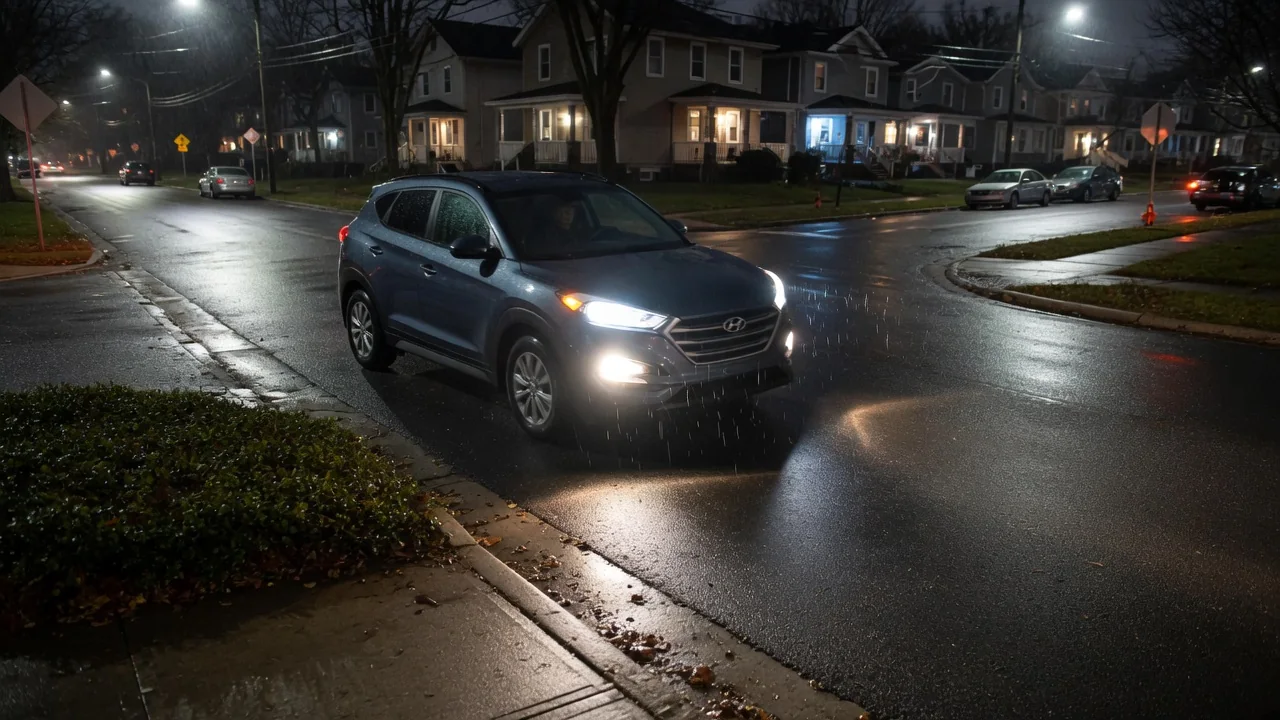
Drivers who ask what are cornering lights have usually noticed an extra patch of light appearing beside the car during a slow turn. These lamps add side illumination while the vehicle maneuvers at low speed, revealing curbs, pedestrians, and driveway edges that the main headlight beam leaves in shadow. Knowing how they switch on and where they shine makes their behavior much easier to interpret.
Activation types
Most cornering lights respond to one of two triggers, and many vehicles use both. The first is the turn signal: with the headlights on, moving the stalk lights a steady lamp on the side the driver intends to turn toward. The second is steering angle, where a sensor in the steering column reports how far the wheel has been turned and the lighting control module switches on the matching side lamp without any input from the stalk. Both approaches depend on the vehicle traveling slowly.
Some vehicles add a third trigger by lighting both sides when reverse gear is selected, which helps when backing out of a tight parking space at night. Speed matters as well, because the function is generally cancelled once the vehicle picks up pace, at a threshold the manufacturer chooses. Many systems fade the lamp in and out rather than snapping it on, so the change feels gradual. Whether a particular car uses the signal, the steering wheel, reverse gear, or a mix is set by its design and described in the owner's manual.
Where light falls
A cornering lamp throws a wide, short beam out to the side and slightly ahead of the front wheel, aimed well away from the direction the low beams point. On a right turn into a dark driveway, it brightens the apron, the curb radius, and anything standing near the edge, such as a mailbox or a person waiting to cross. The light stays low and close to the car, because its job is to fill the area the vehicle is about to swing into, not to reach far down the road.
The source of that light differs between designs. Some vehicles use a dedicated reflector or LED segment inside the headlamp housing, others repurpose one front fog lamp on the turning side, and older designs often place a separate clear lens in the fender or bumper corner. This is different from adaptive or swiveling headlights, which pivot the main beam to follow a curve at road speed. Cornering lamps stay fixed and simply add a second pool of light for tight, slow maneuvers.
Distinguish malfunction
Because one side lights while the other stays dark, cornering lights are sometimes mistaken for a fault. A single fog lamp glowing during a turn, or a lamp that fades out a moment after the wheel straightens, is usually normal behavior. The useful test is consistency: the left lamp should react to left turns, the right lamp to right turns, and both should look similar in brightness and color. A pattern that repeats predictably with the steering or the signal points to design, not to a defect.
Signs worth checking include a lamp that never lights on one side, one that flickers, stays on while driving straight, or comes with a warning message on the instrument cluster. Any stored fault code related to exterior lighting or the steering angle sensor is evidence to interpret, not proof that a specific part has failed, since wiring, connectors, moisture in the housing, or a control module can produce similar symptoms. Lighting codes are often manufacturer-specific, so their meaning should be confirmed against information for that exact vehicle.
Everyday Use and Observations
In daily driving the feature is easiest to see in a parking garage, a dim residential street, or a home driveway. Turning the wheel sharply while creeping forward causes a soft glow to spread across the pavement beside the front bumper, often visible against a wall or garage door. Pulling out of a parallel space with the signal on does the same thing on vehicles that use the stalk as a trigger. In daylight, or with the headlights switched off, the lamps typically stay dark.
Drivers may also notice that the effect disappears on the open road. A lane change at highway speed normally produces only the blinking signal, with no added side light, because the function is reserved for slow maneuvers. On some vehicles the feature works only when the light switch is in the automatic or low beam position, and a few allow it to be turned off through a settings menu. These differences explain why two cars from the same brand can behave differently in the same intersection.
Limits and Next Steps
Cornering lights have clear limits. Their reach is short, they do nothing for visibility on fast sweeping bends, and they cannot make up for poorly aimed, clouded, or dim headlights. Dirt, snow, or road film on the lens can reduce their output enough to make them seem inactive. They also depend on accurate input from other systems, so a steering angle sensor that is out of calibration after alignment or suspension work may change how or when the lamps respond until that calibration is restored.
For anyone unsure whether their vehicle has the feature, the owner's manual and the lighting section of the equipment list are the best starting points, since availability often varies by trim level and model year. A simple walk-around with a helper turning the wheel in a dark spot can confirm which lamps respond on each side. If one side fails or behaves erratically, a qualified technician can test the circuit and read lighting data properly, which is safer than guessing at bulbs or modules inside a sealed headlamp assembly.