Why Are Reverse Lights White?
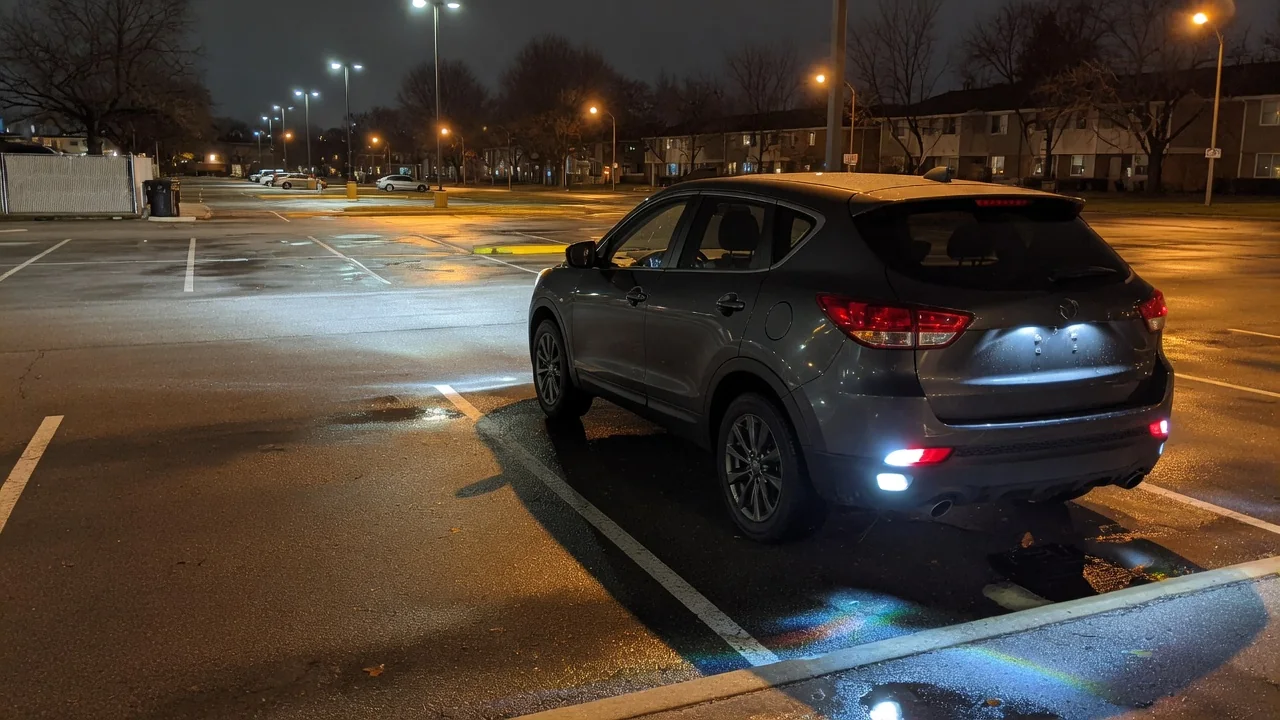
Anyone who has wondered why are reverse lights white is really asking about two jobs done by one lamp. White light illuminates the area behind a vehicle better than red or amber, and it stands apart from every other rear lamp color, so nearby drivers and pedestrians immediately recognize that the vehicle is about to move backward.
When they activate
Reverse lights, also called backup lamps, come on when the transmission is placed in reverse while the ignition is on. In a vehicle with an automatic transmission, a range sensor or selector switch reports the gear position and the lamps receive power. With a manual gearbox, a small switch on the transmission closes when the shifter moves into the reverse gate. Either way, the lamps respond to gear selection, not to vehicle movement, so they light before the wheels begin to turn.
That early activation is part of the signaling role. A driver in a parking lot sees white lamps appear on a parked car and knows it may back out, even while it is still stationary. Some vehicles briefly flash the lamps as the selector passes through reverse on the way from park to drive, which is normal. Others keep them lit for a short time after locking or unlocking as courtesy lighting, a feature that varies by manufacturer and trim level.
Rear view
The illumination role explains the color choice from the driver's seat. Red light is reserved for tail and brake lamps, and amber for turn signals, but neither color shows detail well in darkness. White light contains the full visible spectrum, so curbs, posts, children's toys, and painted parking lines reflect back with more contrast. When a driver checks the mirrors or looks over a shoulder at night, the white wash behind the bumper is what makes low obstacles visible at all.
Backup cameras depend on the same light. A camera image on a dark driveway is usually clearer when the reverse lamps are working at full brightness, and a dim or grainy picture can be an early hint that a bulb has failed. Lamp placement and output differ between vehicles, though. A tall pickup, a sedan with lamps set into the trunk lid, and a hatchback with a single lamp in the bumper each throw a different pattern, so the lit area behind one vehicle may not match another.
Failure checks
Because the driver cannot see these lamps from the seat, a failure often goes unnoticed. A simple check is to back toward a garage door or wall after dark and look for two even white patches in the mirrors, or to ask a helper to stand safely to the side while reverse is selected with the brake firmly applied. One dark side usually points toward a bulb, socket, or local wiring fault, while both lamps staying dark suggests something shared, such as a fuse or the reverse switch.
Those patterns are clues, not conclusions. A lamp that works intermittently may have corrosion in the socket or a damaged wire where the harness flexes at a trunk or liftgate hinge. Some vehicles report a lamp fault on the instrument panel or store a diagnostic code, but a code describes a circuit condition the module detected and does not prove a specific part has failed. Its meaning can also depend on the manufacturer, so it should be confirmed against information for that exact vehicle.
Everyday Use and Observations
In daily driving, the white color works as a kind of shared language. On a street lined with parked cars, red means a vehicle is present or braking, amber means it intends to turn, and white at the rear means it intends to travel backward. Because white normally faces forward on a vehicle, seeing it at the rear is distinctive enough to catch attention quickly. Pedestrians walking behind a row of parked cars often rely on that cue more than on engine sound, especially around quiet hybrids and electric vehicles.
Observant drivers will notice differences from one vehicle to the next. Older cars often use incandescent bulbs that give a warm, slightly yellow white, while newer designs with LEDs produce a cooler, crisper light that reaches full brightness instantly. Some models have two lamps, and others have only one, sometimes paired with a rear fog lamp on the opposite side. Clear lenses can also haze or collect road film over time, which dulls the output even when the bulb itself is healthy.
Limits and Next Steps
Reverse lights have limits that are worth respecting. They are relatively modest lamps intended for low-speed maneuvering, so they light a short distance behind the vehicle and do little for the areas beside the rear corners. They do not replace mirrors, a camera, parking sensors, or a direct look around before moving. They also only communicate intent, and other road users may not notice them in bright daylight, in heavy rain, or when a neighboring vehicle blocks the view of the lamps.
When a lamp is out, replacing a bulb is sometimes straightforward, but access, bulb type, and whether the light source is serviceable at all vary widely, so the owner's manual is the right first reference. Sealed LED assemblies and faults that persist after a new bulb generally call for proper electrical diagnosis by a qualified technician. Anyone considering brighter aftermarket lamps should confirm they suit the vehicle and remain white, since working backup lamps of the correct color are commonly a legal and inspection requirement.