What Battery Terminals Are
The short answer
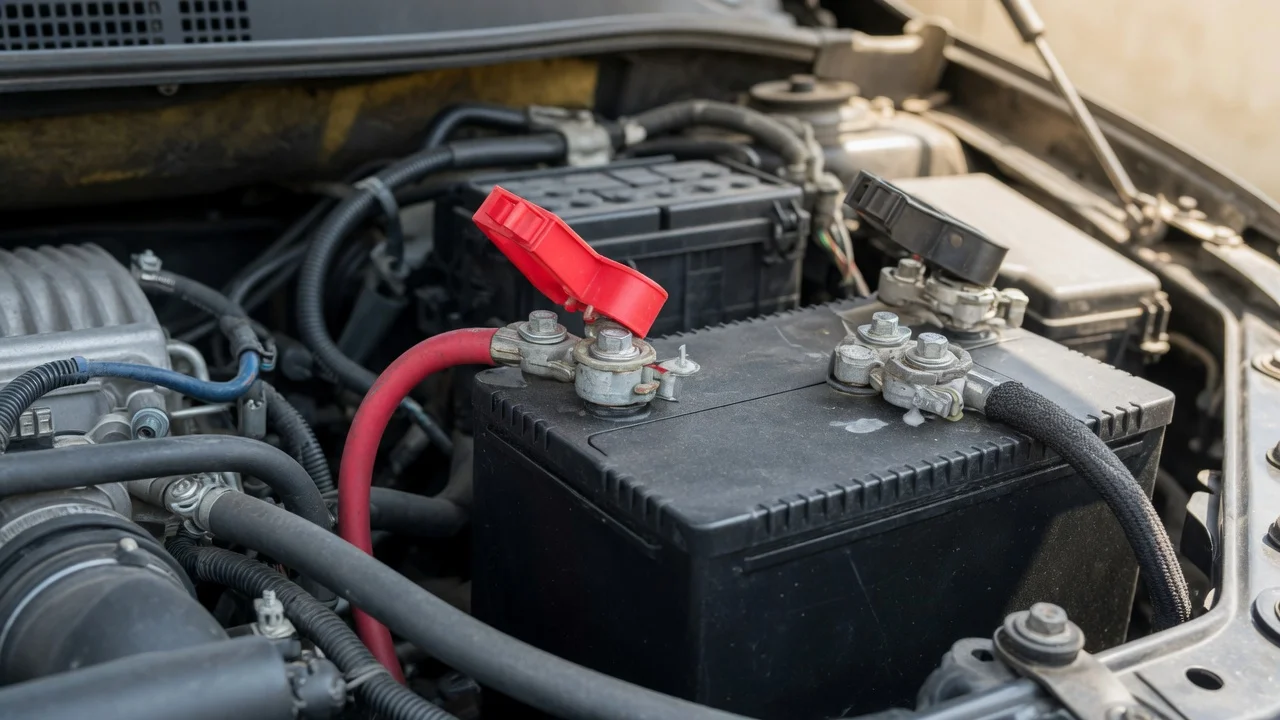
Battery terminals are the electrical connection points on a vehicle battery. They connect the battery to the car's wiring so it can deliver current to the starter and electrical systems, and receive current back from the charging system. Every conventional automotive battery has two: a positive terminal and a negative terminal.
The term covers two related parts, and both are commonly called terminals. One is the fixed post or threaded connection that is part of the battery. The other is the clamp or connector on the end of each battery cable that attaches to that post. When someone says a car has a terminal problem, they may mean either part, or the joint between them.
Positive and negative terminals
The positive terminal is usually marked with a plus sign and often with red markings or a red cable or cover. The negative terminal is marked with a minus sign and is typically associated with black. Colors and covers vary by manufacturer and vehicle, so the stamped plus and minus symbols on the battery case are the more reliable guide.
On the common top-post design, the positive post is generally made slightly larger in diameter than the negative post. This reduces the chance of fitting the cables to the wrong posts.
Positive terminal: connects through the positive cable to the starter circuit and the vehicle's main power distribution. Negative terminal: connects through the negative cable to the vehicle body, engine or a dedicated ground point. On most modern cars this ground connection completes the circuit, an arrangement called negative ground.
Common terminal types
Terminal design depends on the battery type and the vehicle it was built for. The types below are common in passenger vehicles, but fitment is specific to the battery group and the vehicle, so check the battery label or the vehicle documentation before assuming a type.
Type | Description | Where it is typically found; Top post | Tapered round lead posts on top of the battery; cable clamps slide over and tighten around them | Many passenger cars and light trucks; Side terminal | Threaded sockets on the side of the case; cables attach with bolts | Associated especially with some North American vehicles, notably various General Motors models; Dual terminal | Both top posts and side terminals on one battery | Replacement batteries designed to fit more than one vehicle; Threaded stud or L-type | A stud or flat tab that the cable bolts onto | Some marine, powersport, deep-cycle and specialist applications
Cable-end connectors come in several styles as well, including clamp-type ends for top posts and ring or eye terminals that bolt onto studs or side terminals.
How battery terminals work
Inside a lead-acid battery, chemical reactions between the plates and the electrolyte create a voltage difference between the positive and negative sides. Most passenger-car systems use a nominal 12-volt battery. The terminals are where that internal circuit meets the outside world. Current only flows when an external path connects them, such as the starter motor, lights or onboard electronics.
In practice, the terminals do three jobs:
Starting: when the engine is cranked, the starter draws a large current through the terminals, much more than most other loads on the vehicle. Powering electrical systems: when the engine is off, and sometimes during brief peaks while it runs, the battery supplies power to lighting, control modules and accessories. Charging: when the engine runs, the alternator sends current back through the terminals to recharge the battery.
Why the terminal connection matters
Because starting current is high, the terminal joint must be tight and clean. A loose clamp or a layer of corrosion adds electrical resistance. Extra resistance can cause a voltage drop that weakens cranking or interrupts power, even when the battery itself is still healthy. The usual materials, lead posts and lead, copper or alloy cable ends, are chosen for conductivity and resistance to the battery environment. They can still corrode over time, which often appears as a white, green or bluish crusty deposit around the post.
Many terminals are fitted with plastic or rubber covers, particularly on the positive side. The covers help prevent an accidental short circuit if a metal tool or another object bridges the terminal and nearby metal.
Before handling battery terminals
This article explains what battery terminals are rather than how to service them. If you plan to disconnect, clean or replace a terminal, first follow the procedure, sequence and tightening guidance in your vehicle's owner's manual or service information. Many modern vehicles have specific requirements around battery disconnection that vary by model. These can include resetting electronic systems and, on hybrid and electric vehicles, separate high-voltage systems that must be left to qualified technicians.
Information gaps
No model-specific specifications were available for this article. Post dimensions, terminal layout, cable-end design and recommended tightening values depend on the battery group and vehicle. Confirm them against the battery manufacturer's labeling or the vehicle manufacturer's documentation.