What AGM Means on a Battery: Absorbent Glass Mat Explained

If you have found the letters AGM on a car battery label and wondered what they stand for, the short answer is Absorbent Glass Mat. It is a type of lead-acid battery, not a different chemistry. The label tells you how the battery is built inside and, more practically, what kind of charging and replacement it expects. This guide explains what the AGM battery type is, how it works, how it compares with other common automotive batteries, and what it means for owning and replacing one.
The direct answer: AGM stands for Absorbent Glass Mat
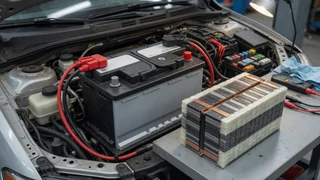
An AGM battery is a sealed lead-acid battery in which the electrolyte, a mix of sulfuric acid and water, is held in thin fiberglass mats packed between the lead plates. The mats soak up the electrolyte like a sponge, so there is little or no free liquid sloshing inside the case. A conventional flooded battery, by contrast, has plates submerged in liquid electrolyte.
AGM batteries belong to a broader category called valve-regulated lead-acid, often abbreviated VRLA. Valve-regulated means the battery is sealed and does not need topping up with water, but it has pressure-relief valves that let gas escape if internal pressure builds up, for example during overcharging. Gel batteries are the other main VRLA type; they use a thickened electrolyte instead of glass mats.
One qualification matters: AGM describes construction, not a single performance level. AGM batteries are made in many sizes, capacities, and quality grades for cars, trucks, motorcycles, boats, and RVs. Seeing AGM on a label tells you the design, but you still need to match the group size, terminal layout, and ratings your vehicle requires.
How an AGM battery works
Like any lead-acid battery, an AGM battery stores and releases energy through a chemical reaction between lead plates and sulfuric acid. A typical automotive unit has six cells, each producing a little over 2 volts, which together give the nominal 12-volt system voltage used in most passenger vehicles.
What changes is how the electrolyte is contained. Because the glass mats hold the acid in place and are tightly compressed against the plates, AGM batteries have several practical effects:
Spill resistance: with the electrolyte absorbed, the battery can tolerate tilting and is far less likely to leak acid if the case is damaged. Gas recombination: oxygen and hydrogen produced during normal charging are largely recombined into water inside the battery, which is why it does not need refilling. Low internal resistance: tight packing allows the battery to deliver and accept high currents readily, which helps with engine starting and fast recharging. Vibration resistance: compressed plates and mats are less prone to shedding active material when the vehicle is shaken over rough roads.
Why so many newer vehicles use AGM batteries
AGM batteries became common in passenger vehicles largely because of start-stop systems and heavier electrical loads. A start-stop vehicle shuts the engine off at idle and restarts it repeatedly, while the battery keeps powering lights, climate fans, infotainment, and driver-assistance electronics with the engine off. That pattern involves frequent partial discharges and recharges, which wear a conventional flooded battery much faster. AGM construction generally tolerates this kind of cycling better.
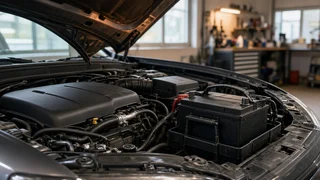
Packaging is another reason. Because AGM batteries are sealed and spill resistant, manufacturers can mount them in the trunk, under a seat, or in other locations inside the cabin where a vented flooded battery would be a poor fit. Whether a particular model uses AGM depends on the make, model year, trim, and equipment, so the battery that came with the vehicle, or the owner's manual, is the best guide.
AGM compared with other battery types
Understanding what AGM means is easier when you see how it differs from the other options you are likely to encounter at a parts counter.
Flooded (standard or wet cell): plates sit in liquid electrolyte. Usually the least expensive option and fine for many vehicles without start-stop or heavy electrical demand. Some are serviceable and may need water added; they must stay upright. EFB (Enhanced Flooded Battery): an improved flooded design built for better cycling durability. Often used in entry-level start-stop vehicles. Sits between standard flooded and AGM in cost and cycling capability. AGM (Absorbent Glass Mat): sealed, spill resistant, maintenance free, strong at high-current delivery and repeated cycling. Typically costs more than flooded and EFB. Gel: sealed VRLA battery with gelled electrolyte. More common in deep-cycle, marine, and stationary uses than in starting applications, and usually sensitive to charging voltage. Lithium (12-volt lithium-ion or lithium iron phosphate): a different chemistry, lighter and used in some performance vehicles and as auxiliary batteries. It requires charging and management designed specifically for it and is not a drop-in substitute for lead-acid unless the vehicle and battery are designed for it.
Strengths and limitations of AGM batteries
AGM batteries are a good match for some owners and an unnecessary expense for others. The trade-offs below are general characteristics of the design; actual life and performance vary by brand, battery grade, climate, driving pattern, and how well the charging system is working.
Strengths
Better tolerance of frequent cycling, which suits start-stop vehicles and cars with large electrical loads. No routine maintenance, since the battery is sealed and does not need water. Spill resistance and flexible mounting, including inside the cabin or trunk where the vehicle is designed for it. Strong cranking performance and quick recharge acceptance because of low internal resistance. Good resistance to vibration. Generally lower self-discharge than flooded batteries, which helps when a vehicle sits for a while.
Limitations
Higher purchase price than flooded or EFB batteries. Sensitivity to overcharging: excessive charging voltage can dry out the absorbed electrolyte, and because the battery is sealed, lost water cannot be replaced. Heat sensitivity: high under-hood temperatures shorten the life of most lead-acid batteries, and AGM is not immune. Charging equipment matters: an older or basic charger without an AGM setting may not charge it correctly. In some vehicles, replacement involves more than swapping the battery, as explained below.
Who an AGM battery suits
If your vehicle came from the factory with an AGM battery, replace it with an AGM battery of the correct specification. This is the clearest rule in the whole topic. Start-stop systems and the vehicle's charging strategy are typically calibrated for the original battery type, and fitting a cheaper flooded battery in its place commonly leads to short battery life and electrical complaints.
If your vehicle came with a flooded battery, upgrading to AGM is usually allowed and can make sense if you have significant aftermarket electrical loads, make many short trips, park for long periods, or want a spill-resistant battery. If your vehicle has no special demands and the original flooded battery served well, an AGM may not deliver enough benefit to justify the extra cost. Check that the AGM battery matches the required group size, terminal positions, and cold-cranking rating.
Charging an AGM battery correctly
In normal driving, the vehicle's alternator and voltage regulation handle charging. Many modern vehicles control charging output electronically and adjust it according to battery condition, temperature, and load. That is one reason the battery type matters to the vehicle.
When charging an AGM battery with an external charger, use a charger with an AGM mode or one that lists AGM compatibility. A smart charger that moves through charging stages and then switches to a maintenance mode is a good fit for vehicles that sit unused. Avoid charging methods that apply high voltage for long periods without regulation, since overcharging is one of the main ways a sealed battery is damaged. For exact charging voltages and current limits, follow the battery maker's label or instructions, because these vary by product.
Replacing an AGM battery: what to know
Battery replacement procedures vary widely between vehicles, so treat the following as general points rather than a model-specific procedure.
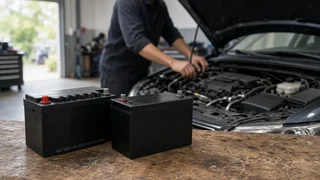
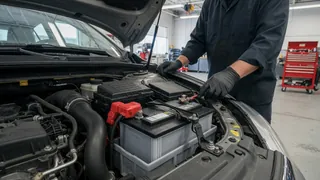
Confirm the type before buying: look for AGM on the existing battery label or check the owner's manual. Match group size, terminal layout, and ratings. Check for battery registration requirements: some vehicles, especially many European models and others with intelligent battery management, need the new battery registered or coded with a scan tool so the charging system adjusts for a fresh battery. Skipping this step on such vehicles can lead to overcharging or reduced battery life. Keep the vent connection: batteries mounted inside the cabin or trunk may have a vent tube. Reconnect it to the replacement battery if the vehicle uses one. Protect memory and settings if needed: disconnecting the battery can reset radio presets, window positions, and some learned values. Some owners use a memory saver; consult your manual. Handle the battery terminals carefully: follow the disconnection and reconnection order given in the owner's manual, keep tools from bridging the terminals, and make sure clamps are clean and tight to avoid voltage drop. Recycle the old battery: lead-acid batteries, including AGM, are widely recycled, and retailers that sell batteries commonly accept old ones.
If your vehicle requires registration and you do not have a compatible scan tool, a dealer or independent shop with the right equipment can complete the installation.
If an AGM battery keeps going flat
An AGM battery that repeatedly runs down is not necessarily defective. Because AGM batteries are often fitted to vehicles with heavy electrical demand, the cause may lie elsewhere in the system. Useful things to check, or have a technician check, include:
Battery state and age: a load test or conductance test, using equipment that supports AGM batteries, shows whether the battery can still hold and deliver charge. Charging output: if the alternator or its regulation is not delivering adequate charge, even a new battery will drain over time. Parasitic draw: a module, accessory, or light that stays powered after the vehicle is shut off can slowly discharge the battery. Measuring draw after the vehicle's modules go to sleep helps identify it, and a wiring diagram and the fuse box layout help narrow down which circuit is responsible. Voltage drop at connections: corroded or loose battery terminals and ground connections can restrict charging and starting current. Wrong battery type or missing registration: a flooded battery in a vehicle designed for AGM, or an unregistered replacement where registration is required, can lead to early failure. Driving pattern: frequent short trips may not give the charging system enough time to replace the energy used during starting.
Stop driving and seek professional diagnosis if the battery case is swollen, hot, cracked, or giving off a strong sulfur or rotten-egg smell, since these can indicate severe overcharging or internal failure. When replacing a blown fuse during diagnosis, always use the fuse rating specified for that circuit; a fuse that blows again points to a fault that needs proper investigation.
The bottom line
AGM on a battery stands for Absorbent Glass Mat: a sealed, maintenance-free lead-acid design that holds its electrolyte in fiberglass mats. It handles frequent cycling, vibration, and high current demands better than a standard flooded battery, which is why it is common in start-stop vehicles and cars with heavy electrical loads. It costs more and needs correct charging. If your vehicle came with an AGM battery, stay with AGM and check whether the replacement needs to be registered; if it did not, an AGM upgrade is optional and worth it mainly when your use places extra demands on the battery.