What an AGM Battery Is vs SLA: How They Relate and Which to Choose
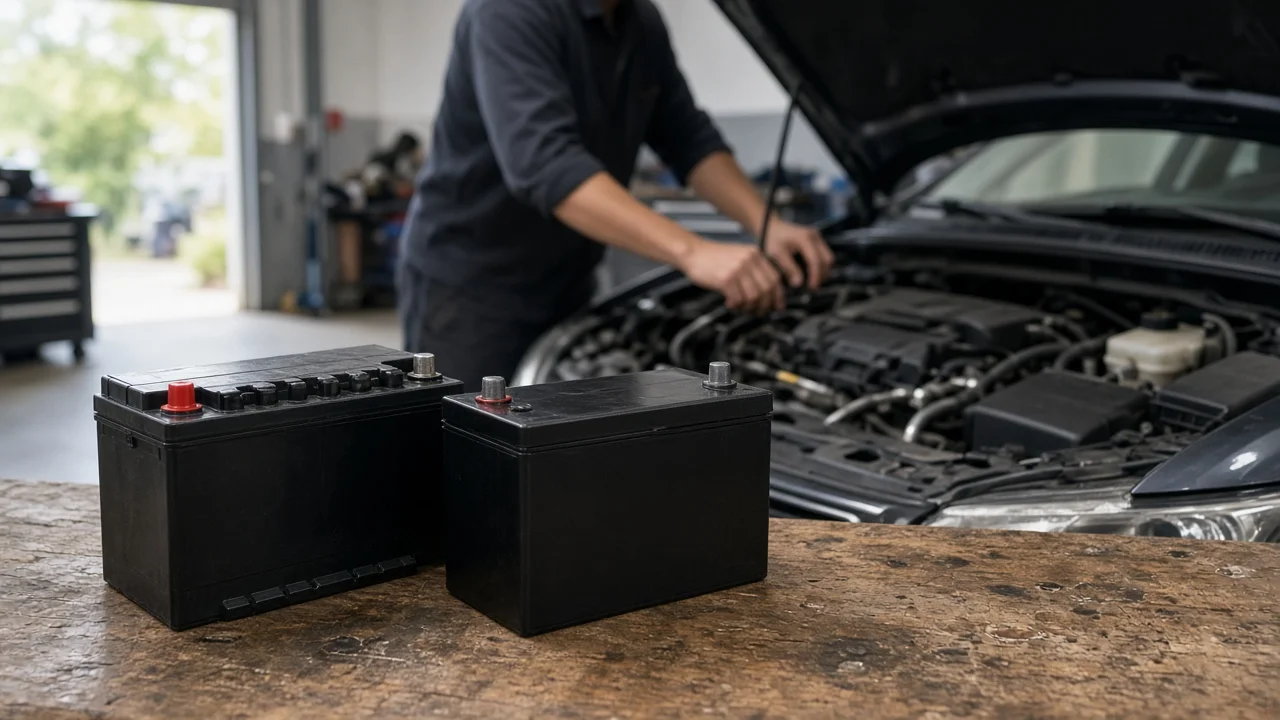
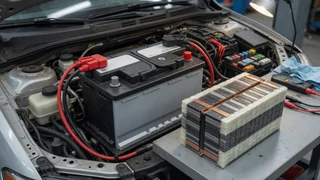
An AGM battery is a sealed lead-acid battery that holds its electrolyte in absorbent glass mat separators instead of letting it slosh around as free liquid. That means AGM is not really an alternative to SLA. It is one kind of SLA. Comparing AGM with SLA is a bit like comparing a pickup truck with a truck: one is a specific type inside the broader category. The useful question is which type of sealed or flooded battery your vehicle needs, and whether the battery labeled SLA is even meant for automotive starting.
AGM Battery Definition
AGM stands for Absorbent Glass Mat. Inside the battery, thin fiberglass mats sit between the lead plates. The sulfuric acid electrolyte is soaked into these mats and held there, much as a sponge holds water. The plates and mats are pressed tightly together in each cell, and the case is sealed except for small pressure-relief valves.
Because the electrolyte is held in place, an AGM battery is spill-resistant. You do not add water to it, and it does not have removable cell caps. AGM batteries are also called VRLA batteries, which stands for valve-regulated lead-acid.
What SLA Means
SLA stands for sealed lead-acid. It is an umbrella term for lead-acid batteries that are sealed and do not need maintenance. The two main SLA types are:
AGM: electrolyte absorbed in glass mat separators. This is the common sealed type for cars and trucks. Gel: electrolyte thickened into a gel with a silica additive. This type is more common in deep-cycle, mobility and some marine or solar uses than in automotive starting.
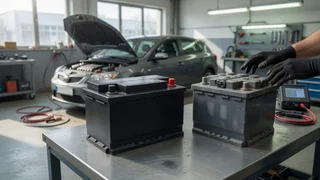
In everyday shopping, SLA is often used for small rectangular sealed batteries. These are found in alarm panels, UPS backup units, emergency lighting, toys and ride-on equipment. Many of these small batteries use AGM construction internally. However, they are built for low, steady current draw and are not designed to start an engine. A battery sold simply as SLA is therefore not automatically a substitute for an automotive AGM battery, even if both are 12-volt and sealed.
How an AGM Battery Works
All lead-acid batteries store and release energy the same basic way. Lead plates react with sulfuric acid, and the reaction runs one way during discharge and the other way during charging. The difference in an AGM battery is how the electrolyte and the gases are managed.
In a conventional flooded battery, charging produces hydrogen and oxygen. Some of these gases escape through vents, which is why flooded batteries slowly lose water. In an AGM battery, the glass mat leaves tiny gas paths. Oxygen produced at the positive plate can travel to the negative plate and recombine back into water. The valves stay closed during normal operation. They open only to release excess pressure, such as during heavy overcharging.
This design has several practical effects:
No routine water top-ups and no free acid to spill if the case is tilted. The tightly packed plates resist vibration better than many flooded designs. Low internal resistance allows the battery to deliver high current quickly and accept charge relatively fast. The battery generally tolerates repeated partial discharge better than a standard flooded starting battery. The battery is more sensitive to overcharging. Gas vented through the valves cannot be replaced, so chronic overcharging dries the battery out and shortens its life.
AGM vs SLA vs Flooded: Quick Comparison
Type | Electrolyte | Maintenance | Typical automotive role | Charging notes; Flooded (standard) lead-acid | Free liquid | Some types need water checks | Conventional vehicles without start-stop | Tolerates a wide range of chargers; AGM (a type of SLA) | Absorbed in glass mat | Sealed, no water added | Start-stop systems, high electrical loads, many newer vehicles | Use an AGM-compatible charger or AGM setting; avoid overcharging; Gel (a type of SLA) | Thickened gel | Sealed, no water added | Rarely used for engine starting | Usually needs a gel-specific charging profile; Small general-purpose SLA | Usually AGM construction | Sealed | Alarms, UPS units, small equipment, not engine starting | Use a charger matched to the battery's stated requirements
Why Many Vehicles Use AGM Batteries
Automakers often fit AGM batteries to vehicles with automatic start-stop. In these vehicles, the engine shuts off at stops while lights, climate control, infotainment and other systems keep drawing power, and then the battery has to restart the engine many times per trip. AGM batteries also suit vehicles with heavy electrical demand, such as large screens, driver-assistance systems, heated seats and many control modules. Some vehicles also use AGM because the battery is mounted in the cabin or trunk, where a spill-resistant, valve-regulated design is preferable.
How to Choose: AGM, Flooded or Another SLA Type
The safest starting point is to match what the vehicle was designed for. The owner's manual, the label on the original battery and the battery fitment information for your exact model year, engine and trim usually tell you the required type, group size and cold cranking rating.
If the vehicle came with an AGM battery, replace it with an AGM battery of the correct size and rating. Downgrading to a flooded battery in a start-stop vehicle often leads to shorter battery life and can cause start-stop or electrical warnings. If the vehicle came with a flooded battery, an AGM battery of the correct group size can usually be used and may handle accessories and short trips better. It costs more and does not make the charging system produce more power. If the vehicle has an EFB (enhanced flooded battery) from the factory, follow the vehicle maker's guidance. EFB is a separate design used in some lower-demand start-stop systems. Do not use a small general-purpose SLA battery for engine starting, even if it has the right voltage. It is not built for the high current a starter motor draws. Use gel batteries for starting only if the vehicle or equipment maker specifically calls for them.
Some vehicles have a battery management system that adjusts charging output based on the battery's type and age. On these vehicles, a new battery may need to be registered or coded with a scan tool after installation, and changing battery type may require updating that setting. If this step is skipped, the system may charge the new battery as if it were the old one. That can shorten the battery's life. Check the procedure for your specific vehicle before replacing the battery.
Charging and Care Tips for AGM Batteries
When charging at home, use a smart charger with an AGM mode, or one that states it is AGM-compatible. Older unregulated chargers can overcharge a sealed battery. Keep battery terminals clean and tight. Corrosion or a loose clamp causes voltage drop, which can make a healthy battery seem weak and stop it from charging fully. If the vehicle sits unused for long periods, use a maintainer suited to AGM batteries. Even a normal parasitic draw from modules and alarms will slowly discharge any battery. Avoid leaving an AGM battery deeply discharged for extended periods. Like other lead-acid batteries, it can lose capacity through sulfation.
When an AGM Battery Keeps Going Flat
An AGM battery that repeatedly runs down is not necessarily defective. Several different causes produce the same symptom, and replacing the battery without finding the cause often means the new battery fails the same way. Common possibilities, and what checking each one tells you:
Weak or aging battery: a load test or conductance test at a parts store or shop shows whether the battery can still deliver its rated current. A battery that passes after a full charge points the search elsewhere. Charging system fault: measuring system voltage with the engine running, and comparing it with the vehicle's specification, shows whether the alternator and regulator are supplying adequate charging output. Some vehicles vary charging voltage on purpose, so a single reading needs to be interpreted against the correct specification. Excessive parasitic draw: measuring current draw with the vehicle off and asleep shows whether something stays on, such as a module, light or aftermarket accessory. Pulling fuses one at a time while watching the reading, using the wiring diagram and fuse chart, helps narrow down which circuit is responsible. Always replace fuses with the correct fuse rating. Poor connections: checking for voltage drop across the battery cables and ground straps while cranking or charging shows whether corrosion or a bad connection is limiting current. Wrong battery type or missed registration: an incorrect battery or an un-updated battery management setting can lead to chronic undercharging or overcharging.
Stop driving and have the vehicle inspected if the battery case is swollen or cracked, you notice a strong rotten-egg smell, the battery is very hot, or the battery or charging warning light stays on while dimming lights or stalling also occur. These signs can point to severe overcharging, an internal battery failure or a charging system fault that may leave you stranded.
Bottom Line
AGM is a type of sealed lead-acid battery, not its opposite. In automotive use, AGM is the sealed design built for starting engines and handling heavy electrical loads, especially in start-stop vehicles. Small batteries sold as SLA are usually meant for backup power and equipment, not cars. Choose the battery type your vehicle was designed for, charge it with equipment that supports AGM, and if it keeps going flat, check the charging system, parasitic draw and connections before assuming the battery itself is the problem.