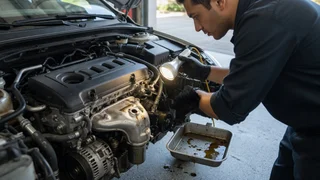
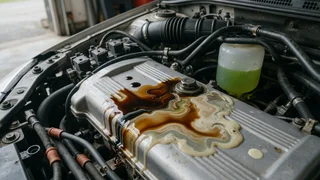
Water in diesel engine oil: what it means and what to do
The short answer
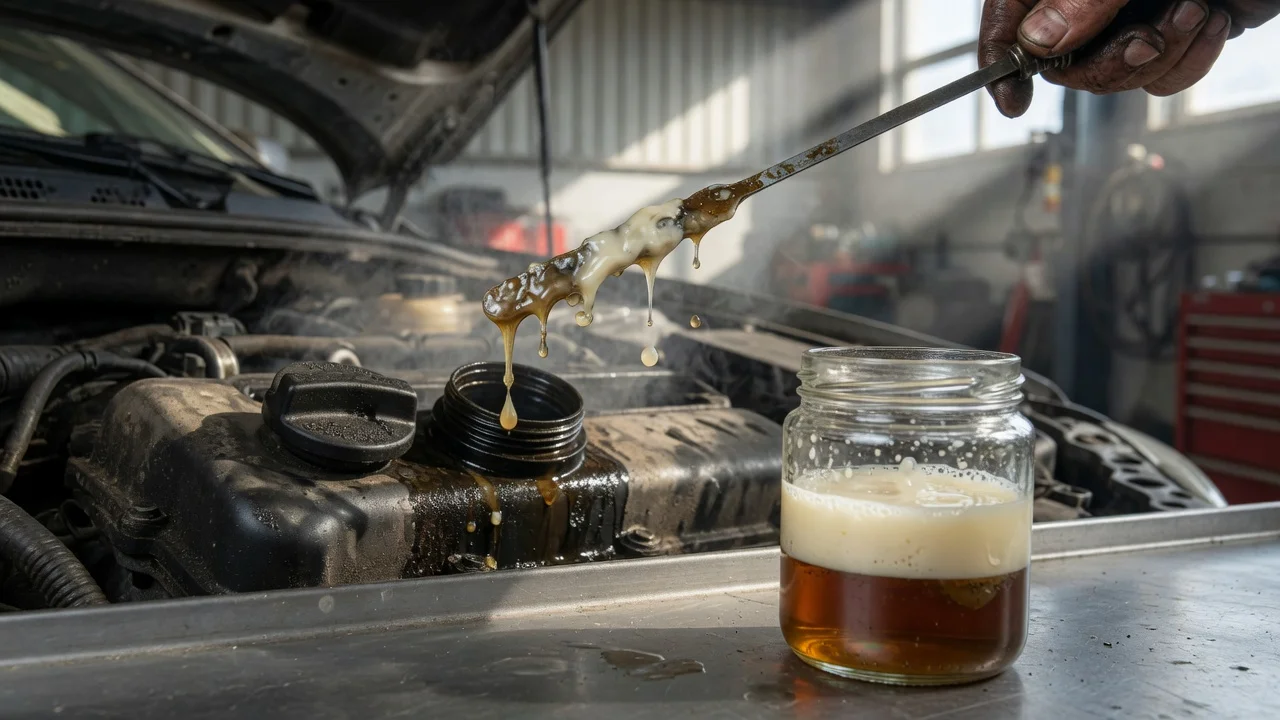
Water in a diesel engine's oil is not normal in more than trace amounts. A thin layer of creamy residue under the oil filler cap after short trips in cold or humid weather is usually condensation, and it typically clears once the engine runs at full operating temperature for a sustained period. Milky oil on the dipstick, a rising oil level, or a coolant level that keeps dropping points to coolant entering the oil. That is a mechanical fault and should be diagnosed before the engine is run further.
Which explanation applies, and which parts are likely involved, depends on the engine's design, its age and how the vehicle is used. A light-duty passenger diesel and a heavy-duty truck engine with replaceable wet cylinder liners have different typical failure points. No model-specific data was supplied for this guide, so the causes below are general. Check the manufacturer's service information or technical bulletins for your exact engine.
Scope: oil contamination versus water in fuel
This guide covers water or coolant in the engine's lubricating oil. Water in diesel fuel is a different problem. It is usually caught by the fuel filter's water separator and often triggers a dashboard warning on vehicles equipped with a sensor. If that warning is lit, drain the separator as the owner's manual describes. That issue is not covered further here.
Condensation or coolant: how to tell the difference
Sign | More consistent with condensation | More consistent with a coolant leak; Where residue appears | Mainly under the filler cap or in the breather area | Throughout the oil, visible on the dipstick; Oil appearance | Normal on the dipstick | Milky, tan or chocolate-milk coloured; Driving pattern | Frequent short trips, cold or humid climate | Appears regardless of trip length; Coolant level | Stable | Falling with no external leak; Oil level | Stable | Rising between changes; Exhaust | Normal once warm | Persistent white smoke, sometimes with a sweet smell
These signs are indicators, not proof. A small internal coolant leak may not show visible milkiness, and condensation residue can look alarming. Testing, described below, is the reliable way to separate the two.
Common sources of coolant in diesel oil
Head gasket failure, allowing coolant to pass between the cooling passages and the oil galleries or cylinders. A failed engine oil cooler, where an internal leak lets coolant and oil mix across the cooler's core. A cracked cylinder head or engine block, sometimes caused by overheating or freezing. Cylinder liner seal failure or liner cavitation erosion on engines with wet liners, which are common in heavy-duty diesels. Leaking injector sleeves or cups on engines where the injectors sit in coolant-jacketed bores.
Which of these is most likely varies by engine family. Some engines have well-documented weak points, such as oil cooler or liner issues. Others rarely suffer from them. That information was not available for this guide.
Why it matters
Water, and especially glycol-based coolant, damages engine oil's ability to protect the engine. Water can form an emulsion that thins the oil film and promotes corrosion. Glycol reacts with oil additives and can form sludge and deposits that restrict oil flow. Either can lead to accelerated wear of bearings and other lubricated parts. Continuing to drive with significant coolant contamination risks severe engine damage.
How to confirm the cause
Used oil analysis: a laboratory can measure water content and test for glycol. It can also report coolant marker elements such as sodium, potassium or boron, depending on the coolant chemistry. This is the most direct way to confirm whether coolant is present. Cooling system pressure test: pressurising the cold system can reveal internal or external leaks as pressure drops. Combustion leak test, also called a block test: this checks the coolant for exhaust gases and points toward a head gasket or cracked head. Component-specific checks: a workshop may pressure-test the oil cooler separately or inspect liners and injector sleeves, depending on the engine.
What to do next
If the residue is limited to the filler cap and the vehicle mostly makes short trips, a longer run at full operating temperature followed by a recheck is a reasonable first step. Keep watching the oil and coolant levels. If the oil on the dipstick is milky, the coolant level is dropping, or the oil level is rising, avoid running the engine and arrange diagnosis. Changing the oil alone will not fix a coolant leak. The source must be found and repaired, and the oil system may need flushing afterward according to the manufacturer's or repairer's guidance.