Water and Oil Mixed on the Engine Block: What It Usually Means
The short answer
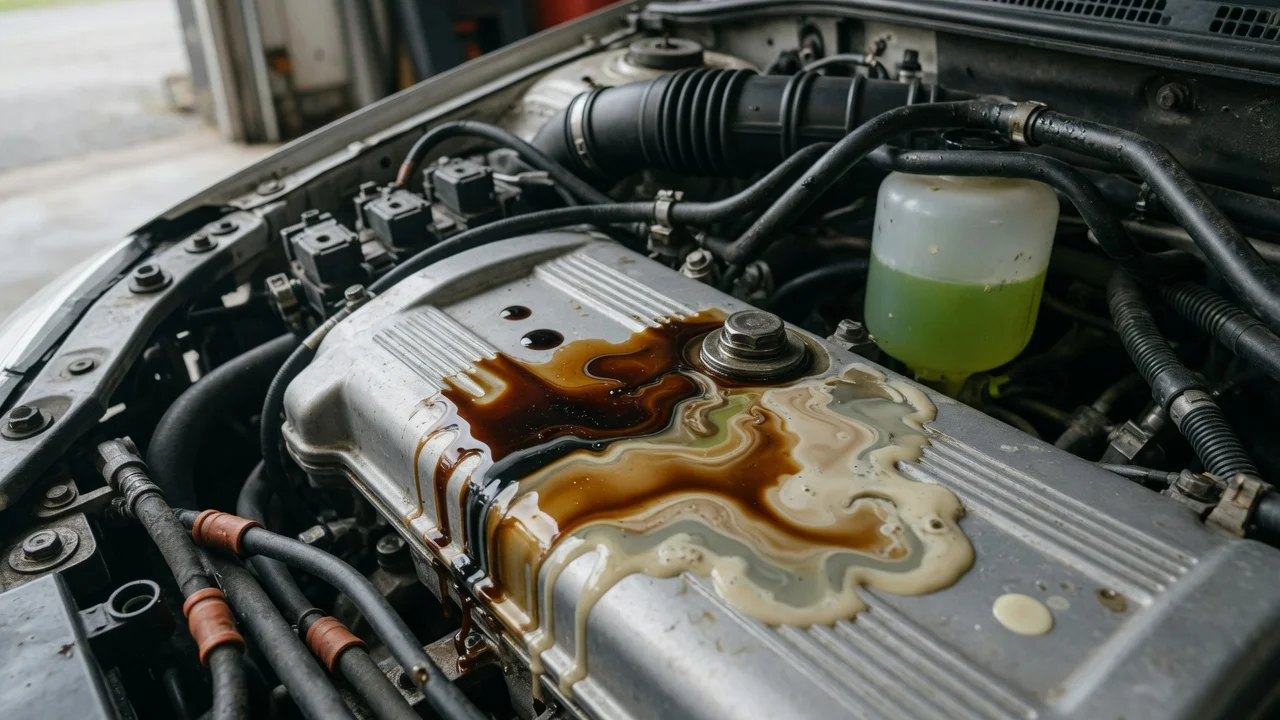
A mix of water and oil on the outside of an engine block usually means two things are happening at once. Oil is seeping from a gasket or seal, and moisture is reaching the same area. That moisture may be harmless, such as rain, washing or condensation, or it may be engine coolant escaping from the cooling system. The key question is whether the liquid is plain water or coolant, and whether the oil inside the engine is still clean.
If the residue is only on the outside surface and the oil on the dipstick looks normal, the cause is more often an external oil leak combined with outside moisture than a serious internal failure. If the oil inside the engine looks milky, or the coolant level keeps dropping without an obvious leak, the problem may be more serious and should be inspected promptly.
Scope and an important qualification
This guide covers the general causes that apply to most water-cooled petrol and diesel engines. Where leaks typically appear, which gaskets are known to be weak, and how components such as oil coolers are arranged all vary by manufacturer, engine family, model year and generation. No vehicle-specific data was supplied for this article, so it cannot say which cause is most likely for a particular car. For that, consult the service information for your exact engine or a technician familiar with it.
Common causes of oil and water on the block
Oil leak plus outside moisture: a seeping valve cover gasket, oil pan gasket, oil filter housing or front or rear seal leaves oily film, and rain, road spray, engine washing or condensation mixes with it to form a wet, sometimes foamy residue. External coolant leak near an oil leak: a hose, water pump, thermostat housing or radiator connection drips coolant onto an area that is already oily. Head gasket leaking externally: a failing head gasket can seep oil, coolant or both along the seam between the cylinder head and the block. Intake manifold gasket: on engines where coolant passes through the intake manifold, a failed gasket can release coolant and sometimes oil around the manifold joint. Oil cooler or oil filter housing seals: on engines that use an oil-to-coolant heat exchanger, a failed seal can let oil and coolant mix and leak outward. Whether this applies depends on the specific engine design.
How to tell coolant from plain water
Coolant is usually tinted, commonly green, orange, pink, blue or yellow depending on the type, and it often has a faintly sweet smell. It can leave crusty, coloured deposits as it dries. Plain water from rain or washing is clear, odourless and evaporates without leaving coloured residue. Checking whether the coolant reservoir level falls over several days, measured with the engine cold, is a simple way to confirm a coolant loss.
Warning signs that point to an internal problem
Milky, light-brown or frothy oil on the dipstick, not just under the filler cap. Coolant level dropping with no visible external leak. White exhaust smoke with a sweet smell that persists after the engine is warm. Overheating, or bubbles appearing in the coolant reservoir while the engine runs. Oily film floating in the coolant reservoir.
A small amount of creamy residue under the oil filler cap alone can come from condensation, especially in cold weather or with frequent short trips. It is not proof of a head gasket failure on its own. It becomes more concerning when it appears together with coolant loss or milky oil on the dipstick.
Sensible next steps
With the engine cold, check the oil on the dipstick and the coolant level in the reservoir. Clean the affected area with a degreaser, then drive and recheck to see where fresh wetness first appears. Note the colour and smell of any fresh fluid to separate coolant from water. If the oil is milky, coolant is disappearing, or the engine overheats, stop driving as much as possible and have a cooling system pressure test and a combustion gas or block test performed. If the oil is clean and the coolant level is stable, the likely fix is resealing the leaking oil gasket or seal, which is usually far less costly than internal engine repair.
What this guide cannot confirm
Without details about the vehicle, its engine and the exact location and appearance of the residue, it is not possible to identify the specific leak source, estimate repair cost or say whether the vehicle is safe to keep driving. Those answers depend on an inspection and the manufacturer's service information for the engine in question.