What Is Oil Aeration? Causes, Pressure Effects and Diagnosis
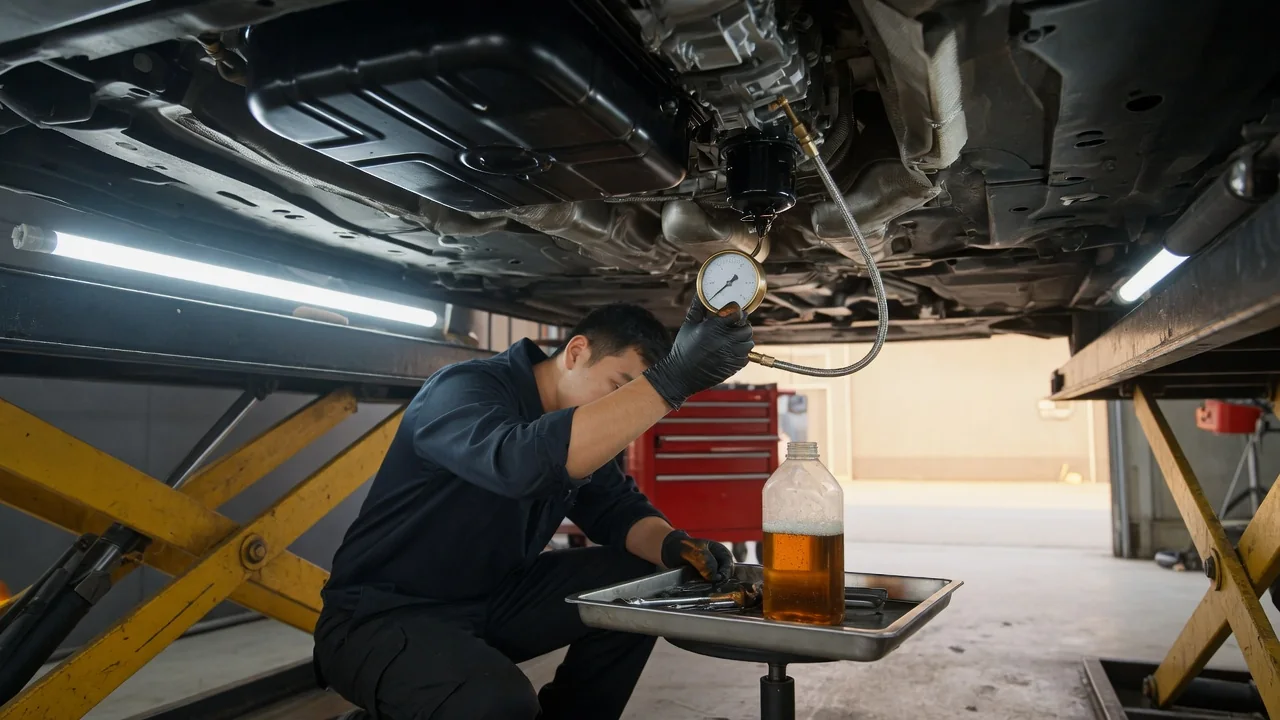
Oil aeration is the presence of air mixed into engine oil, either as tiny bubbles dispersed through the oil or as foam collecting on its surface. A small amount is normal in any running engine, because oil is constantly thrown, splashed and pumped. Problems begin when air accumulates faster than the oil can release it. This guide explains how air entrainment happens, why it disturbs oil pressure and lubrication, and how the causes of foamy engine oil are usually narrowed down.
Air entrainment
Engine oil can hold air in three general forms. Dissolved air is invisible and behaves as part of the liquid until a change in pressure or temperature releases it. Entrained air consists of small bubbles suspended throughout the oil, which make it look cloudy or lighter in color. Foam is a layer of larger bubbles at the surface, typically in the sump or under the valve cover. Aeration usually refers to the entrained and foamed forms, because these are the ones that change how oil behaves inside the lubrication system.
Air gets into oil mainly through mechanical agitation. A rotating crankshaft and connecting rods throw oil droplets and mist around the crankcase, and oil draining back from the cylinder head falls into the sump, where it can trap air. If the oil level is too high, the crankshaft counterweights may contact the oil surface and churn it. If the level is too low, or the vehicle is cornering, braking or climbing hard, the pump pickup can draw air along with oil. A leak on the suction side of the pump, such as a damaged pickup tube seal, can also pull in air before the oil reaches the pump.
Whether air stays in the oil depends on how quickly bubbles can rise and break. Oil formulations include antifoam additives that help bubbles collapse, and the sump gives oil time to settle before it is picked up again. Contamination can upset this balance. Fuel dilution, coolant, water from condensation and degraded or mixed additive packages can change surface tension and viscosity, making bubbles more stable. Aged oil with depleted additives may also release air less effectively than fresh oil, which is one reason foamy engine oil often has more than one cause.
Pressure
Liquid oil is nearly incompressible, which is what allows a positive-displacement oil pump to build pressure and push oil through narrow passages and bearing clearances. Air is highly compressible. When bubbles are mixed into the oil, part of the pump's work goes into compressing gas instead of moving liquid, so less actual oil is delivered. The result can be lower pressure, unstable pressure or a gauge reading that fluctuates without an obvious cause.
Plain engine bearings depend on a continuous film of oil being carried into the gap between the shaft and the bearing shell. Air bubbles interrupt that film and reduce its ability to support load, and bubbles moving between high- and low-pressure zones can contribute to surface damage. Components that use oil as a hydraulic medium are especially sensitive. Hydraulic lifters or lash adjusters filled with aerated oil can become spongy and noisy, and oil-pressure-controlled devices such as variable valve timing actuators or hydraulic chain tensioners may respond inconsistently when the supply contains air.
Aeration affects oil beyond the pressure reading. Air conducts heat poorly, so aerated oil removes heat from bearings, pistons and other hot parts less effectively. A larger contact area between air and oil also speeds oxidation, which can thicken the oil, form deposits and consume additives sooner. Aeration can therefore be both a symptom of a problem and a cause of further oil degradation.
Diagnosis
The first checks are simple and visual. With the engine off and the vehicle on level ground, pull the dipstick and look at both the level and the appearance of the oil. Oil that is frothy, bubbly or lighter in color than expected suggests air entrainment. Comparing a reading taken shortly after shutdown with one taken after the engine has rested is useful, because aerated oil occupies more volume and may read high until the bubbles escape. Looking under the oil filler cap can also reveal foam over the valve train.
Appearance alone can be misleading. A creamy or milky deposit under the filler cap is often condensation, especially in vehicles used for short trips in cold or humid weather, but it can also indicate coolant entering the oil, which is a separate and potentially serious fault. A practical sorting step is to catch a sample in a clean, clear container and let it stand. Air bubbles rise and clear over time, while water or coolant tends to stay mixed or separate as a distinct layer. A laboratory oil analysis can confirm contamination such as coolant or fuel when the cause is unclear.
Symptoms that point toward aeration include an oil pressure warning light that flickers during hard cornering or braking, a gauge that wanders at steady speed, and valve train ticking that appears after sustained high engine speed. A technician can confirm actual pressure with a mechanical gauge rather than relying on the dashboard sender. If oil level and condition are correct, diagnosis typically moves to the pickup tube and its seal, the oil pump, sump baffling and the crankcase ventilation system, following the service manual procedure for that engine.
Practical implications and limits
For most drivers, the most controllable factors are oil level and oil choice. Keeping the level within the marked range avoids both crankshaft contact with the oil and air ingestion at the pickup. Using an oil that meets the specification in the owner's manual ensures its antifoam and viscosity properties match what the engine was designed around. Adding oil gradually and rechecking after it has drained down helps prevent accidental overfilling, a common and avoidable source of foaming.
There are limits to what an owner can judge. Some aeration occurs in every running engine, and a single bubbly dipstick reading is not proof of damage. Engines differ in sump shape, baffling, pump design and oil capacity, so how sensitive a particular engine is to oil level or sustained high load is vehicle-specific and should be checked in its service documentation rather than inferred from general descriptions. Track driving, towing and steep off-road angles place demands on the oiling system that ordinary road use does not.
Persistent foaming, a returning pressure warning, or oil that looks contaminated soon after a fresh change are reasons to stop guessing and have the engine inspected. Continuing to drive with a pressure warning risks bearing and valve train wear that costs far more than diagnosis. Treated as an early signal, oil aeration gives useful information about oil level, contamination and the condition of the lubrication system.