Volvo D13 Engine Oil Capacity: How to Find the Correct Figure for Your Engine
The Short Answer
The Volvo D13 is a 13-liter inline six-cylinder heavy-duty diesel used in Volvo trucks, coaches and other commercial applications. It has no single oil capacity that applies to every engine. The correct fill volume depends on the specific engine configuration, mainly the oil pan design, the number and type of oil filters, and the model year or emissions generation.
No verified capacity figure was available for this guide, so it does not quote one. The authoritative number for a given engine is in the operator's manual or the Volvo service information for that vehicle, matched to the engine serial number. Treat a figure from a forum, parts listing or another truck as provisional until you have checked it against those documents.
Why the Capacity Varies
Truck and coach builders fit the D13 with different oil pans to suit chassis layout, ground clearance and service intervals. A deeper or larger sump holds more oil, and filter arrangements add their own volume. Volvo has also revised the D13 several times to meet successive emissions standards, so two engines with the same name can need different amounts of oil.
Manuals often give two figures: the fill for an oil and filter change, and the total system capacity. The total includes oil held in the cooler, galleries and lines that does not drain during a normal change. Using the total figure at a routine service can lead to overfilling.
How to Identify Your Engine Configuration
To get the right capacity, first confirm exactly which D13 you have. These sources usually identify it:
Engine serial number and identification label: stamped or affixed on the engine itself. Its exact position varies by generation and installation, so check the manual for your vehicle. Emissions control information label: shows the engine family and emissions certification year, which help separate D13 generations. Vehicle identification number (VIN) and build documents: a dealer or the manufacturer's service system can decode these into the factory engine specification, including the oil pan type. Operator's manual: lists the fill capacities that apply to the vehicle as delivered.
If the engine has been rebuilt, replaced or fitted with an aftermarket oil pan, the original build data may no longer match. In that case, confirm the pan and filter setup physically, or ask a Volvo dealer to verify it.
Finding the Dipstick and Oil Fill
Where the dipstick and oil fill cap sit depends on the vehicle and how the engine is installed. On a conventional truck they are under the hood. On a coach or other rear-engine layout they may be reached through a service hatch. The operator's manual shows the locations for the specific model.
Some installations have more than one dipstick tube, or a dipstick marked for a particular oil pan. Use the dipstick that came with the engine. A dipstick from a different configuration can read wrongly even when it fits the tube.
Filling Without Overfilling
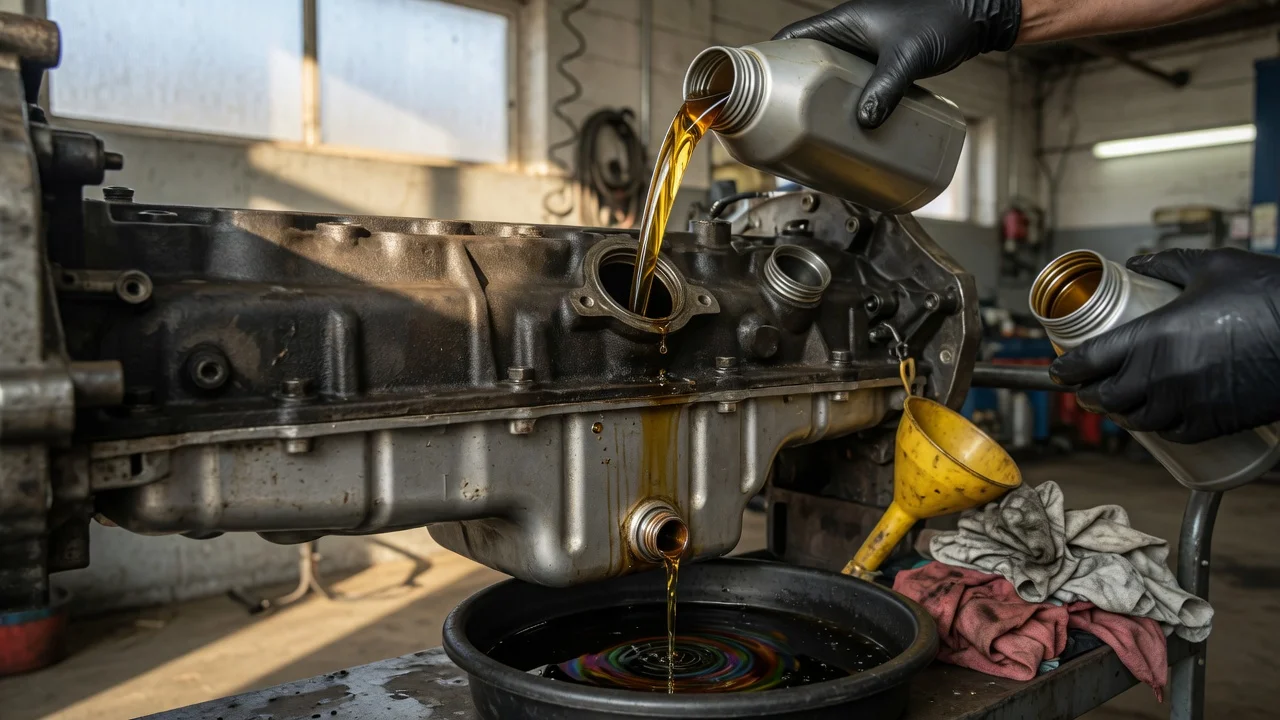
Use the oil-change fill figure from the manual, not the total system capacity, as your starting amount. Add somewhat less than the full amount, run the engine briefly, then shut it down and let the oil settle before checking. Park on level ground before reading the dipstick, and follow the manual's guidance on how long to wait after shutdown. Top up in small amounts until the level is within the marked range on the dipstick. Use oil that meets the specification listed for your engine and model year. Volvo diesel oil standards have changed over time.
What This Guide Does Not Cover
This article gives no capacity in quarts or liters, no oil viscosity or specification codes, and no exact position for labels or dipsticks on a particular truck model, because verified documentation for those details was not available. For any of these, use the operator's manual, Volvo service information, or a Volvo dealer with your engine serial number.