VIP Vehicle Inspection Services: What the Name Covers and How It Differs
The short answer
People who search for a VIP auto inspection are usually looking either for a specific business that uses "VIP" in its name or for a premium, more thorough tier of vehicle inspection. In the context of buying a vehicle, both typically point to an independent pre-purchase inspection: a third party with no stake in the sale examines a used car or truck and reports its condition before you commit to buying it.
One qualification changes how far this answer can go. No confirmed information was available about any particular company trading as VIP, so this guide cannot verify a specific provider's prices, service areas, credentials, contact details or customer reviews. It explains what this type of service generally involves and what to confirm with whichever provider you are considering.
What an independent pre-purchase inspection is
A pre-purchase inspection, often shortened to PPI, is an assessment of a used vehicle's mechanical, structural and cosmetic condition, carried out before the sale is completed. Its defining feature is independence: the inspector works for the buyer rather than for the seller or the dealership, so the findings are not shaped by an interest in closing the deal.
Many independent services are mobile. Instead of the buyer arranging to bring the vehicle to a shop, the inspector goes to wherever the vehicle is, such as a dealer lot or a private seller's home. That arrangement is especially useful when the buyer lives far from the vehicle or is buying it remotely.
What an inspection commonly covers
The scope varies by provider and by package, so the following areas are typical rather than guaranteed:
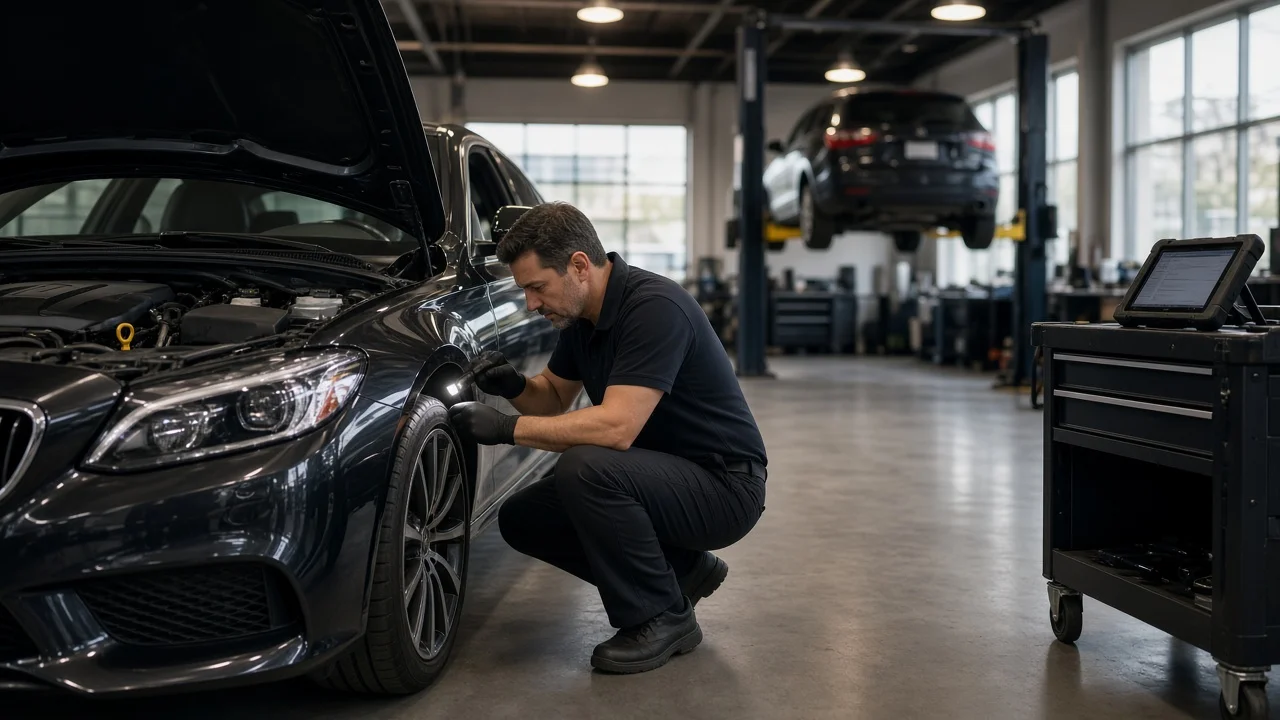
Exterior: body panels, paint consistency, panel gaps, glass, lights and tires, looking for signs of previous accident repair or rust. Interior: seats, trim, controls, climate system, infotainment and warning lights. Engine bay: fluid levels and condition, belts, hoses and visible leaks. Undercarriage: suspension, steering components, exhaust, brake lines and any frame damage or corrosion. On-board diagnostics: a scan of the vehicle's computer through the OBD-II port (the standardized diagnostic connector on cars and light trucks sold in the US since the 1996 model year) to read stored or pending trouble codes. Test drive: how the engine, transmission, brakes and steering behave on the road, where the seller permits it. Written report: findings, usually with photos, that the buyer can review and use in negotiation.
A "premium" or VIP-style package, where offered, generally means a broader checklist, more photographs or extra checks. Since what counts as premium is defined by each business rather than by any standard, ask for the exact checklist instead of relying on the label.
How it differs from a state vehicle inspection
An independent pre-purchase inspection is not the same as a state-mandated safety or emissions inspection. Whether a state inspection is required, and what it checks, depends on the state and sometimes the county. Those inspections test a vehicle against minimum legal requirements; passing one does not mean the vehicle is in good overall condition or free of costly upcoming repairs.
A pre-purchase inspection, by contrast, is voluntary and advisory. Its purpose is to help a buyer decide whether to purchase, renegotiate or walk away. It does not issue a legal pass, and it is not a warranty. Some businesses offer both kinds of service, so if you are booking with a company that uses "VIP" in its name, confirm which inspection you are actually getting.
Limits to keep in mind
An inspection is a snapshot of a vehicle's condition on a single day. It generally does not involve taking components apart, so internal engine or transmission wear may not be visible. It also complements, rather than replaces, a vehicle history report and a check of open safety recalls, both of which cover things a physical inspection cannot see, such as reported accidents, title brands or outstanding recall work.
What to confirm before booking a VIP inspection provider
Because no verified details about a specific VIP-branded provider were available, the practical next step is to put these questions to any company you are considering:
Independence: Does the inspector have any relationship with the seller or dealership? Qualifications: Who performs the inspection, and do they hold recognized credentials such as ASE (National Institute for Automotive Service Excellence) certification? Scope: What is on the checklist, and does it include a diagnostic scan, an undercarriage check and a test drive? Vehicle fit: Can they properly inspect your type of vehicle, for example a hybrid, electric vehicle, diesel truck or exotic model? Report: How is the report delivered, how soon after the inspection, and can you see a sample first? Liability: What does the provider accept responsibility for if something is missed? Price and logistics: What is the total cost, including any travel fee, and how far ahead do you need to book?
Get the seller's agreement before the inspection is scheduled, especially for a mobile inspection carried out on a dealer's premises or at a private seller's home.