VinFast Car Fire: Immediate Safety Steps
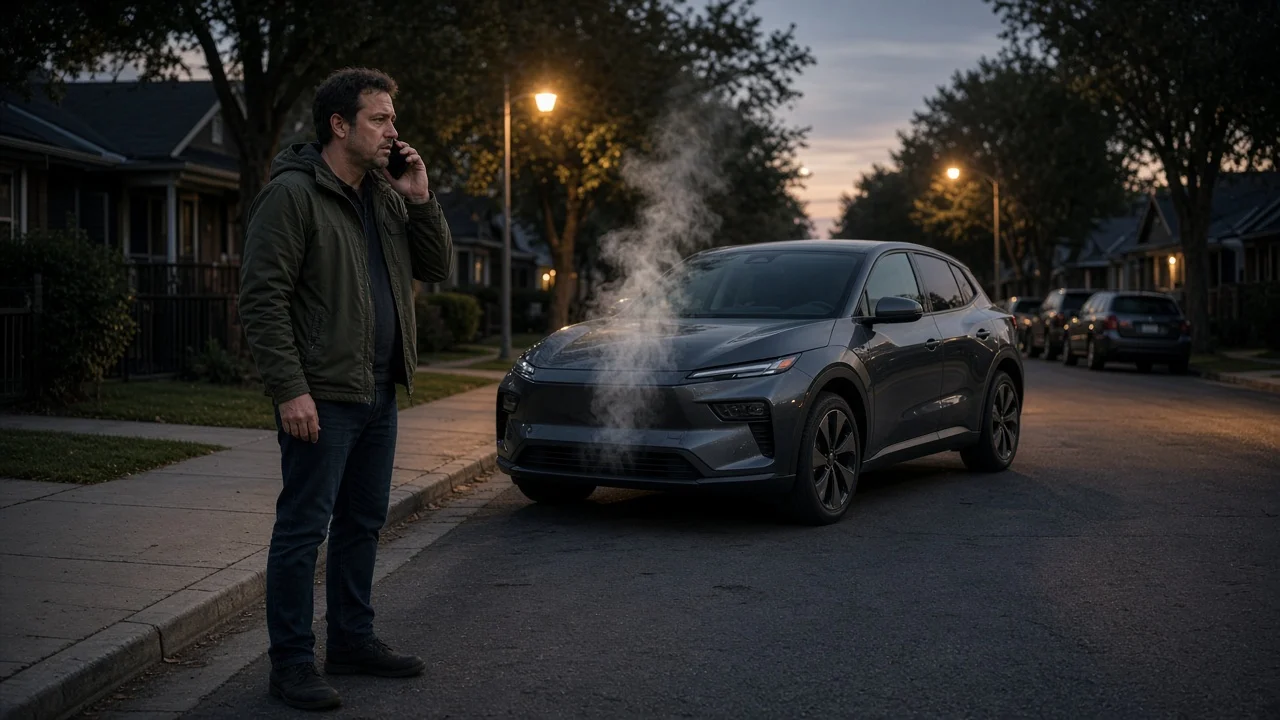
If a VinFast car is smoking or on fire, stop as soon as it is safe, switch the vehicle off, get everyone out, move well away and call emergency services. Do not try to put out a fire that involves the high-voltage battery yourself. The first priority is safe evacuation, not saving the car or anything inside it. The rest of this guide explains why each step matters for a battery-electric vehicle, when a portable extinguisher is or is not appropriate, and what to do once the fire is out.
Scope: which VinFast vehicles this applies to
VinFast sells battery-electric SUVs in the US market, so this guide focuses on EV fire response. VinFast has also built gasoline models for other markets. The basic steps are the same for any car fire: stop, get out, get away and call for help. What differs is the nature of the fire. A lithium-ion traction battery can keep heating itself, release toxic and flammable gases, and reignite hours or even days later. Model-specific details vary by model, model year and market. Examples include emergency shut-off locations, battery placement and first-responder guidance. Treat the owner's manual and VinFast's own guidance for your vehicle as the authority on those details.
Immediate steps if you see smoke or fire
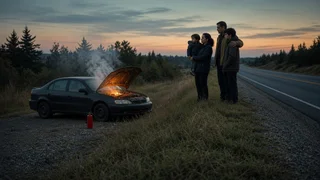
1) Signal and pull over as soon as it is safe. Choose an open area away from buildings, fuel pumps, dry grass and other vehicles where possible. Do not pull into a garage, tunnel or parking structure. 2) Put the vehicle in Park and switch it off. Do this only if it takes no more than a moment. Shutting the car down reduces the chance of the drive system or climate system feeding the problem, but it does not make the battery safe. 3) Get everyone out immediately. Help children, older passengers and pets first. Leave bags, phones in cradles and other belongings unless they are already in hand. 4) Move away and stay upwind. Battery smoke is toxic. Keep a generous distance; responders commonly advise at least 100 feet for vehicle fires and more if the battery is involved. Keep people away from the front and rear of the car and out of traffic lanes. 5) Call 911. Say that it is an electric vehicle and give the make and model (for example, a VinFast VF 8 or VF 9). Give your exact location and say whether anyone is injured or still near the car. 6) Warn others. Use hazard lights if you activated them before leaving the car, and keep bystanders back. Do not return to the vehicle for any reason. 7) Wait for emergency services and follow their instructions. Tell them anything you noticed beforehand, such as warning messages, a recent collision or a charging session.
Completion check: everyone is out, accounted for and upwind at a safe distance; emergency services have been told it is an EV; and nobody is approaching the car.
Warning signs that should make you stop
A battery problem does not always start with visible flames. Treat any of the following as a reason to pull over and get out rather than continuing to a destination:
Smoke from under the car, the wheel wells, the vents or the front trunk area; A sharp chemical, sweet or acrid smell inside or around the vehicle; Hissing, popping or crackling sounds, which can indicate battery cells venting gas; A battery, high-voltage system or overheating warning on the display; Sudden loss of power combined with any of the signs above; Smoke or heat after hitting debris, a curb or deep water with the underbody
If the car shows a high-voltage or battery warning without smoke, follow the instructions in the warning message and the owner's manual. Contact VinFast roadside assistance or service. Do not ignore it and keep driving.
Why an EV battery fire is different
Every fire needs heat, fuel and oxygen. In a gasoline car the main combustible material is fuel, plus plastics, upholstery and fluids. In an EV the ignition source is often the battery itself. Damage, a manufacturing defect or an electrical fault can cause thermal runaway, a chain reaction in which one overheating cell heats its neighbors. This process generates its own heat and releases flammable gases. As a result, it can be very hard to stop from outside the pack.
This explains several of the steps above. Battery fires can flare suddenly or produce jets of flame from vents, so distance matters. The smoke can contain hazardous compounds, so staying upwind matters. Fire crews may need large amounts of water, extended cooling or specialized methods. Telling them it is an EV helps them plan. Even after flames are gone, damaged cells can heat up again and reignite later.
Should you use a fire extinguisher?
A portable extinguisher is not a tool for fighting an EV battery fire. It will not stop thermal runaway, and staying near the car puts you at risk. A small extinguisher may be useful only for a very small, early fire that clearly does not involve the battery, such as burning debris on the road or a small item burning on the cabin floor. Even then, you should have a clear escape path and step back the moment it does not go out at once.
Situation | Reasonable action; Smoke from under the floor, battery area or vents | Evacuate and call 911; do not attempt to extinguish; Hissing, popping or flames from the underbody | Evacuate, move upwind, call 911; Small, isolated item burning in the cabin, battery not involved | Use an extinguisher only if trained and it is safe; otherwise evacuate; Fire spreading or you are unsure of the source | Evacuate and call 911
If you carry an extinguisher, check its fire extinguisher rating on the label. In the US, Class A covers ordinary combustibles such as fabric and paper, Class B covers flammable liquids, and Class C indicates the agent is safe on energized electrical equipment. A multipurpose ABC unit covers the common small-fire scenarios in a car. None of these ratings means the extinguisher can put out a lithium-ion traction battery fire.
Electrical isolation: leave it to responders
EVs carry high voltage in orange-sheathed cables and in the battery pack. Electrical isolation means disconnecting the high-voltage system so it can be handled safely. That is a job for trained firefighters and technicians who follow manufacturer emergency-response procedures. As a driver, switching the car off is enough. Do not open the hood or front trunk to look for a disconnect. Do not cut cables or touch a damaged vehicle that may be energized.
If the fire starts while charging
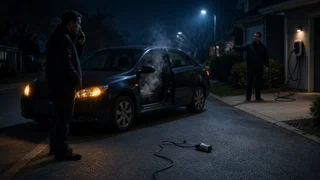
If you notice smoke, heat or a burning smell during charging, get people away from the car first. At a public charger, use the station's emergency stop if it is easy and safe to reach, then move away and call 911. At home, do not unplug a connector that is hot, melting or smoking. If the home charger is on a dedicated circuit and the panel is away from the fire, switching off that breaker is reasonable. Do not enter a smoke-filled garage to do it. Leave the building and call for help.
After the fire is out
Do not drive the car or try to restart it. Treat a vehicle with any fire or heat damage near the battery as unsafe until VinFast or a qualified EV technician has inspected it. Arrange flatbed transport. Tell the towing company it is an EV that has been involved in a fire. Fire-damaged EVs should generally be stored outdoors, away from buildings and other vehicles, because of the reignition risk. Contact VinFast customer support or roadside assistance so the incident is recorded and they can advise on inspection. Notify your insurer and keep the fire department's incident details. If you suspect a vehicle defect, you can file a safety complaint with the National Highway Traffic Safety Administration (NHTSA), which reviews complaints when deciding whether to investigate or seek a recall. Seek medical attention for anyone who inhaled smoke, even if symptoms seem mild.
Reducing the risk before anything happens
Check for open recalls on your VinFast using its VIN and have any recall work completed promptly. Have the underbody and battery inspected after a hard impact, curb strike or driving through deep water. Use charging equipment that is properly rated and installed, and avoid household extension cords for charging. Do not ignore high-voltage or battery warnings. Know how to exit the car manually if the electronic door releases stop working, and find the manual release locations in the owner's manual before you need them.
The core rule does not change with the model or the situation: people come before the car. Get out, get away, stay upwind, call 911 and tell responders it is an electric vehicle.