Valvoline CVT Full Synthetic Transmission Fluid: What to Check Before You Buy
The Short Answer
Valvoline CVT full synthetic continuously variable transmission fluid is a multi-vehicle fluid for belt-type and chain-type CVTs. It can be a reasonable choice when the current label or product listing names the exact fluid specification your owner's manual requires. If your vehicle's specification is not listed, or is listed as excluded, use the fluid the manufacturer specifies instead. Do not use it in a conventional automatic, a dual-clutch transmission or a manual gearbox.
In short, "CVT" on the bottle does not settle compatibility. The specification code in your manual does.
What This Fluid Is For
A continuously variable transmission changes ratio smoothly. It does not step between fixed gears. In most CVTs, a steel belt or chain runs between two variable-width pulleys, and the fluid has to do more than lubricate. It needs carefully controlled friction so the belt or chain can grip the pulleys without slipping. It also has to work with the transmission's hydraulic controls and any lock-up clutch.
Because each manufacturer tunes its transmission around a particular friction behavior, CVT fluids are not interchangeable the way many people assume. A multi-vehicle CVT fluid such as Valvoline's full synthetic product is formulated to meet the needs of a range of CVT designs. Full synthetic describes the base oil type. It does not guarantee that the fluid meets any specific carmaker's requirement.
Step 1: Confirm Your Transmission Type
Before comparing fluids, confirm that your vehicle actually has a belt-type or chain-type CVT. Your owner's manual, window sticker, build sheet or a VIN decode can confirm this. Model year, trim, engine and market all matter, because the same model name can come with different transmissions.
Belt-type or chain-type CVT: this is the intended application for a CVT fluid, if the specification matches. Hybrid "eCVT" or power-split transmission: many of these use planetary gears and electric motors, not belts and pulleys. They often call for a different fluid type. Check the manual rather than assuming a CVT fluid applies. Conventional stepped automatic: this needs the automatic transmission fluid (ATF) the manual specifies, not CVT fluid. Dual-clutch transmission: this uses its own dedicated fluid type. Manual transmission: this uses gear oil or a manual transmission fluid, as specified.
Step 2: Match the Fluid Specification
Carmakers identify CVT fluid by a specification name. Common examples include Nissan's NS-2 or NS-3, Honda's HCF-2, Toyota's CVT Fluid TC or FE, and Subaru's CVT fluid designations. Find the exact name for your vehicle in the owner's manual's capacities and fluids section, or in the service information. Then compare it with what the Valvoline bottle or product page says.
Read the recommended-for list on the current packaging, not an old photo or a listing that might be out of date. Look for exclusions. Multi-vehicle fluids often state which transmissions or specifications they should not be used in. Note whether the label says the fluid "meets" a specification or is "recommended for use" in vehicles needing it. Some carmakers license their specifications, and these phrases may not mean the same thing. If the label lists only some of the specifications your manufacturer used across model years, confirm which one applies to your exact year and powertrain.
If you cannot match your specification clearly, the lower-risk choice is the carmaker's own fluid or a fluid that explicitly names your specification. A wrong fluid in a CVT can show up as judder, slipping or abnormal shift behavior. Over time it can contribute to belt and pulley wear.
Warranty and Service History Considerations
In the US, federal warranty law generally prevents a manufacturer from denying warranty coverage simply because you used an aftermarket fluid, unless it supplies that fluid free of charge. However, the manufacturer can deny a claim if it shows the fluid caused the damage. While a vehicle is under powertrain warranty, many owners choose the carmaker's fluid to avoid any dispute.
Whichever fluid you choose, keep records. Save receipts showing the product name and quantity, and note the date and mileage of each service. A clear service history helps with warranty questions and with resale.
Buying Checklist
What to check | Why it matters | Where to find it; Transmission type | CVT fluid suits only belt-type or chain-type CVTs | Owner's manual, VIN decode, build sheet; Required fluid specification | This is the real compatibility test | Owner's manual fluids section, service information; Label recommendations and exclusions | Multi-vehicle fluids do not cover every CVT | Current bottle or product page; Quantity needed | Drain-and-fill amounts differ from total capacity | Service information for your exact powertrain; Service procedure | Many CVTs check level by temperature at a fill plug, with no dipstick | Service information or a qualified shop; Warranty status | This affects how cautious to be about non-OEM fluid | Warranty booklet, purchase date and mileage
How Much to Buy and How the Service Works
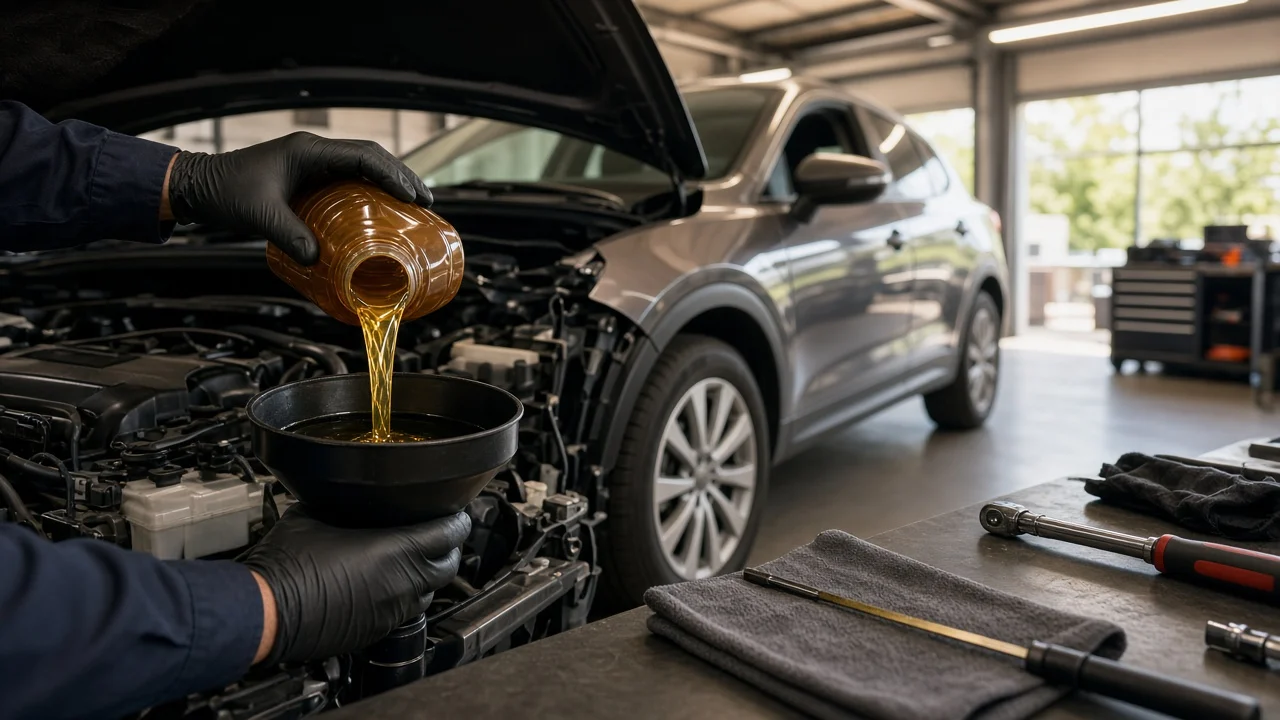
Buy based on the drain-and-fill quantity for your specific transmission, not the total system capacity. A typical drain and refill replaces only part of the fluid, because some stays in the torque converter, cooler and lines. Some owners or shops repeat the drain-and-fill to raise the share of fresh fluid. Buying a little extra also covers spills and getting the level right.
Many CVTs have no conventional dipstick. The correct level is often checked at an overflow or fill plug, with the fluid in a set temperature range and the engine running. Some vehicles also need a scan tool to read fluid temperature, or to reset a fluid deterioration counter after the service. If you do not have the procedure and tools for your vehicle, a shop visit may cost less than fixing an overfill or underfill.
Avoid topping up with a different CVT fluid from the one already in the transmission unless both fluids clearly suit your specification. Mixed or incorrect fluids make problems harder to diagnose.
If You Are Changing Fluid Because of a Symptom
Fresh fluid can help when the old fluid is degraded, low or the wrong type. It will not repair worn pulleys, a damaged belt or chain, failed solenoids or a faulty valve body. Before you treat a fluid change as the fix, consider what the transmission is actually doing.
Shudder or judder on light acceleration: this may relate to fluid condition or type, but can also point to torque converter or lock-up issues. Whining or droning that changes with speed: this can indicate bearing, pulley or belt wear that fluid alone will not fix. Slipping, flaring RPM or delayed engagement: check the fluid level first, then have the transmission diagnosed. Warning light or reduced-power mode: read the stored diagnostic codes before servicing. Codes for pressure, ratio, speed sensors or fluid temperature help separate a fluid problem from an electrical or mechanical one.
Repair options range from a correct-specification fluid service, software updates and sensor or solenoid replacement, up to a rebuilt or replacement transmission. If your CVT has high mileage and no record of fluid changes, talk to a transmission specialist about the risks and benefits before servicing. That is especially true if the vehicle already shows symptoms.
Making the Decision
Choose Valvoline CVT full synthetic fluid if all four of these are true: • Your vehicle has a belt-type or chain-type CVT. • The current label names your manual's exact fluid specification. • Your transmission is not on the exclusion list. • You are comfortable with your warranty position. If any of those points is unclear, use the carmaker's specified fluid, or ask a dealer or transmission shop to confirm the specification for your exact model year, trim and powertrain before you buy.