Valvoline 75W-140 Synthetic Gear Oil: Is It Right for Your Axle?
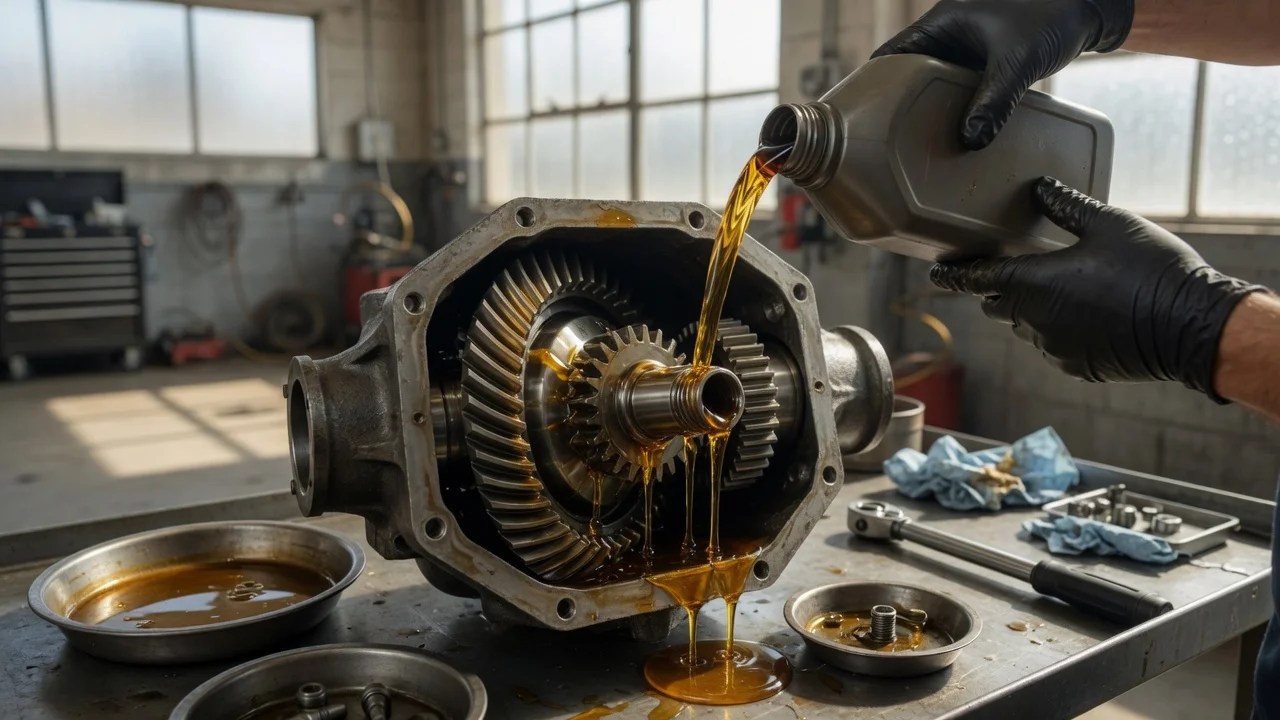
The short answer
Valvoline's 75W-140 synthetic gear oil is a heavy-grade lubricant for differentials and axles. It suits a vehicle only if that vehicle's maker calls for a 75W-140 gear oil in that specific component. Three things can change the answer. The first is your owner's manual or axle tag, which may specify a lighter grade. The second is whether your differential is a limited-slip unit that needs a friction modifier. The third is whether the manufacturer requires a particular performance rating. Check all three before buying.
What 75W-140 means
Gear oil viscosity grades use two numbers. The figure before the W (for winter) describes how the oil behaves at low temperatures. A 75W rating means the oil is meant to flow reasonably well in cold starts. The second figure, 140, describes thickness at normal operating temperature. A 140 grade is among the heaviest common gear oil grades, so the oil keeps a thicker film when it is hot. This is why 75W-140 is often associated with towing, hauling and other heavy loads that raise differential temperatures.
Thicker is not automatically better. If a vehicle was designed for a lighter gear oil, such as 75W-90 or 75W-85, switching to 75W-140 without guidance from the manufacturer can affect efficiency and how the axle was meant to be lubricated. Use the grade your vehicle specifies.
How to confirm it fits your vehicle
Find the gear oil specification for the exact component, such as the front axle, rear axle or transfer case. Do not rely on the vehicle model alone. Match the model year, market, trim and axle option. Gear oil requirements can differ within one model line, especially between standard and towing or heavy-duty packages. Check whether the manual lists a separate grade or service interval for towing or severe use. Confirm the performance rating the manufacturer requires, such as an API GL category, and check that the product label lists it. If the differential is a limited-slip type, check whether the manual requires a friction modifier additive. Then check whether the product already contains one or whether it must be added separately.
Limited-slip differentials
A limited-slip differential uses clutches or similar parts to send torque to the wheel with more grip. Many of these units need a friction modifier in the gear oil to work smoothly. Without it, they can chatter or make noise on tight turns. Some gear oils include a friction modifier and some do not. Read the label of the Valvoline product you are considering, and compare it with your vehicle's requirement, before using it in a limited-slip axle.
What this guide cannot confirm
No product data sheet, price, fill capacity or vehicle application list was available for this guide. That means it cannot confirm several things: the exact performance ratings on the current Valvoline 75W-140 label, whether it contains a friction modifier, how it compares with other brands, or which specific vehicles call for it. Use the product label or data sheet and your vehicle's documentation to settle these points. A dealer parts department or a trusted mechanic can confirm the requirement for your exact axle.