Valve seal oil treatment
Can an oil treatment fix leaking valve seals?
A valve-seal oil treatment can sometimes reduce oil burning when the valve stem seals are still in place but have shrunk, hardened, or lost elasticity. It will not restore a torn, cracked-through, or missing seal, and it will not repair worn valve guides, worn piston rings, or a crankcase-ventilation fault that produces similar smoke and oil use. If the main symptom is a short puff of blue-gray smoke on startup after the engine has sat, a treatment is a reasonable short-term try. Ongoing smoke under load, heavy oil consumption, or misfires usually need mechanical diagnosis and often seal replacement.
What valve stem seals do
Each intake and exhaust valve stem slides in a guide in the cylinder head. A small rubber or elastomer seal at the top of that guide meters a thin film of oil onto the stem and keeps the rest of the oil in the valvetrain from being drawn into the combustion chamber. When the seal ages, heat and oil chemistry can make it shrink or harden, so more oil slips past the stem. Intake vacuum then pulls that oil in, especially after the engine has been sitting and oil has pooled around the seals.
What the treatment is meant to do
Products sold as valve-seal treatments, stop-leak additives, or seal conditioners typically rely on seal-swell chemistry. The idea is that certain solvents and esters in the oil soak into remaining rubber and cause it to plump slightly, closing the gap around the stem. Some formulas also thicken the oil film so less oil migrates past a worn seal. That only works if enough of the original seal is still there and still able to swell. A treatment is an oil-additive workaround, not a rebuilt seal.
Symptoms that point toward valve seals
Blue or gray smoke for a few seconds on cold start, then the exhaust clears; Smoke on overrun or deceleration, when intake vacuum is high; Oil use with relatively even consumption and no large external leaks; Fouled spark plugs, especially on engines that sit between short trips; A burnt-oil smell without a corresponding coolant loss or milky oil
Those clues are suggestive, not proof. Piston rings, turbocharger seals, a stuck PCV valve, and a leaking valve-cover gasket that drips onto a hot exhaust can look similar. A treatment will not sort those other faults, so it is worth ruling them out before treating the oil as the fix.
When a treatment is a reasonable next step
A treatment is most plausible on an older engine that still runs evenly, does not smoke hard under acceleration, and mainly puffs on startup. It is also a stopgap when the head work to replace seals is not practical right away. Follow the product’s mix ratio and oil-change interval; overdosing can affect oil viscosity and wet-clutch or hydraulic-lifter behavior on some designs. Use it in the oil that already matches the engine maker’s viscosity and specification for that model year, market, and powertrain. If the owner’s literature forbids aftermarket oil additives, treat that as the controlling instruction.
When it will not help
Seals that are torn, brittle and broken, or already missing; Worn valve guides that leave a large clearance the seal cannot close; Ring or cylinder wear, which usually smokes more under load and can foul plugs with heavier oil; Turbocharger oil-seal failure, often with smoke that tracks boost or shutdown soak; A blocked or stuck PCV system pushing oil past the rings or into the intake
If smoke is dense, continuous, or getting worse after a treatment and an oil change, the remaining rubber is not the limiting factor. Continuing to add conditioner will not reverse mechanical wear.
How this differs from replacing the seals
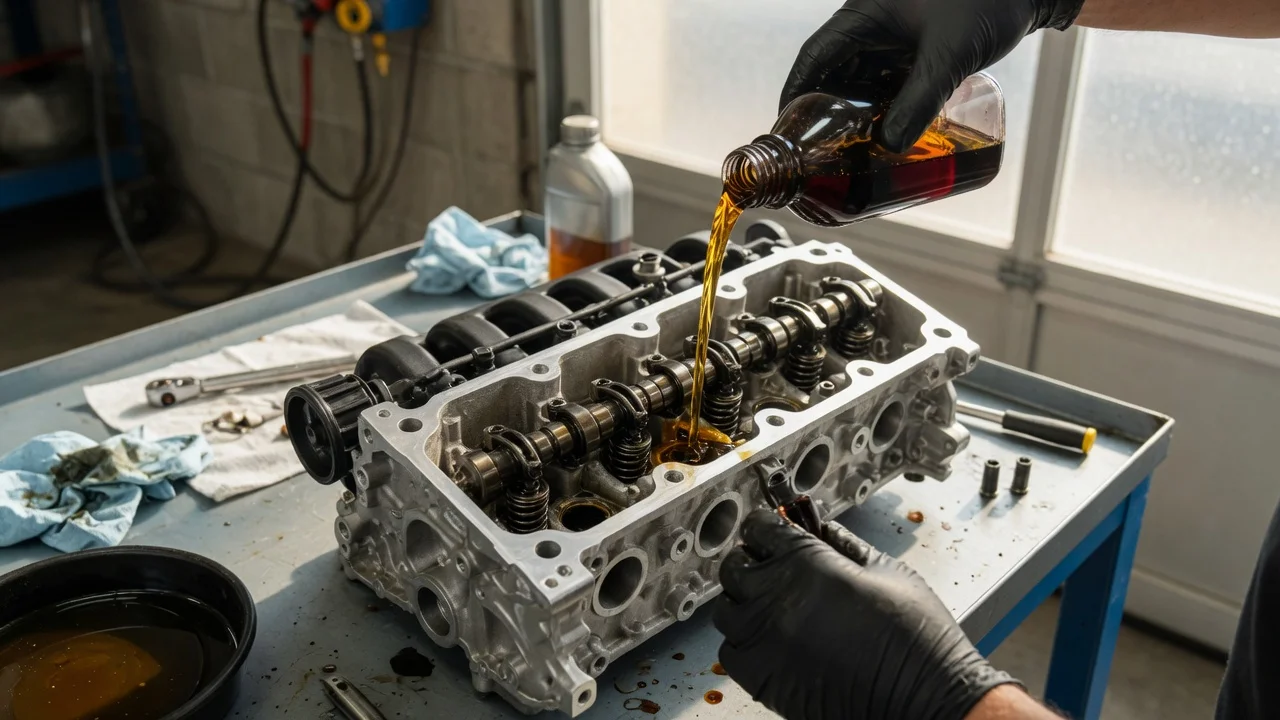
Replacing valve stem seals restores the metering lip itself. On many engines that job means removing the valve cover, supporting the valves so they do not drop, compressing the springs, and fitting new seals on each guide. Some layouts need the cylinder head off. Guides, seats, and valve-stem wear should be checked at the same time, because a new seal on a worn guide will not last. A treatment buys time; replacement is the lasting repair when the seals have actually failed.
Choosing a next step
Confirm oil level and look for external leaks, coolant in the oil, and PCV operation first. If the pattern still matches sitting-then-startup smoke and the engine is otherwise healthy, one correctly dosed treatment in a fresh oil fill is a low-disruption trial. Recheck oil level and exhaust after a short period of mixed driving. If consumption and smoke drop, the seals were likely shrunk rather than destroyed, and you can plan replacement on a normal service schedule. If nothing changes, stop treating the oil as the solution and have the valvetrain, guides, rings, and any turbo seals inspected. Exact labor, parts, and whether the head must come off depend on the engine family and model year; those details need a shop or parts lookup for that specific vehicle.
What this article cannot pin down
No product names, mix ratios, prices, oil-consumption rates, or test results are given here, and no particular additive has been verified against a named engine. Compatibility still depends on seal material, oil specification, and the maker’s rules for that trim and powertrain. If those details are unknown, treat any additive as optional and confirm against the vehicle’s oil specification before pouring it in.