UTV Safety Inspection in Utah: When It Applies and What to Expect
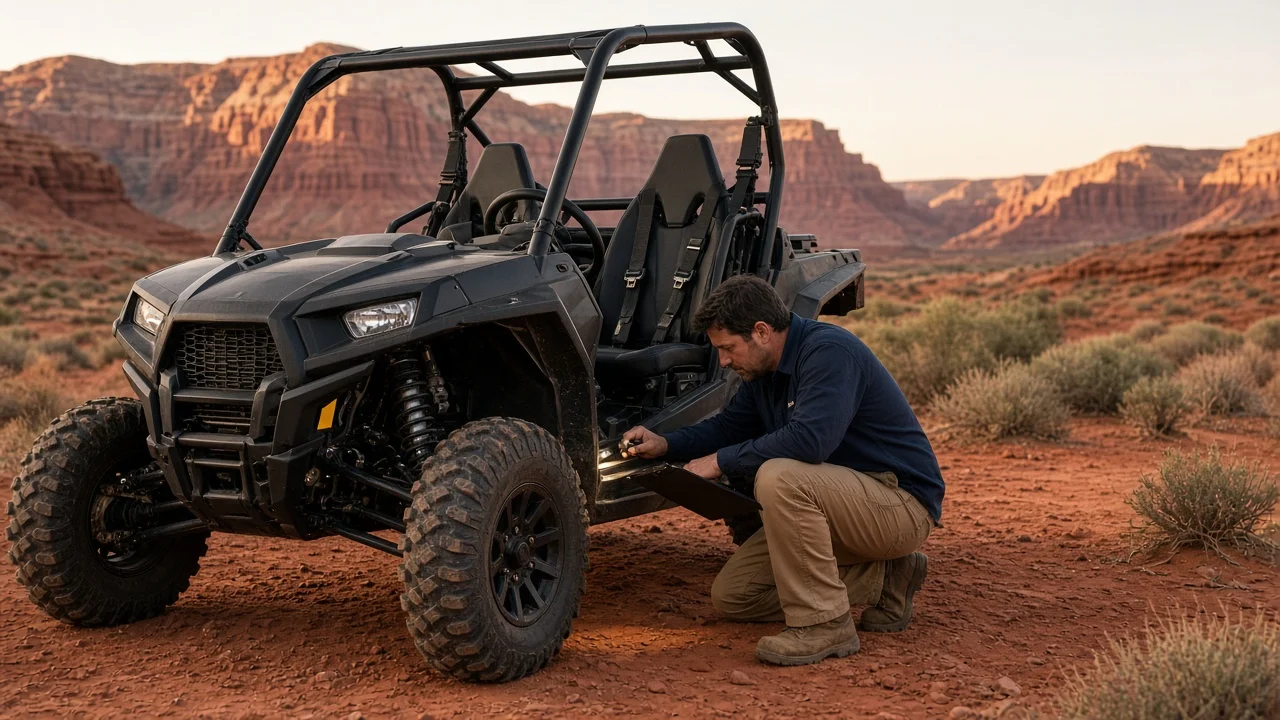
If you own a UTV (utility task vehicle, also called a side-by-side) in Utah, whether it needs a safety inspection depends almost entirely on where you plan to drive it. A UTV registered only for off-highway use on trails and designated OHV routes does not go through a safety inspection. A UTV you want to register as street legal for use on public roads must meet Utah's street-legal equipment requirements, and that process is where an inspection or equipment certification comes in. This guide explains the difference, what an inspection typically covers, and what to do next.
The Short Answer
Utah ended mandatory periodic safety inspections for most passenger vehicles in 2018, so there is no annual safety inspection requirement for ordinary cars and trucks. UTVs follow their own path. For off-highway registration, no safety inspection is part of the process. For street-legal registration, the vehicle must be equipped to the standards Utah sets for street-legal all-terrain vehicles, and an authorized inspection station confirms that equipment before the Division of Motor Vehicles (DMV) will register it for road use. Because forms and procedures can change, confirm the current street-legal steps with the Utah DMV before you start buying parts.
Trail-Only vs. Street-Legal: Why the Distinction Matters
Situation | Safety inspection involved? | What usually applies; UTV used only on trails, OHV areas and designated OHV routes | No | Off-highway vehicle registration and decal; UTV being converted to street-legal use on public roads | Yes, as an equipment inspection or certification | Required street-legal equipment, inspection at an authorized station, highway registration, insurance and plates; Street-legal UTV renewing its registration | Generally not as a recurring annual inspection, but rules can differ by county and vehicle status | Registration renewal; check whether any county emissions rule applies; UTV with a salvage or rebuilt title being registered for road use | Likely additional scrutiny | Utah still requires safety inspections for salvage-title vehicles registered for highway use
Utah's statutes generally group UTVs under the broader all-terrain vehicle (ATV) and off-highway vehicle (OHV) categories, so you will often see street-legal UTV rules described as street-legal ATV rules. In practice, most of the inspection discussion applies to side-by-sides as well.
What a Street-Legal UTV Inspection Typically Checks
The inspection criteria focus on whether the UTV has the equipment a road vehicle needs to be seen, signal its intentions, stop and keep the driver protected. Many factory UTVs lack some of these items, so owners often add aftermarket kits before the inspection. Typical items include:
Headlights that provide high and low beam; Taillights and brake lights; Front and rear turn signals; A rear reflector; A horn audible to other road users; Mirrors giving a view to the rear; A windshield, or eye protection worn by the operator where the rules allow it; A working muffler that keeps noise within legal limits; A speedometer; Functioning brakes; Tires in roadworthy condition suitable for pavement
Treat this as a general overview rather than a complete legal checklist. The exact list, and details such as whether particular tire types or seat belts are required, are set by Utah law and DMV guidance and can be revised. Ask the inspection station what it will check before you go.
Vehicle Identification and Paperwork
Expect the inspection and registration process to involve vehicle identification. The inspector or DMV will usually compare the vehicle identification number (VIN) on the frame with your title or ownership documents. This matters most if the UTV was bought out of state, was previously registered only as an OHV, or has a branded title.
Bring the title or other proof of ownership, proof of insurance that meets Utah's requirements for street-legal use, and a valid driver license. After a successful inspection, the station provides a certificate or signed certification form, which acts as your test certificate for the DMV. Keep it with your registration paperwork until the vehicle is registered.
Does a UTV Need an Emissions Test in Utah?
Utah's emissions testing is run at the county level, and only certain counties, mainly along the Wasatch Front and in Cache County, require it for some vehicles. Off-highway-only UTVs are not part of those programs. For street-legal UTVs, whether an emissions test applies depends on the county where the vehicle is registered and how the county program classifies it. A safety inspection and an emissions test are separate requirements. Passing one does not satisfy the other, so check with your county's emissions program if you live in a testing county.
If the UTV Fails: Repairs and Retest
If something is missing or not working, the station will tell you which items failed. Fix or install those components and return for a retest. Common reasons for failure include turn signals wired incorrectly, a horn that is too weak, mirrors that do not give a useful rear view, and worn or unsuitable tires. Ask the station up front whether a retest carries a fee and how long you have to come back, since policies vary between stations.
Practical Next Steps
Decide whether you need street-legal status or whether off-highway registration covers how you ride. If you want street-legal status, review the current Utah DMV requirements for street-legal ATVs and UTVs. Compare your UTV's existing equipment with the required items and install anything missing. Find an authorized inspection station that handles street-legal OHV inspections and ask what it checks. Bring your title, proof of insurance and identification to the inspection. Take the inspection certificate to the DMV to complete highway registration, and check whether your county requires an emissions test. Once registered, learn which roads street-legal UTVs may use, because Utah limits their use on higher-speed highways and interstates.
For most riders who stay on trails, a Utah UTV safety inspection is not part of ownership at all. For those who want to drive on public roads, the inspection is a one-time gate that confirms the side-by-side has the lighting, signaling, braking and visibility equipment a road vehicle needs.