Electric UTVs and Side-by-Sides: What to Check Before You Buy
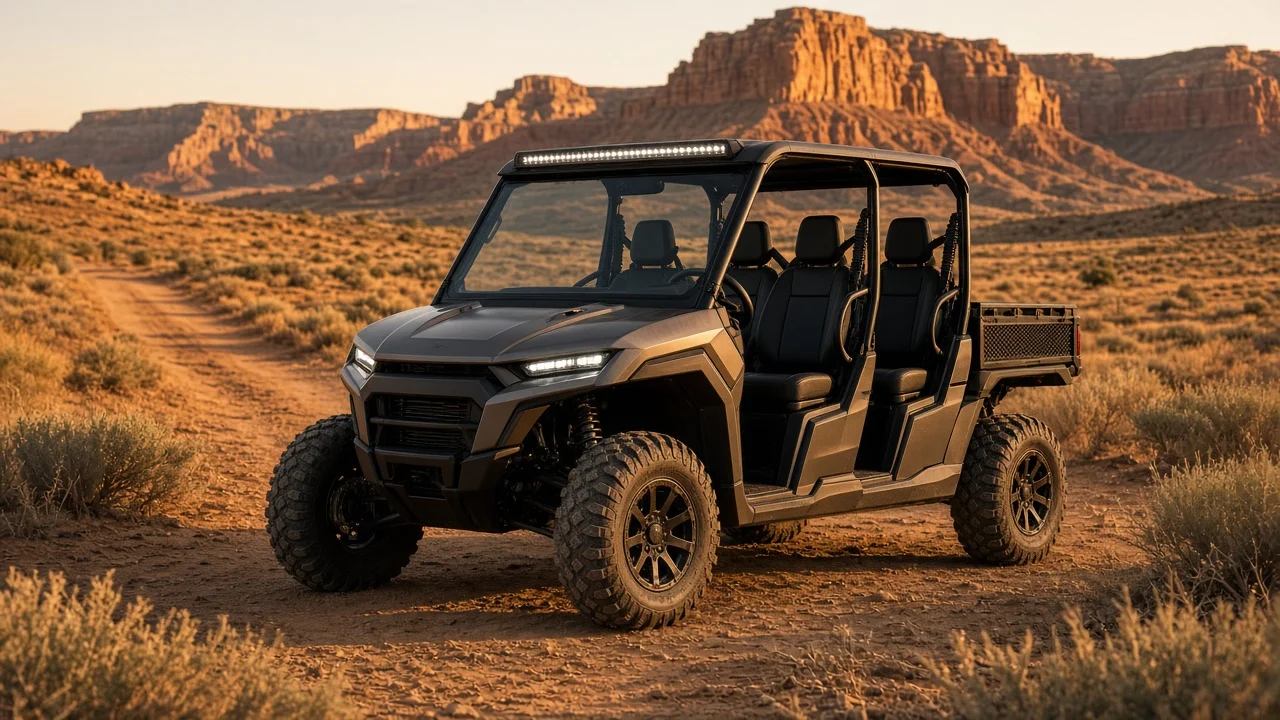
An electric side-by-side can be a strong choice when your typical day stays within its real-world range and you can recharge reliably between uses. Property work, farm and ranch chores, hunting access, campgrounds, worksites and shorter trail loops tend to suit electric power well. It becomes a harder fit if you regularly cover long distances far from charging, tow heavy loads for extended periods, ride in deep cold, or need to refuel quickly in the field. The rest of this guide explains how to check whether a specific electric off-road UTV matches the way you will actually use it.
UTV, side-by-side and ATV: clearing up the terms
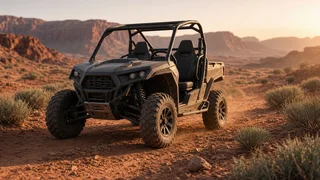
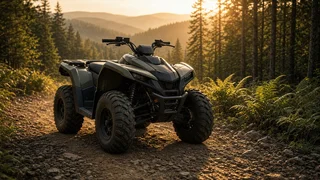
Many shoppers search for an electric side-by-side ATV, but the two vehicle types differ. An ATV (all-terrain vehicle, often called a quad) has a straddle seat and handlebars and is usually ridden by one person. A side-by-side, also called a UTV (utility task vehicle) or SxS, has seats next to each other, a steering wheel, foot pedals, seat belts and usually a roll-over protection structure. Within side-by-sides, manufacturers often separate utility-focused models, built around cargo beds and towing, from sport or recreation models, built around suspension travel and speed. Some electric models aim at the crossover between the two. Knowing which category a model belongs to helps you compare it fairly.
When an electric side-by-side makes sense, and when it may not
Electric drivetrains offer quiet operation, instant torque from a standstill, no exhaust at the point of use, and fewer routine fluid services than a gas engine. These traits matter most in specific situations: quiet movement near livestock or game, use in barns and enclosed spaces where exhaust is a concern, early-morning work near neighbors, and short, repeated trips where a gas engine would rarely warm up properly.
The trade-offs center on energy. A battery stores less usable energy than a full fuel tank of similar weight, recharging takes far longer than refueling, and range drops with load, speed, steep or soft terrain, low temperatures and accessory use. If your use involves remote multi-hour trail rides, sustained high-speed running, or heavy towing over long distances, a gas or diesel machine, or a hybrid if one suits your needs, may still be the more practical choice.
Use case | Electric suitability | What to prioritize; Farm, ranch and acreage chores | Often a good fit | Payload, bed capacity, towing, overnight charging location; Hunting and wildlife access | Often a good fit | Quiet operation, range in cold weather, ground clearance, traction; Campgrounds, resorts and facilities | Often a good fit | Seating, low-speed control, charging fleet logistics, street-legal options if needed; Worksites and industrial yards | Depends on shift length | Range per shift, charging between shifts, durability, cargo handling; Short recreational trail loops | Can fit well | Suspension, drive configuration, range margin for the full loop; Long remote trail days or overlanding | Harder fit | Real-world range at speed and load, field charging options, recovery equipment; Sustained heavy towing | Harder fit | Rated towing capacity, range impact under load, thermal management
Range: read the rating, then estimate your own
Manufacturers publish range figures, but there is no single universal testing standard for off-road vehicles, and claims are often based on favorable conditions. When comparing models, ask what conditions the range figure assumes: speed, payload, terrain, temperature and drive mode. A figure measured on flat ground with one occupant can differ substantially from what you see climbing hills with a loaded bed.
To estimate your own needs, map a typical day: how far you travel, how much of it is uphill or on mud and sand, what you carry or tow, and how cold it gets. Then build in a reserve. Running a battery close to empty in a remote location leaves you with few options, so plan for a margin rather than matching the advertised figure to your route length.
Factors that reduce range: Heavy payload or towing; Sustained higher speeds; Steep climbs, soft sand, mud and deep snow; Cold temperatures, which reduce available battery capacity; Larger, heavier or more aggressive tires than stock; Accessories such as cab heaters, winches, light bars and audio; Frequent hard acceleration
Battery: chemistry, capacity, temperature and warranty
Battery capacity is usually stated in kilowatt-hours (kWh). Check whether the figure is total or usable capacity, since some of the total is held back to protect battery life. Some low-speed utility electrics still use lead-acid batteries, which are heavier, need more maintenance and typically deliver less range per pound. Many newer performance-oriented models use lithium-ion batteries, which are lighter and largely maintenance-free but cost more to replace.
Ask how the battery is protected from heat and cold. Thermal management, whether active heating and cooling or passive design, affects charging speed, power availability on hot climbs and capacity in winter. If you ride in freezing conditions, check the manufacturer's guidance on charging below freezing, since charging lithium cells when very cold can be restricted or require preheating.
Read the battery warranty separately from the vehicle warranty. Look for the coverage period, any usage or mileage limits, the capacity threshold that triggers a claim, and whether coverage transfers to a second owner. Battery replacement is often the single largest potential ownership cost on an electric side-by-side, so this section deserves careful reading.
Charging: where, how and how fast
Before buying, confirm how the vehicle charges and whether your property supports it. Some models charge from a standard household outlet, while others benefit from or require a 240-volt circuit or a Level 2 charger. Charging time depends on battery size, the onboard charger's power rating and the supply you connect to. Ask for charging time estimates tied to the specific outlet type you will use, not just the fastest possible figure.
Charging questions to answer: Which outlet or charger type the vehicle supports, and which connector it uses; Whether a 240-volt circuit is recommended, and whether you need an electrician to add one; Where the vehicle will be parked and charged, including weather protection; Whether the vehicle can charge from a public EV charger, if you plan to trailer it to trailheads; Whether portable generator or field charging is supported or discouraged by the manufacturer; Recommended storage charge level for off-season periods
Drive configuration and traction
Drive configuration describes which wheels receive power and how. Common setups include two-wheel drive, selectable four-wheel drive and full-time all-wheel drive. Electric UTVs may use a single motor driving both axles through a drivetrain, or separate motors on each axle. Dual-motor designs can allow precise torque control between front and rear, while single-motor designs may be simpler.
Traction is the grip between the tires and the surface. Electric motors deliver strong torque from a standstill, which helps on climbs but can also spin tires on loose ground if not managed well. Check whether the model offers locking differentials, electronic traction control, selectable drive modes, hill descent control and regenerative braking settings. Regenerative braking, which slows the vehicle by using the motor to recover energy, can help on descents, but its feel and adjustability vary between models.
Ground clearance, suspension and terrain
Ground clearance is the distance between the lowest point of the vehicle and the ground. On electric models, check where the battery pack sits and how it is protected, since a pack mounted low improves stability but needs a sturdy skid plate on rocky or rutted terrain. Ask whether the published clearance figure is measured at the lowest point, including the battery enclosure, and whether it applies with the stock tires and an unloaded vehicle.
Match suspension to your terrain. Utility models typically prioritize load carrying and stability, while sport-oriented models offer longer suspension travel for rough, fast trails. Battery weight affects how the suspension behaves, so a test drive over terrain similar to yours is more useful than comparing travel figures alone.
Water crossings deserve particular attention. Ask the manufacturer or dealer for the vehicle's water ingress rating and any maximum wading guidance, and follow it. Water exposure limits differ between models and components.
Tire specification
Tire specification includes size, construction, ply or load rating and tread pattern. Stock tires on an electric side-by-side are often chosen with efficiency in mind. Upgrading to larger, heavier or more aggressive tires can improve traction and clearance in mud or rocks, but it typically reduces range, can change speedometer and odometer accuracy, and may add strain to the drivetrain. Before changing tires, check the manufacturer's approved sizes and whether non-approved sizes affect the warranty.
Payload, towing and cargo
Check three separate figures: total payload capacity, which includes occupants and cargo; cargo bed capacity; and towing capacity. Confirm that the published numbers apply to the exact model year, trim and battery option you are considering, since these can differ. Remember that using the vehicle near its rated limits will shorten range, so if towing is a regular task, ask how range changes with a loaded trailer.
Recovery points and trail preparedness
Recovery points are rated attachment points designed to handle the forces of pulling a stuck vehicle free. They are not the same as tie-down loops, which are meant for securing the vehicle during transport. Check whether the model has front and rear recovery points from the factory or offers approved accessories. If you plan to add a winch, ask about its electrical draw on the main battery and how it connects to the vehicle's systems, since winch use on an electric UTV draws from the same energy you need to drive home.
Cab, accessories and electrical load
Doors, roofs, windshields, heaters, lighting and storage all affect comfort and range. Ask which accessories are designed for the specific model and how they are powered. Heaters in particular can consume a noticeable share of battery energy in cold weather. If you will add several electrical accessories, confirm the available power capacity for them.
Street legality and local rules
In the US, whether a side-by-side can be registered for road use depends on the state and sometimes the county or municipality. Some areas allow registration with added lighting, mirrors and other equipment; others restrict UTVs to private land or designated trails. Trail systems and public lands may have their own permit and equipment requirements. Check local rules before buying if road or public trail access matters to you, and do not rely on a dealer's general statement that a model is street legal.
Service, parts and software
Electric side-by-sides need less routine maintenance than gas models, with no oil changes, spark plugs or fuel system work. They still need brake, suspension, tire, steering and drivetrain service, and electrical faults require trained technicians and diagnostic tools. Before buying, find out where the nearest authorized service location is, how parts are supplied, whether a mobile service option exists, and how software updates are delivered. Newer brands may have thinner service networks than established manufacturers, which matters if you live far from a dealer.
Buying used
A used electric UTV can save money, but battery condition determines much of its value. Ask whether the dealer or manufacturer can provide a battery health report, check whether the battery warranty transfers and how much coverage remains, and request service records. Inspect charging ports and connectors for corrosion or damage, look underneath for impacts to the battery enclosure, and confirm that all recalls and software updates have been completed. A test drive should include a climb, if possible, to check for power reduction or warning messages under load.
Test drive checklist
Drive on terrain similar to your intended use, including a climb and a descent; Try each drive mode and check how throttle response feels at low speed; Test regenerative braking and hill descent behavior; Engage four-wheel drive or differential locks if equipped; Check seating, visibility, seat belts and entry and exit; Note noise levels from the motor and drivetrain; Ask to see the charging port, onboard charger details and display information on range and battery state; Confirm the exact model year, trim, battery option and tire size of the test vehicle
Keep specifications tied to the exact model
Range, battery capacity, power output, payload, towing capacity and clearance can change between model years, trims and battery options, and listings sometimes mix figures from different versions. When comparing vehicles, record the specification source and the exact configuration it applies to. If a dealer quote and a published specification disagree, ask for clarification in writing before you buy.
Your next step
Start by writing down your typical day of use: distance, terrain, loads, towing, temperature range and where you will charge. Use that profile to shortlist electric off-road UTVs whose ratings leave a comfortable margin, then confirm charging requirements at your property, the battery warranty terms and local service options. A test drive on terrain like yours will tell you more than any spec sheet about whether an electric side-by-side suits the job.