Using the Tire Pressure Gauge at a Gas Station
Direct answer
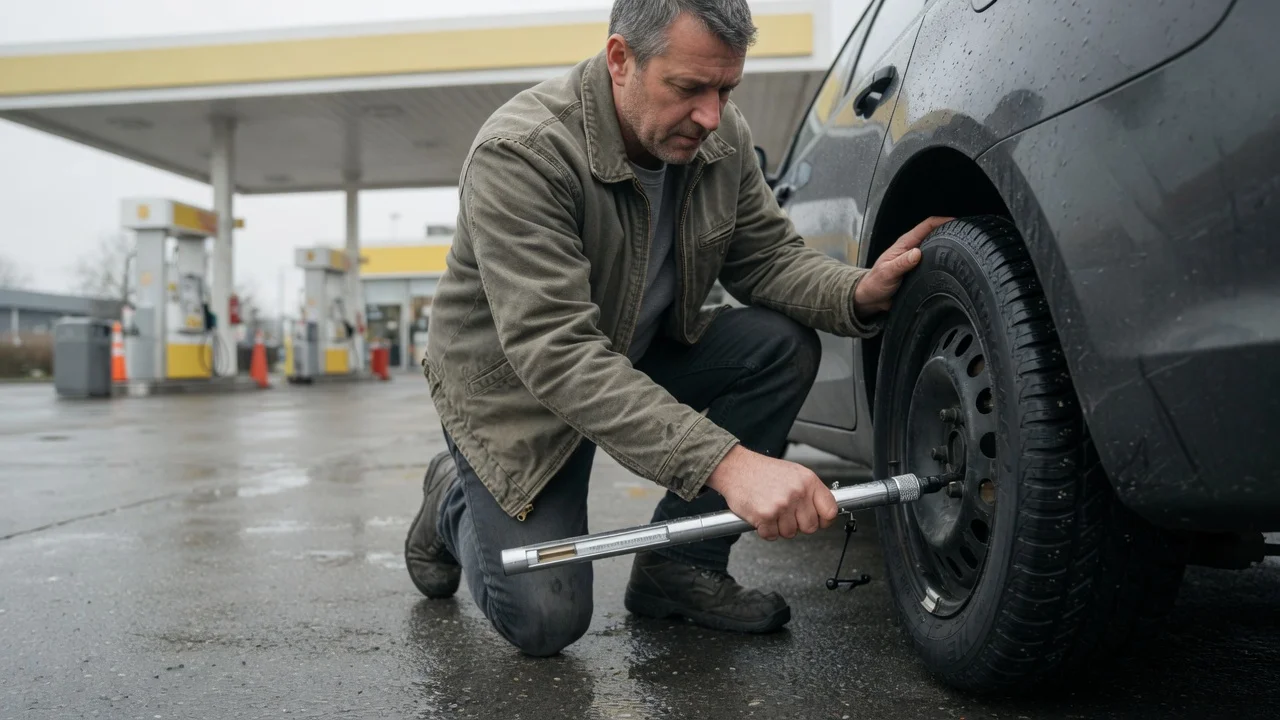
A gas station tire pressure gauge is usually built into the air pump or attached to the air hose. You press the gauge end firmly over the tire valve to get a pressure reading, add air in short bursts, and recheck until the reading matches the vehicle manufacturer’s cold inflation pressure. The gauge is not a replacement for a known-accurate personal gauge, especially if the station unit is damaged or poorly maintained.
Scope and important qualification
Availability and gauge design vary by station, region, and pump type. Some air pumps have a digital gauge, some have an analog dial, and some use a slide-style stick gauge on the inflator. A station may charge for air, may offer free air, or may disable the gauge if the pump is out of service. Public gauges also tend to be dropped, exposed to weather, or used roughly, so treat the reading as approximate rather than exact.
Finding a gauge at the station
Look near the fueling area for a freestanding air pump, often placed toward the edge of the lot or along a side wall. The gauge may be mounted on the pump housing, integrated into the inflator handle, or attached to the hose near the chuck. Some stations keep the air hose and gauge behind a service bay; ask the attendant if it is not visible. Chains such as QuikTrip commonly provide air stations, but individual locations can differ.
Before you start
Check tire pressure when tires are cold, meaning the vehicle has been parked for about three hours or driven less than a mile or two. Heat from driving raises pressure. Find the recommended cold inflation pressure on the driver’s door jamb placard, glovebox sticker, or owner’s manual. Do not use the maximum pressure molded into the tire sidewall. Have a way to pay if the air pump requires coins, a card, or a station token. Remove the valve cap from the tire and keep it in a pocket so it is not lost.
How to use the gauge on an air pump
Start the air pump according to the station instructions. Some pumps run continuously after payment; others activate only when the inflator trigger is pressed. Press the gauge end or chuck straight onto the tire valve. A brief hiss is normal until the seal seats; a continuous hiss means the gauge is not seated squarely. Read the current pressure on the dial, digital display, or slide stick before adding air. Add air in short bursts of a few seconds, then recheck the pressure. It is easier to add more air than to remove excess. If the tire is over the target pressure, press the center pin in the valve stem briefly with a small tool or the gauge’s bleed button, then recheck. Replace the valve cap snugly when finished and repeat for each tire, including the spare if it is accessible and has a conventional valve.
Accuracy and common problems
Gas station gauges can read several psi high or low because of impact damage, moisture, or worn seals. A reading that seems far from your expected value should be treated with suspicion. If the gauge glass is cracked, the needle is bent, the display is unreadable, or the chuck does not seal, use a different station or a personal gauge. Some pay-for-air pumps stop while you are checking pressure, so work steadily and use short fill-and-check cycles rather than long fills.
When to use a personal gauge instead
For repeatable measurements, a digital or dial gauge bought for personal use is worth carrying. Use the station pump to add air and your own gauge to verify the result. This avoids relying on a public unit that may be out of calibration. A small difference of one or two psi is not usually critical for normal driving, but consistent pressure across an axle matters for handling, tire wear, and fuel use.
If the gauge is missing or broken
A station may have an air hose without a working gauge, or the gauge may be removed. In that case, do not guess by eye. Use a personal pressure gauge, or drive carefully at moderate speed to another air station with a functional gauge. Underinflated tires can overheat and wear edges rapidly, while overinflated tires can reduce grip and wear the center of the tread.
Next step
After filling, note whether one tire needed much more air than the others. A repeated or large loss suggests a slow leak, damaged valve, or bead leak that should be inspected. Recheck pressures after the tires have cooled to confirm the final cold reading, and keep the door placard values marked for future fills.