How to Read a Gas Station Tire Pressure Gauge

A gas station air pump gauge shows tire pressure, but the reading is only useful if you understand the scale and take the measurement correctly. Many drivers misread the dial or trust an uncalibrated pump gauge that has been dropped, weathered, or heavily used. The key is to compare the gauge reading after filling against a reliable reference and your vehicle’s recommended cold inflation pressure. The process is quick once you know where to look and how to interpret the needle or digital display without letting rushing air distort the result.
Direct answer
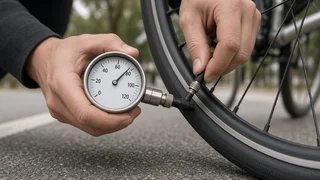
Reading a gas station tire pressure gauge starts with identifying the scale on the analog dial or the number on the digital screen. Most station gauges display pounds per square inch, abbreviated PSI, and the needle or digits reflect the pressure inside the tire at the moment the chuck is firmly seated on the valve stem. The essential answer is to press the connector straight onto the stem until the hissing stops, read the indicated PSI, and compare that number with the vehicle specification printed on the driver’s door jamb or in the owner’s manual. A partial connection or an angled chuck can leak air and produce a falsely low value.
A single reading at the pump is not a complete verification because station gauges vary in accuracy and calibration. Heat from driving raises tire pressure, so a warm tire may show several PSI above the cold specification. The more useful check is to note whether the reading is close to the recommended range and then confirm it with a personal gauge when the tires are cold. If the station gauge shows pressure far above the listed number, the tire may be overinflated; if far below, it needs air. The gauge gives evidence of pressure, not a diagnosis of a leak or a failed valve.
How to proceed
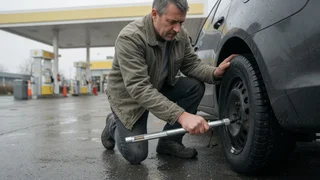
Before adding air, locate the vehicle’s recommended cold inflation pressure on the placard inside the driver’s door jamb, on the fuel filler door, or in the manual. That cold specification is the target for a tire that has not been driven for several hours. At the station, remove the valve cap and set it somewhere clean. Press the air hose chuck squarely onto the valve stem so the connection seals. The built-in gauge may show pressure only while the trigger is released after a short burst, or it may show a live reading during filling. Do not rely on a continuous fill without pausing, because air rushing through the hose can create a temporary reading that is not the settled tire pressure.
Use short bursts of air and release the trigger to let the gauge settle before reading the indicator. If the number is below the target, continue adding air in increments and recheck. If the number is above the target, many station chucks have a small bleed button or the back of the gauge can briefly depress the valve core to release air; follow the equipment’s marked control. Finish by rechecking with the station gauge, then consider a personal gauge as a completion check because pump gauges can be out of calibration. Replace the valve cap snugly to keep dirt and moisture out of the valve core.