Choosing a Bike Tire Pump with a Pressure Gauge
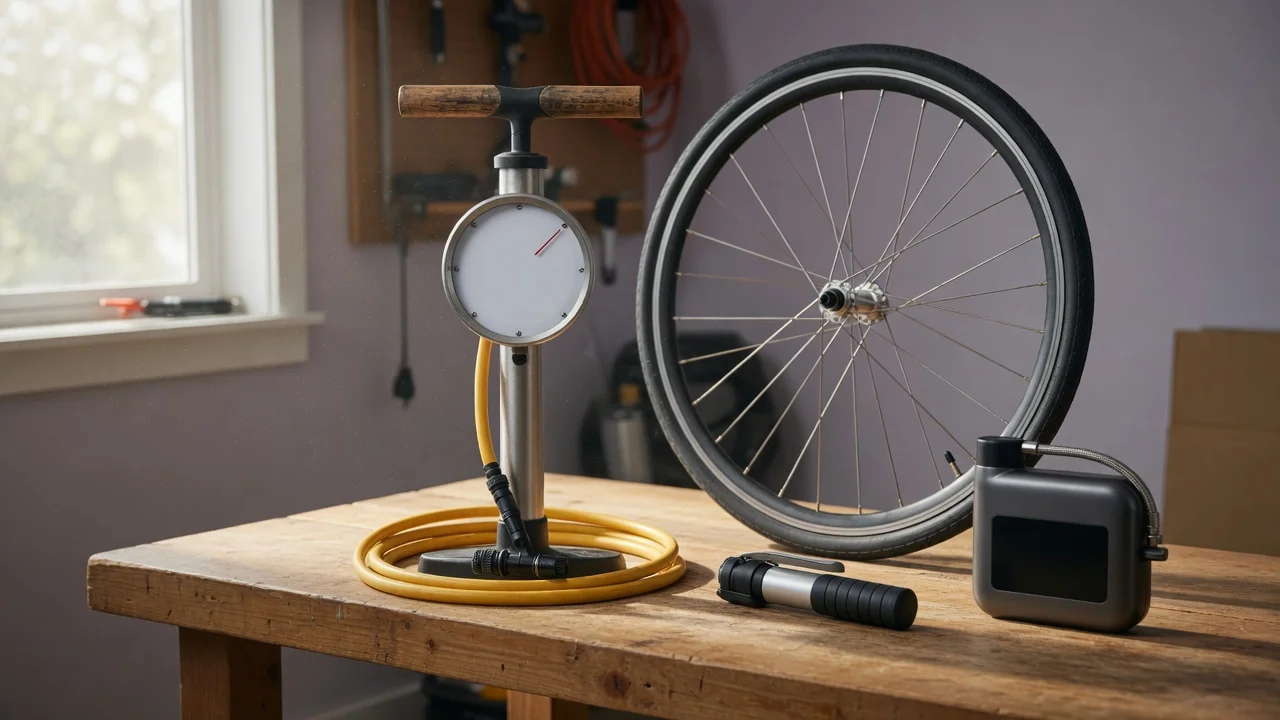
What a pressure gauge on a bike pump actually tells you
A bicycle tire pump with a pressure gauge gives a direct reading of air pressure in pounds per square inch, commonly abbreviated psi, or in bar depending on the gauge. The immediate answer is that the gauge helps you inflate to a specific, repeatable pressure instead of guessing by squeezing the tire. The condition that materially changes the value of that reading is accuracy. Most integrated gauges on floor pumps and some hand pumps are close enough for commuting, touring and general riding, but they can read a few psi high or low. If you need very precise pressure for tubeless setup or road racing, a separate calibrated gauge or a pump known for a well-marked, easily read gauge is more useful.
Valve compatibility
Before choosing a pump, confirm which valve your bicycle tubes use. Presta valves are narrow, have a small locking nut at the top and are common on road, gravel and many higher-end hybrid bikes. Schrader valves look like the valves on car tires and are common on kids' bikes, cruisers, mountain bikes and many commuter models. Many pumps with a gauge now come with a dual head that fits both valve types without swapping internal parts. Some use a reversible rubber gasket inside the head, while others use a switchable chuck. If a pump head only lists one valve type, it will not work directly on the other without an adapter.
Floor pumps versus hand pumps
A floor pump, sometimes called a track pump, stands on the ground and uses a long barrel and handle. The gauge is usually mounted at the base or midway up the barrel, which makes it easier to read while pumping. This is the more practical choice for home use, car racks and pre-ride inflation, especially for tires that need 60 psi or more. A hand pump with a gauge is smaller and more portable, but the gauge is often tiny and less precise. Hand pumps also require far more effort to reach high pressures. For a reader repairing a flat at the roadside, a compact gauge-equipped hand pump can return a tire to safe rolling pressure, but a floor pump is the better tool for consistent weekly inflation.
What to check before buying
Confirm the pump head supports your valve type, or note whether you need an adapter. Check the gauge face is large enough to read at the pressures you normally use. Look for a flexible hose between the pump body and the valve head; this reduces strain on the valve stem while pumping. If you ride tubeless, choose a pump that can deliver a quick burst of high-volume air and still show seating pressure. Verify the maximum rated pressure suits your tires; a road tire can need 80 to 100 psi or more, while a wide gravel or mountain tire may need only 25 to 50 psi.
Using the gauge correctly
Attach the pump head firmly to the valve before pumping. On a Presta valve, first unscrew the small top nut until it stops, then press the head on and lock it. On a Schrader valve, remove the cap and push the head straight on. Pump smoothly and glance at the gauge while the handle is moving. The reading is most stable during a stroke, not after the handle has stopped. Inflate to the pressure printed on the tire sidewall, but remember that the number on the tire is a maximum, not a required value. Many riders use slightly less for wet conditions or rough surfaces to improve grip and comfort.
When the gauge may not be enough
A built-in gauge cannot tell you whether the pump head is fully seated or whether air is leaking past the valve. If the reading rises very slowly and then drops when you stop pumping, remove and refit the head. Also check that the valve core is not loose on a Presta tube. If you need an exact reading for a suspension fork or shock, a bicycle tire pump with a gauge is not the correct tool because suspension pressures are typically much higher and the volumes are much smaller. In that case, a dedicated shock pump with a precise, low-volume gauge is required.
Gaps in available evidence
No measured accuracy data for a specific current model, such as an Azuno bike tire inflator with pressure gauge, is available in the supplied material. A buyer should treat advertised psi accuracy as approximate and compare the gauge against a known reference if precise pressure matters. Availability, exact pricing and long-term durability for any particular pump are also not established here.