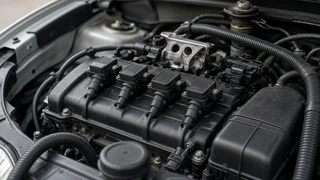
Understand an electronic ignition system

An electronic ignition system replaces the mechanical contact points and condenser in a traditional distributor with solid-state switching and a magnetic or optical trigger. For readers asking what this upgrade means, the core answer is that it controls primary current through the ignition coil more precisely, reducing wear and improving spark consistency. Understanding this system helps when diagnosing a no-start, a misfire, or a rough idle, because the ignition switch, battery state of charge, cranking speed, and fuel delivery all interact with the spark event.
Essential answer
An electronic ignition system is a breakerless method of firing the spark plugs. Instead of a mechanical cam opening contact points, a sensor detects distributor shaft position and sends a low-voltage signal to a control module. That module then interrupts current flow through the coil primary winding. The collapsing magnetic field induces a high-voltage pulse in the secondary winding, which is routed to the correct cylinder. The direct answer is that the system replaces a wear-prone mechanical trigger with an electronic switch to produce a more stable spark.
Because the trigger is solid-state, dwell time—the period when the coil primary is energized—can be controlled more consistently across the rpm range. This matters for cold starts and hard acceleration. When diagnosing a crank-no-start condition, you should still confirm the battery state of charge and the starter circuit, because slow cranking speed reduces available voltage. The electronic ignition system cannot compensate for a weak battery or interrupted fuel delivery, so diagnostic checks should separate the spark event from other no-start causes rather than assuming the module is faulty.