Do You Need a Transmission Relearn After a Fluid Change?
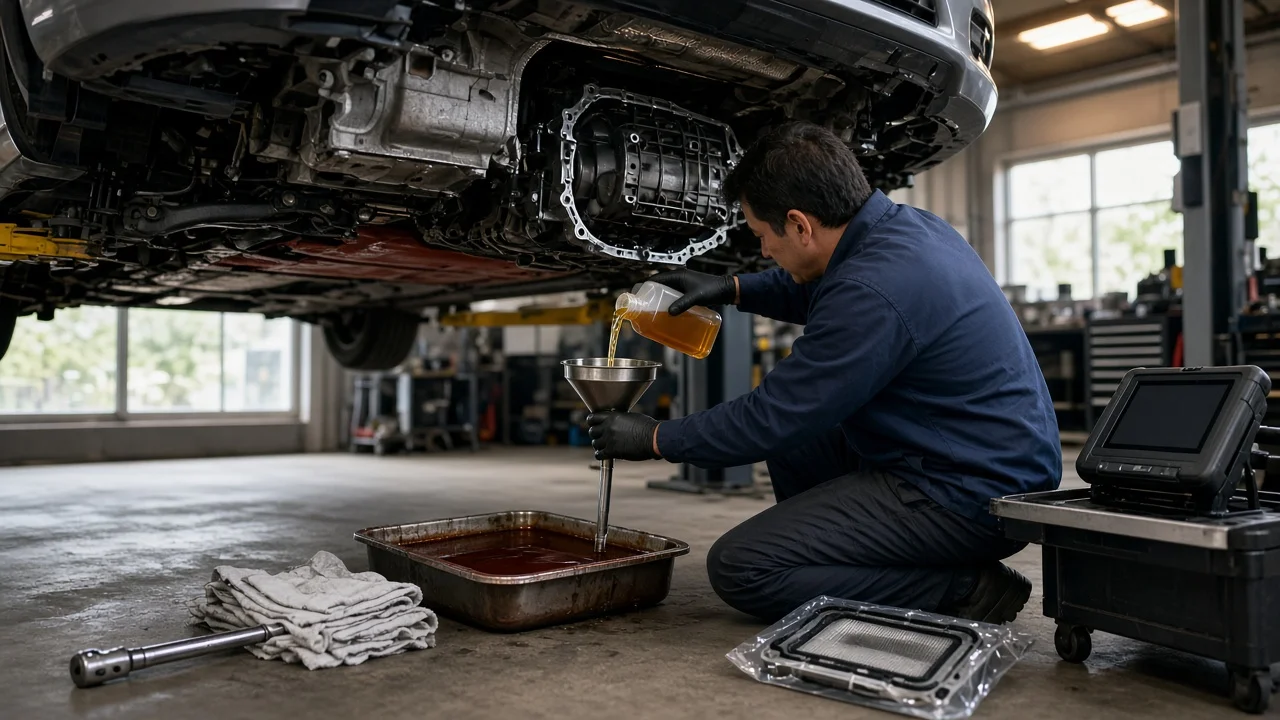
Whether you need a transmission relearn after a fluid change depends on the transmission type and the manufacturer's service procedure. Some automatics, CVTs and dual-clutch units adapt again on their own as you drive. Others need a scan tool routine to reset stored values or a fluid-life counter. This guide explains how to tell which applies to your vehicle, what to prepare, and how to confirm the job was done correctly.
What a Relearn Actually Does
Modern electronically controlled transmissions do not shift from fixed values alone. The transmission control module, or the powertrain module on some vehicles, stores adaptive values. These fine-tune clutch apply pressure and timing as internal parts wear and as fluid condition changes. A relearn, also called an adaptive reset or adaptation procedure, clears or rebuilds those values so the module can learn again from a known starting point. On some units this happens during normal driving. On others the manufacturer specifies a scan tool routine, a defined drive cycle, or both. Some CVTs also store a fluid deterioration or service counter that the module uses to judge fluid life, and that counter may need resetting when new fluid goes in.
A relearn is not a repair. If a transmission shifted harshly or slipped before the service, resetting adaptive values may change how it feels for a while. It will not fix worn clutches, a faulty solenoid or a wiring problem. Treat a change in shift behavior as information to investigate, not as proof that a particular part has failed.
Decide When Service Is Needed
Start with the manufacturer's maintenance schedule for your exact vehicle. It usually lists fluid service under normal and severe operating conditions. Severe use typically includes towing, frequent short trips, stop-and-go traffic, extreme heat, mountainous driving and commercial duty. Some transmissions are described as filled for life under normal use but still list a fluid service for severe conditions. The same service information will state whether a relearn, adaptive reset or counter reset is part of the fluid change procedure.
Some reasons for attention come from the vehicle's condition rather than the schedule: fluid that looks burnt or contaminated, a leak, stored diagnostic codes, or a noticeable change in shift behavior. A fluid change may be part of the answer in those cases, but diagnosis comes first. Check codes, review the service history and confirm the fluid level before deciding that a fluid change or relearn will help. Changing fluid on a transmission with an unresolved fault can remove evidence a technician needs.
Identify the Correct Fluid and Tools
Confirm the transmission type and the exact unit fitted. One model line can use different automatics, CVTs or dual-clutch gearboxes depending on engine, drivetrain and model year. The vehicle identification number, the build label or the transmission tag usually narrows this down. Then look up the fluid specification named in the owner's manual or service information. Using the wrong fluid is a common cause of shift complaints after a service. Only use a multi-vehicle fluid if it explicitly meets the required specification.
Depending on design, consumables may include a filter, pan gasket, drain plug washer or fill plug seal. Fitment matters, because a filter or gasket made for a similar transmission may not seal correctly. For the relearn itself, find out whether your vehicle needs a scan tool with bidirectional functions that can reset adaptives or fluid counters. Basic code readers often cannot do this. Many sealed transmissions also require reading fluid temperature through a scan tool to set the level correctly, so confirm you have that capability before draining anything.
Prepare Safely
Work on level ground so the fluid level check is accurate. Support the vehicle on rated stands or a lift, never on a jack alone. Many level-check procedures require the vehicle to be raised and level, which means supporting all four corners. Hot transmission fluid can cause burns, and some fill-check procedures run the engine with the vehicle raised. Keep clear of moving driveline parts and exhaust components, set the parking brake and follow the manufacturer's safety steps.
Have a drain pan large enough for the expected volume, clean rags and a way to keep dirt out of the fill opening. Some sealed units have no dipstick and are filled from below through a check plug, which requires a fill pump. Take used transmission fluid and filters to an appropriate recycling or collection point. Do not pour them away or put them in household waste.
Carry Out the Fluid Change and Relearn
The order below is general. Your service information governs the details, including the fill method, capacity and any torque values. First, connect a scan tool and record any stored codes, plus current adaptive data if the tool can display it. Next, drain the fluid and inspect it, along with any debris in the pan or on the magnet. Replace the filter and seals if specified. Refill with the specified fluid using the stated method. Bring the transmission to the required temperature range and set the level exactly as described. This often means checking with the engine running after moving the selector through each position.
Once the level is correct, complete whatever the procedure calls for. That may be a scan tool adaptive reset, a fluid deterioration counter reset on certain CVTs, a guided adaptation routine with the vehicle stationary, or a drive cycle with specific throttle and speed conditions. Some vehicles need nothing beyond normal driving. Do not reset adaptives just because your tool offers the option. On a transmission that was shifting well, an unnecessary reset can make shifts feel firm or soft until the module relearns. On certain designs, a reset also requires a guided procedure to be completed afterward.
Many transmissions are only partially drained during a pan service, because fluid remains in the torque converter and cooler lines. Fluid exchange machines are an alternative on some vehicles, but use one only where the manufacturer allows it. If you are unsure whether your transmission needs a relearn or how to run it, a shop with dealer-level software may be the practical repair option.
Verify and Record the Result
After the relearn or drive cycle, recheck the fluid level at the specified temperature. Look for leaks at the pan, plugs and lines, and scan again for diagnostic codes. On the road, watch shift behavior under light and moderate throttle, downshifts when slowing, and engagement when moving the selector into drive and reverse. Some firmness or hesitation early on can be normal while the module adapts, and the service information may describe what to expect.
Stop and investigate if you see warning lights, new codes, slipping, flare between gears, delayed engagement, a burning smell or fluid loss. These signs are worth diagnosing and may point to an incorrect level, the wrong fluid or an existing fault. None of them confirms a specific failed part on its own.
Keep a record of the service: date and mileage, fluid specification and quantity, parts replaced, whether an adaptive or counter reset was performed and with which tool, and any codes before and after. This service history helps a future technician judge whether a later complaint relates to the service, and it keeps the maintenance schedule on track.