Finding Transmission Cooler Lines at AutoZone
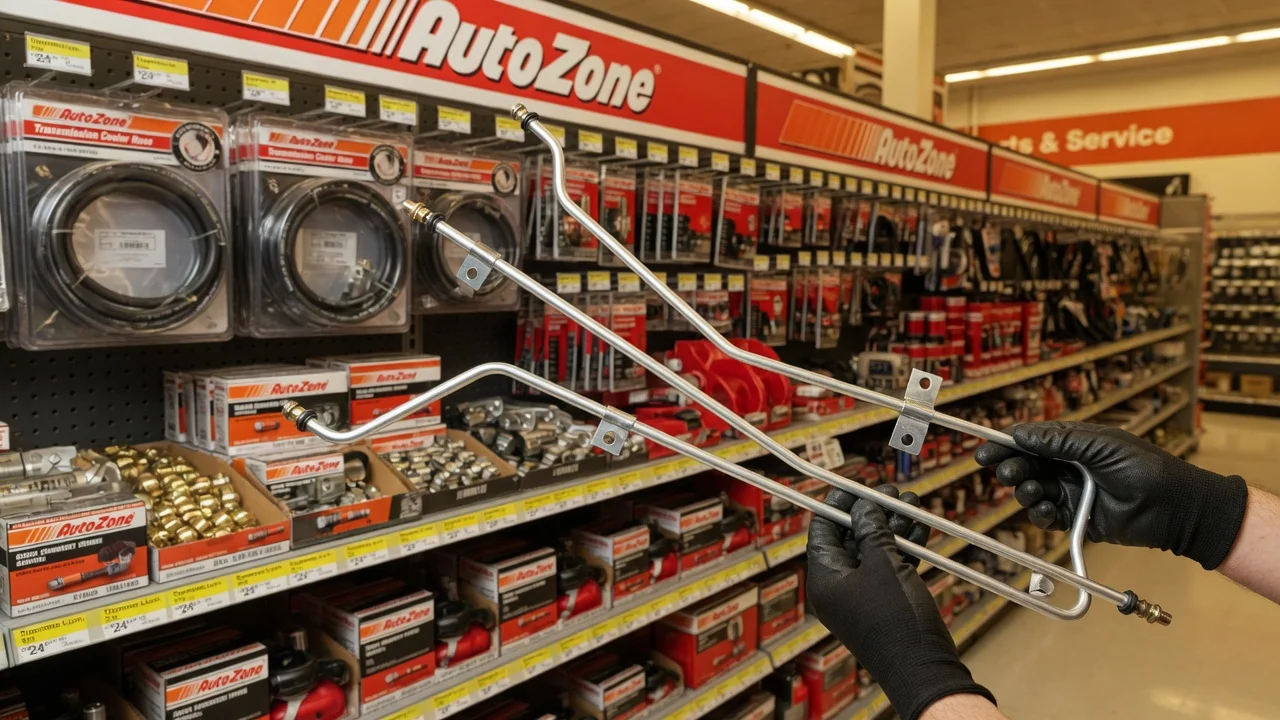
If you need a replacement transmission cooler line from AutoZone, you can usually find one, but the correct part depends on what your vehicle actually has. Cooler lines are not universal. Routing, length and fitting style change with the transmission, engine, drivetrain and options such as a factory tow package. This guide covers what to confirm before buying, how the lines work, what changes fitment, and when a wet line points to a different problem.
Can You Get Transmission Cooler Lines at AutoZone?
For many common cars, trucks and SUVs, the parts catalog lists transmission oil cooler lines. These are usually preformed replacement assemblies that copy the original bends and end fittings. Stores also tend to carry transmission cooler hose sold by length, hose clamps and some fittings for repairing a damaged section. Availability is not guaranteed. Coverage varies by vehicle, and a particular store may not have the line on the shelf, so it may need to be ordered. For many vehicles the answer is yes, as long as you confirm fitment for your exact configuration before you pay.
To check, look up the part by year, make, model and engine, then answer any follow-up questions the catalog asks, or call the store with your VIN. If no preformed line appears, your vehicle may still have one available, just not through that retailer. It may be a dealer-only part, or a hose repair of the damaged section may be the practical route if the design allows it.
How Transmission Cooler Lines Work
An automatic transmission or CVT generates heat as it operates. The fluid pump sends fluid out through one line to a cooler and brings it back through a second line. The cooler can be a heat exchanger built into the radiator tank, a separate air-to-oil cooler mounted ahead of the radiator, or both in series. The lines are typically steel tubing joined to rubber sections with crimped connections, which lets them absorb engine and transmission movement. The ends may be threaded flare nuts, banjo fittings or quick-connect couplings that seal with O-rings and lock with retaining clips.
Because the circuit carries hot fluid under pressure, a leaking line can lose fluid quickly while driving. Low fluid can cause delayed engagement, slipping or harsh shifts. Still, a wet line does not prove the line itself has failed. Fluid from a leaking cooler, radiator fitting, pan gasket or seal can run along the line and drip from its lowest point. Clean the area, drive briefly, and look for where the wetness starts rather than where it drips.
What Changes the Right Part
Fitment depends on more than the model name. Transmission type and model matter first, since two versions of the same vehicle can use different units with different port locations. Engine choice, two-wheel versus four-wheel drive, cab and wheelbase on trucks, and whether the vehicle has an auxiliary cooler or tow package all affect routing and length. Mid-year production changes can also split fitment, which is why the VIN is more reliable than year alone. You also need to know which line failed: supply or return, upper or lower, or a pressure line versus a return line, as these are often sold separately.
The repair approach changes the answer too. A complete preformed assembly restores the original design. A section repair with hose and clamps can work on some lines, but the hose must be rated for transmission fluid and its operating temperatures. Fuel or heater hose is not a suitable substitute. Quick-connect ends, crimped joints near the transmission, and lines that run close to exhaust components are generally poor candidates for splicing. Some manufacturers specify replacement rather than repair, so check the service information for your vehicle when you can.
If the transmission has failed internally or was recently rebuilt, debris may sit in the cooler and lines. Flushing them, or replacing the cooler, may be needed to protect the new or repaired unit. Rebuilders sometimes require this as a condition of their warranty.
What the Owner Can Do Before and After Buying
Before heading to the store, gather the VIN, engine size and transmission identification from the door label, owner documents or service history. Take photos of both ends of the damaged line and the leak area, and note which line it is. If the old line is already off, bring it so you can compare bends, length and fitting style at the counter. Check whether the new line comes with O-rings or retaining clips or whether those are sold separately.
Plan to buy fluid that meets the manufacturer's fluid specification, listed in the owner's manual or sometimes on the dipstick or a label. A multi-vehicle fluid should be used only if it explicitly states it meets that specification. You will also want a drain pan, rags and, for quick-connect fittings, the correct line disconnect tool. Many parts stores offer tool loaner programs, so ask at the counter.
After installation, route the line through its original brackets, away from exhaust and moving parts. Check the fluid level using the manufacturer's procedure. Some transmissions have no dipstick and must be checked at a specific fluid temperature with the engine running, which often requires a scan tool. Recheck for leaks after a test drive and pay attention to shift behavior. If a warning light is on, many parts stores can read diagnostic codes, but a code points to a circuit or condition, not a confirmed failed part.
Limitations and When to Get Help
A catalog match is a starting point, not a guarantee. Compare the new part with the original before installing, keep the packaging, and ask about the return policy before opening anything. Whether a hose repair is acceptable has no universal answer either. It depends on the line design, its location and the manufacturer's guidance, so vehicle-specific service information is the best reference.
Get professional help if the fluid is dark or smells burnt, if slipping or harsh shifting continues after the level is corrected, if transmission fault codes are stored, or if the fluid looks milky or coolant appears contaminated. Milky fluid can indicate an internal leak in a radiator-mounted cooler, which needs attention beyond the lines. A shop is also the safer choice if you cannot verify the fluid level, or if corroded or seized fittings risk damaging the radiator or transmission case during removal. Sharing the vehicle's service history and a description of when the leak started will help a technician narrow the repair options faster.