Finding Transmission Cooler Lines at Summit Racing
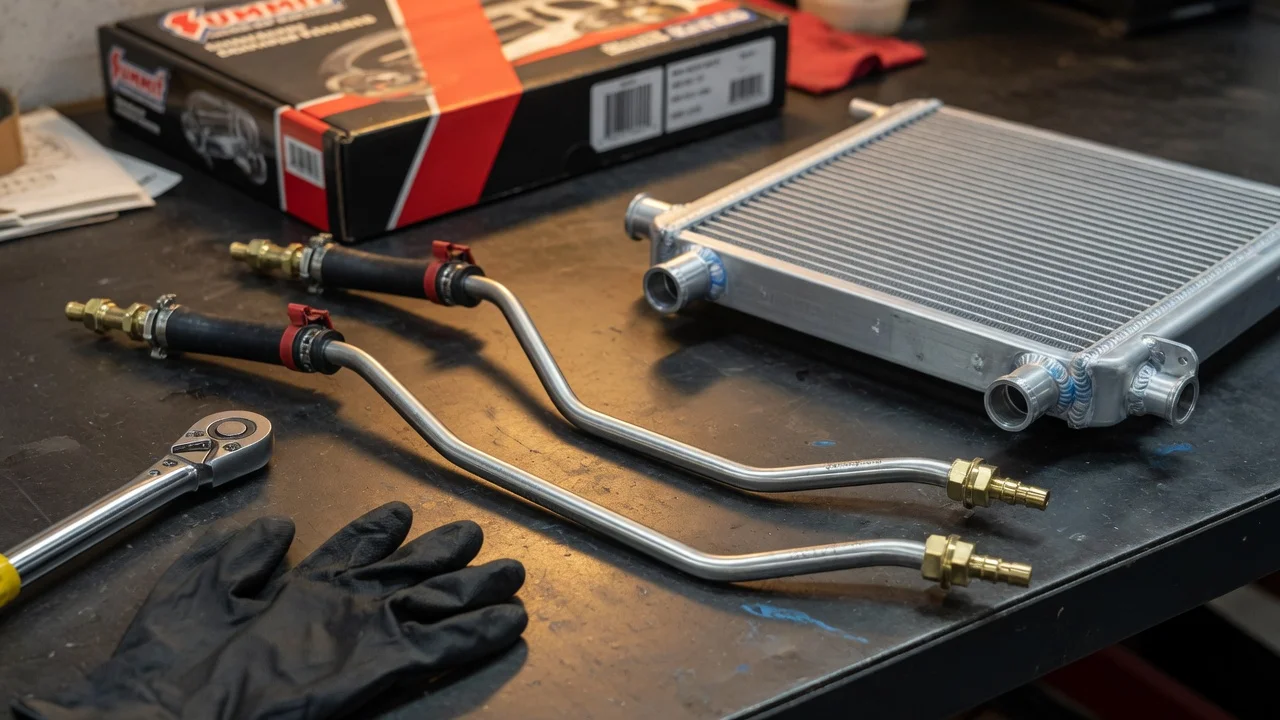
Summit Racing is a common place to shop for transmission cooler lines and the hardware around them. A catalog search can return vehicle-specific hard lines, universal hose, fittings and adapter kits. Which result is right depends less on the store and more on three things: which transmission you have, how it connects to the cooler, and whether you are replacing original lines or plumbing something new. This guide explains how to narrow the search and avoid parts that do not fit.
Can you find cooler lines at Summit Racing?
Generally yes, but the category is broad. Listings for transmission cooler plumbing tend to fall into four groups. There are preformed steel lines made for a specific vehicle or transmission, and universal rubber or braided hose sold by length. There are also line kits that bundle hose with fittings, and individual adapters that convert one thread or connection style to another. The right group depends on your transmission type, the radiator or cooler it feeds, and whether you want an original-style replacement or a custom setup.
The most reliable search starts from the transmission rather than from the vehicle alone. Two vehicles of the same model and year can use different transmissions. Swapped or rebuilt drivetrains often no longer match factory listings. If a listing offers a vehicle filter, use it as a first pass. Then confirm fitment against the transmission model, line diameter and fitting style shown in the product specifications before ordering.
How transmission cooler lines work
In most automatic transmissions, the torque converter and clutch packs generate heat, and the fluid carries it away. A pump inside the transmission sends fluid out through one cooler line to a heat exchanger. This is usually a small cooler inside one of the radiator tanks, an external auxiliary cooler in front of the radiator, or both. The fluid gives up heat there and returns through the second line to the transmission. Some manual transmissions, dual-clutch units and heavy-duty applications also use external coolers, but their plumbing details differ.
The lines carry hot fluid under pressure, so the material and the connections matter as much as the length. Factory lines are often steel tubing with short rubber sections. They connect to the transmission and radiator with threaded flare fittings or with quick-connect couplers held by retaining clips. Aftermarket setups often use transmission-rated rubber hose, braided hose, or AN-style fittings, which need adapters at the case and the cooler. A line can fit physically and still leak or fail if it has the wrong seal type, thread or hose rating.
What changes which lines you need
Transmission type is the first variable. Automatics differ in case fitting threads, port locations and line diameters, and these can change between model years within the same family. An electronically controlled transmission may share a case design with an older unit and still use different fittings. If the transmission has been swapped, rebuilt or upgraded, the original vehicle data may not describe what is actually installed.
The cooler side also changes the answer. Lines made for a factory radiator with an internal cooler will not necessarily connect to an aftermarket radiator or to a stand-alone auxiliary cooler with different ports. An auxiliary cooler is commonly plumbed in series with the radiator cooler on the return side, which changes line lengths and the number of fittings needed. Body style, engine choice, exhaust routing and ground clearance also affect whether a preformed line will clear everything.
Finally, consider why you are buying. To replace a corroded or leaking original line, a direct-fit part with matching ends is usually the better choice. A custom or performance build favors universal hose and fittings, which are flexible but require careful measurement and the correct adapters. Towing, heavy loads and hot climates raise fluid temperatures. That can influence your choice of cooler capacity and hose quality, but it does not change the basic fitment requirements.
What to check before you order
Start by confirming the transmission. The identification tag or stamping on the case, the VIN-based build information and the service history can all help, and a dealer or transmission shop can decode them if needed. Then inspect the existing lines. Note whether each end is a threaded flare, a quick-connect or a barbed hose connection. Measure the outside diameter of the tubing. Photograph the routing from the transmission to the cooler before removing anything.
When comparing listings, match the fitting style and thread at both ends, the tubing or hose size, and the overall length. For preformed lines, also check which application the bend profile was designed for. Find out whether the part comes as a pair or a single line, and whether retaining clips, clamps or adapters are included or sold separately. For barbed connections, choose hose that is specifically rated for transmission fluid at its operating temperature. Matching the diameter with generic hose is not enough. If the transmission has failed or been rebuilt, flushing or replacing the cooler and lines is commonly recommended so that debris does not return to the repaired unit.
During installation, route the lines away from exhaust components, steering linkage and sharp edges, and secure them so they cannot rub through. Seal each fitting the way it was designed to seal. Flare and AN connections seal on their mating surfaces, not with thread sealant. Afterward, refill with the fluid specification listed for your transmission. Check the level using the manufacturer's procedure, which may require a specific fluid temperature or a fill plug instead of a dipstick. Recheck every connection for seepage after a test drive.
Limitations and when to get help
A leak near the lines, harsh or delayed shift behavior, or a stored diagnostic code related to fluid temperature can point toward a cooling problem. None of these confirms that a line is the failed part. The fluid may be coming from a pan gasket, a seal or the cooler itself, and temperature-related codes can come from sensor or wiring faults. Fluid that looks milky or foamy suggests coolant contamination. That usually points to a failed internal radiator cooler and needs prompt professional attention, not just new lines.
Product descriptions and fitment filters are a starting point, not a guarantee for your vehicle. Consider asking a transmission specialist to confirm the correct parts and repair options before you order in these cases: the transmission identity is uncertain, the vehicle has been modified, the quick-connect fittings need special release tools, or the lines are corroded into the radiator. Bring your transmission identification, measurements and photos of the existing fittings. That information turns a broad catalog search into the right part.