Choosing and Using a Trailer Brake Controller for a Dodge Ram
Short answer
A trailer brake controller is the in-cab device that sends braking signals from your Dodge Ram to the electric brakes on a trailer. The correct choice depends mainly on your Ram's model year, whether it has the factory trailer brake controller option, and whether it is pre-wired for an aftermarket unit. If your Ram already has an integrated factory controller, you normally do not need to add another one unless you want a different adjustment feel or the factory unit has failed.
What a trailer brake controller does
When you press the brake pedal in the tow vehicle, the controller applies the trailer's electric brakes in proportion to the truck's braking. This reduces stopping distance, helps keep the trailer straight, and reduces heat and wear on the Ram's own brakes. Controllers are not required for trailers without electric brakes, but they are commonly needed for travel trailers, car haulers, and larger utility trailers.
Factory integrated controller vs. aftermarket controller
Many Dodge Ram trucks, especially newer 1500 models, are available with an integrated trailer brake controller built into the dash. The integrated controller communicates with the truck's stability control and anti-lock brake systems, and its settings appear in the instrument cluster display. If your truck was built with this option, it is usually the simplest and most integrated choice.
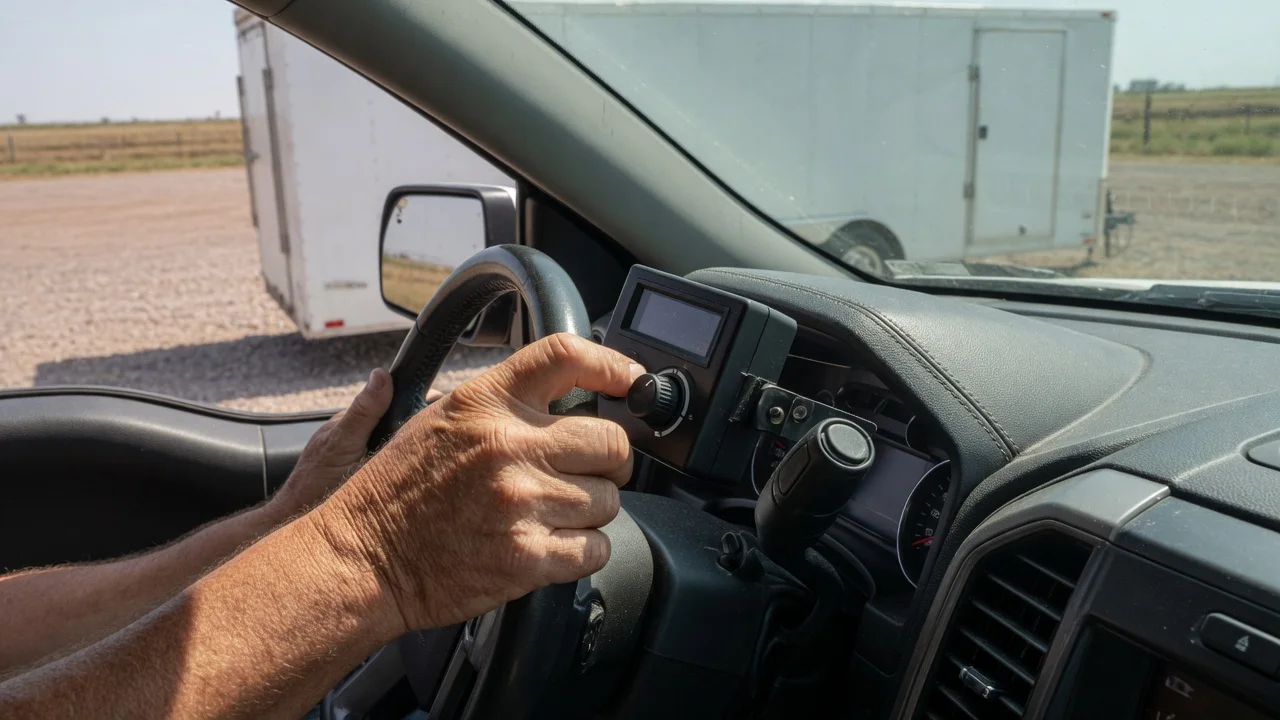
On Rams without the factory option, an aftermarket controller can often be installed in a pre-wired port beneath the dash. The truck may have a wiring connector already present, and the installation can be as simple as plugging in a compatible adapter harness. However, not every Ram is pre-wired, and some model years may require running additional wiring to the seven-pin trailer connector at the rear.
Compatibility and model-year considerations
Compatibility varies by generation and option package. For example, a Dodge Ram 1500 from the fourth generation is often pre-wired if it has the tow package, while a base truck without the tow package may not include the under-dash connector. Later Rams with the rotary-dial factory controller have the controller integrated with the vehicle network, so adding a different type of controller may require disabling or removing the factory unit first.
Because Dodge Ram trims and wiring provisions can change within the same model year, the only reliable way to confirm compatibility is to inspect the truck's build sheet, owner's manual, or the area under the dash for the appropriate plug. If the connector is absent, a professional installation may be needed.
Types of aftermarket controllers
Time-delay controllers: You set a maximum braking force and a delay rate. They are typically simpler and lower cost, but their response is less directly tied to the truck's actual braking pressure. Proportional controllers: These use an internal sensor to detect how quickly the truck is slowing and apply trailer brakes in proportion. They usually provide smoother stops and are preferred for heavier or frequently towed trailers. Dash-mounted vs. handheld: Dash-mounted units are permanently installed and easy to reach. Handheld or remote-mount styles can be useful when dash space is limited or when you want the main module hidden.
Installation path for a Dodge Ram 1500
For a Ram that is pre-wired, the typical job is to locate the factory connector under the dashboard, connect a vehicle-specific adapter harness to the controller, mount the controller bracket within reach, and route the harness cleanly. The controller then needs to be calibrated according to the trailer's weight and brake condition. If the truck is not pre-wired, the installer must add wiring from the cab to the rear trailer connector and possibly install a fuse or relay, depending on the year.
Setup and adjustment
After installation, the controller needs a basic setup. The common method is to set an initial output level per the controller's instructions, then test at low speed on a flat, empty area. The goal is for the trailer brakes to engage firmly but not lock up under normal braking. For proportional controllers, the initial calibration often involves driving forward and braking normally so the unit can learn the truck's deceleration.
When the factory controller may be the better path
If your Ram has the connector for an integrated trailer brake controller but did not come with the switch module, some trucks can be upgraded by installing the factory switch and having the feature enabled in the vehicle's computer. This is not universal and depends on the model year and wiring. In those cases the factory path can preserve the cleanest dash appearance and full integration with the truck's displays. However, if the vehicle is not equipped for it, cost and complexity may make a quality aftermarket proportional controller more practical.
What to check before buying
Confirm whether your Ram already has the factory integrated controller. Check for a pre-wired plug under the dash, especially on trucks with the trailer tow package. Confirm the trailer has electric brakes and a compatible seven-pin or other connector. Match the controller's output capacity to the number of braked axles and the trailer's gross weight. For proportional units, verify the adapter harness is listed for your exact Ram year and cab configuration.
Limits of the information available
Exact part numbers, pricing, labor rates, and dealer programming fees are not provided here and should be confirmed for your specific vehicle. Wiring differences can exist between trims and option packages, so a visual inspection of the truck is the most reliable way to determine whether the installation will be plug-and-play or require additional wiring.