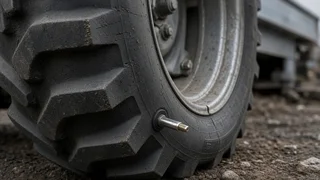
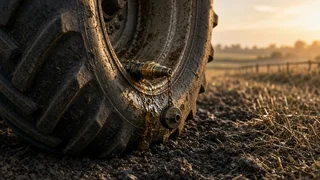
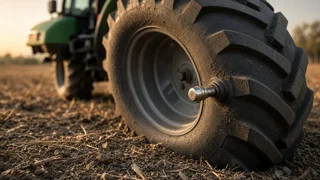
Tractor tire leaking around valve stem
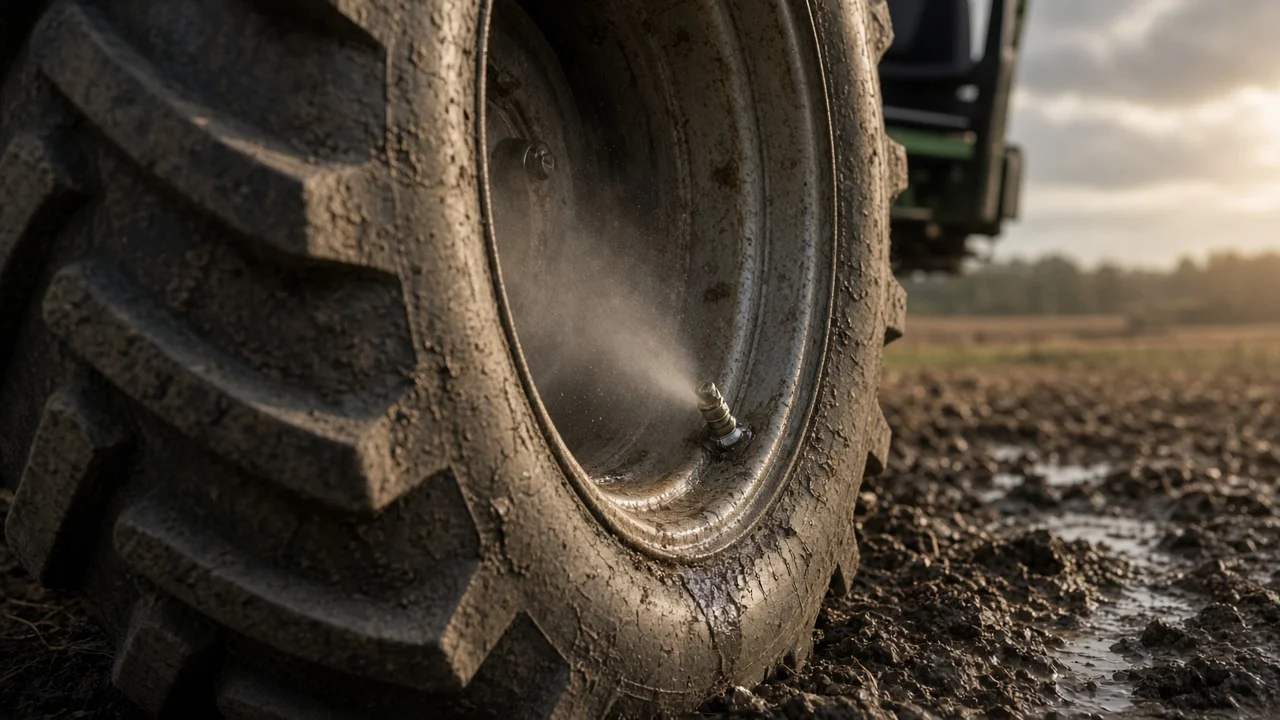
A slow leak at the valve stem can drop inflation pressure between chores, yet the wet spot or hiss at that small opening is easy to misread. Tractor tires carry heavy loads at low working pressures, so the rim seal, tube, stem core, and metal stem base all see flex and debris loads that passenger tires rarely experience. Finding whether air is escaping through the valve core, around the stem-to-rim joint, or from a cracked rubber snap-in seat changes the repair path. The right order of checks avoids breaking a bead or replacing a good tube unnecessarily.
Direct answer
The direct answer is that a tractor tire leaking around the valve stem is usually caused by a loose or failed valve core, a cracked or poorly seated snap-in stem, corrosion or dirt at the stem-to-rim opening, or a damaged tube around the metal stem base. Start with a soapy water check at the stem mouth while the valve cap is off. If bubbles form at the core opening, the core may be loose or its seal worn. If bubbles appear around the outside of the stem where it enters the rim, the stem body or the rim seat is the likely leak path.
When the tractor uses a tube-type tire, the metal stem is part of the tube, and a tear at that junction can release air that travels along the rim and appears at the stem hole. In a tubeless setup, the snap-in rubber stem must seat cleanly in the wheel opening and stay flexible enough to seal. A stem that tilts easily, feels hard, or shows cracks at its base should be suspected before the tire itself. Replacing the core is the least invasive first step; replacing the stem or patching the tube is the next level.
Interpreting symptoms and test results
Bubbles directly from the open valve mouth point to the core. Gently snugging the core with a valve core tool and rechecking is a low-risk test. If the leak stops, the seal was incomplete. If it continues, the core seat inside the stem may be damaged, or the core may have debris on its sealing face. On a tube-type tire, a torn stem base can mimic a loose core because air moves inside the rim and exits wherever the stem passes through the wheel, so the location of the bubbles does not always identify the true hole.
When bubbles surround the stem base on a tubeless tire, mark the stem position on the tire and rim, then check whether the stem is centered in its hole. Debris, rust, or a bent rim opening can prevent a clean seal. A stem that is stiff, cracked, or moves with little resistance likely needs replacement rather than tightening. Keep inflation pressure and tire size in mind during the inspection: a heavily loaded rear tire flexes more, and a small stem leak will change footprint, traction, and rim protection before it becomes obvious in daily work.