TPS Oil Checker: What It Measures and What to Check Before You Buy

The short answer
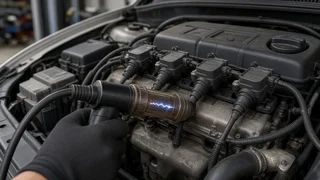
A TPS oil checker is a handheld meter that estimates how degraded an oil is by measuring an electrical property of the oil, rather than by chemically analyzing it. "TPS" usually stands for total polar substances (also called total polar materials or compounds). These are breakdown products that build up as oil oxidizes and is contaminated, and they change how the oil responds to an electric field.
One condition changes the buying decision more than anything else: whether the tool was designed for frying oil or for engine oil. Many meters sold as TPS or TPM testers are built and calibrated for cooking oil in commercial kitchens. They are not a reliable way to judge motor oil. If you want to check engine oil, look for a tester that the seller describes specifically as an engine or motor oil condition tester. Treat its reading as a rough trend indicator, not a verdict on whether the oil is still good.
In automotive conversation, TPS more often means throttle position sensor. That part has nothing to do with oil testing, so make sure search results and listings are about oil quality and not sensor diagnostics.
How these testers work
Most handheld oil condition testers use a sensor that reads the oil's dielectric properties, meaning how the oil behaves as an electrical insulator. Fresh oil gives a baseline response. As oil ages, oxidation byproducts, moisture, fuel dilution, soot and other contaminants shift that response, and the meter turns the change into a number, a bar graph or a color band.
This approach is fast and needs no consumables, which is why it appeals to owners and shops. The trade-off is that the meter detects a combined change. It cannot tell you which contaminant caused the shift, how much additive life remains, or whether wear metals are present.
Equipment identification: confirm what the device is for
Before comparing features, confirm the tool's intended use. Listings sometimes reuse generic wording, and similar-looking devices can serve different markets.
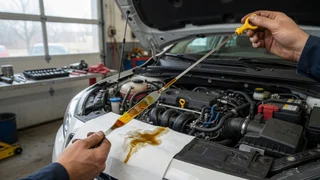
Cooking oil TPM/TPS meters: usually a probe you dip into hot frying oil, reading a percentage of polar materials. They are designed around food-service oil and temperatures, not engine lubricants. Engine oil condition testers: often use a small sensor well where you place a drop of oil taken from the dipstick. Some compare the sample against a fresh-oil reference. Laboratory oil analysis kits: not a meter at all. You mail a sample to a lab for detailed results. Slower and paid per sample, but far more informative. Throttle position sensor testers or scan tools: unrelated to oil, though they can show up in the same search results.
What to check when choosing a TPS oil checker
Stated application: the product description should say it is for engine or motor oil. Note any mention of gasoline, diesel, or both. Reference or calibration method: find out whether the meter compares against a fresh sample of your own oil or against a fixed internal baseline. Comparing against the same oil, new and used, tends to make readings more meaningful. Oil type coverage: synthetic, conventional and diesel oils start from different baselines. Check whether the tester handles the oil you use. Temperature guidance: dielectric readings can change with oil temperature. Instructions should say whether to test warm or cool oil and how to keep conditions consistent. Readout format: a numeric value is easier to track over time than a simple good/bad light. Sensor cleaning: the sensor must be wiped clean between samples. A design that is easy to clean thoroughly reduces carryover errors. Power and build: battery type, a protective case, and resistance to oil and solvents matter for a tool that lives in a garage. Instructions and support: clear directions on taking a sample and reading results are worth more than extra display features.
Limits to understand before buying
An oil condition reading is not a replacement for the basic checks your vehicle needs. Keep these limits in mind so the tool supports your decisions instead of overriding them.
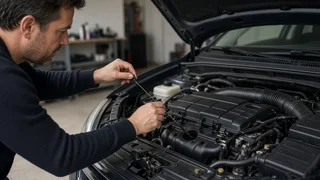
It does not do a level check. Low oil is a separate and often more urgent problem. Keep checking the dipstick or electronic level readout as your owner's information directs. It does not confirm the right oil. The correct lubricant specification, viscosity grade and any manufacturer approval for your engine come from the vehicle maker's information, not from a meter reading. It does not tell you fill quantity. Capacity depends on the specific engine, model year and market, and on whether the filter is being changed. It does not replace the service interval. Warranty and maintenance obligations are tied to the manufacturer's schedule or the vehicle's oil life monitor. A favorable reading is not grounds to stretch them. It cannot diagnose engine problems. Coolant in the oil, heavy fuel dilution or abnormal wear need proper diagnosis or lab analysis.
Getting useful readings
Consistency matters more than any single number. Test at a similar oil temperature each time, take the sample the same way, and clean the sensor fully between readings. If the meter supports it, record a reading from fresh oil of the same brand and grade right after an oil change. Use that as your personal baseline. Over the following weeks, the size and speed of the change from that baseline says more than the absolute value.
Watch for sudden jumps rather than slow drift. A sharp change between two close readings can point to contamination such as coolant or fuel. That is a reason to inspect the vehicle or send a sample to a lab, not just to change the oil and move on.
Is a TPS oil checker worth it?
For an owner who already follows the manufacturer's service interval, a handheld tester is mostly a curiosity or an early-warning aid. It can be useful if you drive in severe conditions, such as frequent short trips, towing, dusty roads or extended idling, and want an extra signal between changes. It is also useful for spotting a sudden change in one vehicle across a small fleet.
If your real goal is to safely extend drain intervals or understand engine wear, a laboratory oil analysis gives much more actionable information than any handheld meter. If you only want to confirm you are using the right oil and the right amount, the vehicle maker's information for your exact model year, engine and market is the source to rely on. No tester is needed for that.
Quick decision guide
Your goal | Best next step; Track oil condition trends between changes | Engine-oil-specific condition tester, used against a fresh-oil baseline; Decide whether to extend oil change intervals | Laboratory oil analysis, and stay within warranty requirements; Confirm correct oil type, grade and approvals | Vehicle manufacturer's specification for your exact engine; Know how much oil to add or fill | Manufacturer fill quantity for your model year and engine, plus a dipstick or level check; Test frying oil in a kitchen | Cooking oil TPM/TPS meter, not an automotive tool; Diagnose a throttle or idle problem | Throttle position sensor diagnostics, unrelated to oil testing