Ignition testers
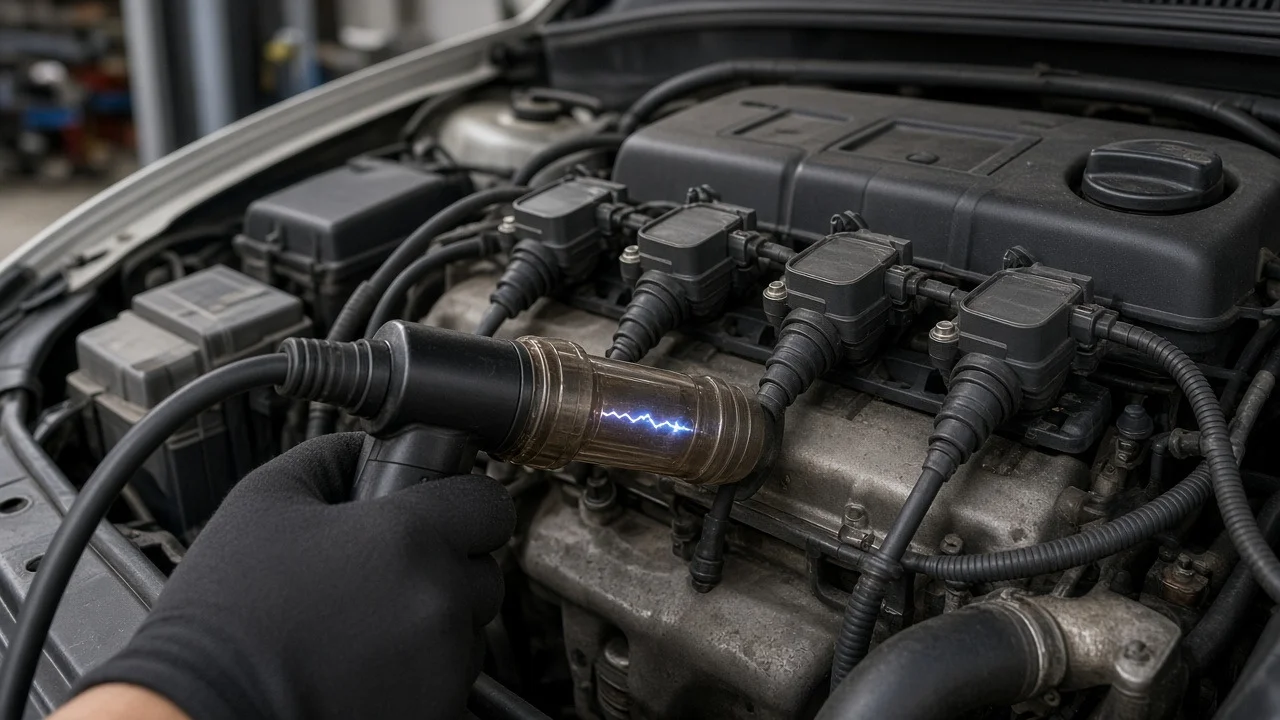
Choosing the right ignition tester starts with the no-start or misfire symptom you are trying to isolate. A tester lets you see whether the secondary side of the starter circuit is producing enough energy to jump a spark plug gap while the engine is cranking. Battery state of charge and cranking speed affect that reading, so a weak result may point to supply voltage rather than a failed coil. Fuel delivery can also mimic ignition trouble, which is why a spark check usually belongs early in diagnostic checks alongside an ignition switch and cranking evaluation.
The direct answer
An ignition tester is most useful when you need to confirm the presence and relative strength of secondary spark before replacing parts. Inline spark testers fit between a plug wire and the plug, while adjustable-gap styles force the coil to build voltage until the spark jumps a visible gap. Both give a faster and safer indication than holding a plug against the engine during cranking. The immediate answer is to match the tester to your ignition type: conventional distributor, waste-spark coil pack, or coil-on-plug systems each require different adapters and test points.
If the engine cranks at normal speed but one cylinder shows a weak or missing flash, the tester narrows attention to that plug wire, coil, or connector instead of the whole starting system. A bright consistent spark across an adjustable gap does not prove the coil is delivering full energy under compression, but it rules out a completely dead secondary circuit. Conversely, no spark on an output that should fire may still be caused by a failed crank sensor or ignition switch signal, so the tester result should guide rather than end the diagnosis.