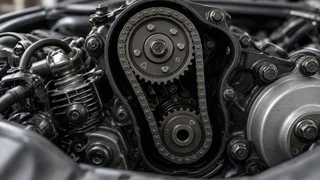
Toyota 2ZR Timing Chain Marks

Setting the timing chain on a Toyota 2ZR engine requires aligning internal components precisely before the chain is installed. The 2ZR engine series, used across several Toyota models, relies on colored links and machined marks to coordinate the crankshaft and camshafts. Understanding these marks matters because even a one-tooth error can create rough running, diagnostic trouble codes, or catalyst damage. This overview explains how the alignment points work and what the procedure generally involves.
Essential answer
The essential answer is that timing chain marks on a 2ZR engine identify the correct relationship between the crankshaft sprocket and the camshaft sprockets. You are not simply matching marks that happen to look close. The colored chain links must align with the designated timing marks on each sprocket while the number one piston is at a known position. If the engine rotates during service, the marks no longer tell you which engine cycle you are on, so all reference points must be confirmed together.
Exact timing mark locations and chain link colors can vary between 2ZR variations, so manufacturer specifications for the specific engine configuration are essential. Service history matters too, because a previously overheated or oil-starved engine may have a stretched chain that shifts the apparent marks. The marks are evidence of correct phasing, not proof a tensioner or guide is healthy. A fault code for camshaft correlation should prompt inspection after confirming the mechanical alignment is right.
Procedure
The procedure begins by placing the engine at the specified service position without relying on a single mark alone. The crankshaft is typically rotated so the keyway or sprocket mark sits in a defined clock position, and the camshaft sprockets are checked for their corresponding marks. The old chain is removed only after the timing set is secure. When the new chain goes on, its bright colored links are matched to the stamped or cast marks on the sprockets before the tensioner is released.
Before turning the engine by hand, recheck that every colored link still meets its mark and that the chain has not slipped on the lower sprocket. After two full rotations in the normal direction, bring the engine back to the service position and confirm the marks return to the same relationship. If a mark appears half a tooth off, the cam timing is suspect. Symptoms such as rough idle, loss of power, or diagnostic codes for camshaft position should be used to decide whether further inspection is needed.