Tire Pressure Gauge Blinking or Flashing: What It Means
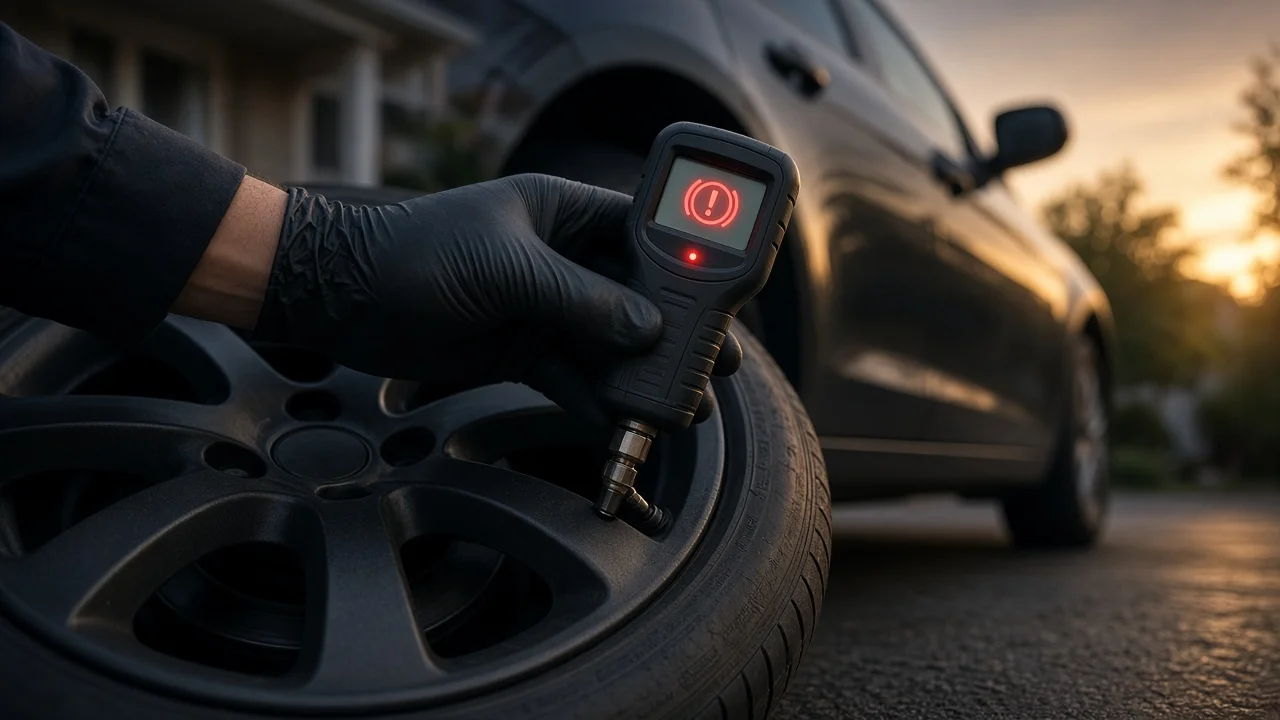
A blinking or flashing tire pressure gauge usually does not describe a handheld pressure checker, but a warning light or digital readout on the instrument panel that is trying to get the driver’s attention. The flashing signal often means the tire pressure monitoring system has lost a stable reading, detected a low tire, or is still learning sensor positions after a tire rotation or sensor replacement. Interpreting the pattern matters because a steady warning and a flashing one can point toward different causes. Recognizing what the vehicle is trying to communicate helps you decide whether the next step is air pressure correction, a relearn procedure, or deeper diagnosis.
Essential answer
In most passenger vehicles, a tire pressure gauge blinking on the dash is not a mechanical gauge but the tire pressure monitoring system display. The flashing condition commonly indicates that one or more tires are below the inflation threshold, that the system has not yet received a usable signal from a wheel sensor, or that a system fault is preventing normal operation. Because the signal is visual rather than a displayed numerical value on many vehicles, the driver may see a tire symbol, a warning lamp, or a readout flash for roughly a minute before it remains steady.
A flashing warning should be read as an invitation to check conditions rather than as proof that a sensor has failed. Start by inspecting all four tires for obvious low pressure, cuts, bulges, or a valve stem that looks damaged. If the tires appear normal and the pressures match the vehicle specification listed on the driver’s door jamb, the flashing may relate to a relearn condition after rotation, a weak sensor battery, or interference affecting the radio signal between the wheel and receiver.
How it works
Tire pressure monitoring systems compare each wheel’s measured inflation level against a programmed threshold. Direct systems use a sensor inside each wheel to measure pressure and transmit data by radio to a receiver. Indirect systems do not measure pressure directly; they use wheel speed signals to identify a tire that rotates at a different rate because it has a smaller rolling radius from low inflation. When the system cannot match a signal to an expected wheel position, or when the vehicle is relearning new sensor locations, the warning may flash while the receiver searches for a stable connection.
The flashing behavior also interacts with the way the vehicle stores reference values. After a tire rotation or replacement, the control module may not know which sensor is at which corner. Many vehicles enter a learn mode automatically once driven, while others require a tool or a specific button sequence. During that interval, the dash can show a blinking tire pressure gauge until the module receives consistent readings and assigns each sensor to the correct location. The range and accuracy of the reading depend on sensor health, mounting, and whether the tires have been recently serviced.
Strengths, limitations and suitability
The main strength of a flashing tire pressure gauge is that it draws attention to a changing condition before handling or fuel use are affected for a long period. A direct system can reveal a slow leak that might not be visible during a casual walkaround. That early warning is especially useful when a tire loses pressure gradually from a nail or a poor bead seal. The flashing signal also tells you that the system itself may not currently be providing a reliable measurement, which is valuable information even though it does not identify the exact source of the problem.
The limitation is that a flashing warning does not always distinguish between low inflation and a communication fault. A driver may add air and still see the light continue flashing because the system has not completed its update cycle or because the sensor is no longer reporting correctly. In an indirect system, the warning depends on relative wheel speed, so it can be affected by tire wear, tire replacement, or driving conditions rather than a simple pressure reading. That makes the flashing signal a useful starting point, but not a substitute for checking each tire with a separate gauge.
Procedure
Begin in a safe location with the vehicle shifted into park and the parking brake set. Check the driver’s door jamb or owner’s manual for the recommended inflation pressure, then use a separate tire gauge to measure each tire when the tires are cool. Add air in small amounts and recheck, because heat from driving can temporarily raise the reading. After correcting the pressures, drive the vehicle at a normal speed for several minutes if the system requires that to refresh and clear the flash.
If the warning continues after pressures are set correctly, look for the tire pressure monitoring reset procedure for that specific vehicle. Some systems clear after a short drive, while others require the ignition key or start button to be placed in a specific position and a reset button to be pressed until the indicator responds. Because these procedures vary by manufacturer and model year, follow the exact sequence shown in the vehicle’s owner information. Do not disable a warning light or rely on a guess when the system still cannot read a wheel.
Diagnosing a problem
A flashing tire pressure gauge is best approached by separating pressure problems from communication problems. First, compare all four tires with a handheld gauge. If one tire is meaningfully lower, a leak is the likely explanation and should be inspected for a nail, screw, valve core leak, or bead damage. If the pressures are equal and the light still flashes, consider whether the wheels were recently rotated, one tire was replaced, or a sensor was disturbed. The flashing pattern may simply mean the vehicle has not completed its position learning process.
Sensor health can also explain the symptom. Direct sensors contain batteries that eventually weaken, and a low or interrupted signal may make the display flash or drop a reading. Because manufacturer-dependent codes and update procedures vary, a diagnostic scan that shows a missing sensor identifier should be treated as evidence to investigate, not as proof that a specific component is ruined. If the warning flashes with other electrical symptoms, or if a tire is damaged or cannot hold air, stop driving and have the condition diagnosed before continuing.