Tarox Brakes: What They Are and How to Decide If They Suit Your Car
The short answer
Tarox is an Italian manufacturer of aftermarket braking components, best known for performance-oriented brake discs, plus matching pads and caliper upgrade kits. Whether a Tarox part is a sensible choice depends mainly on two conditions: how you use the car (daily road driving, spirited road driving or track days), and whether a listed part is confirmed for your vehicle's exact model year, market, trim and powertrain. If either of those is unclear, the right next step is to settle it before buying, because brake fitment often changes within a single model range.
What the brand typically offers
Tarox parts generally fall into three categories. Each solves a different problem, so it helps to know which one you actually need.
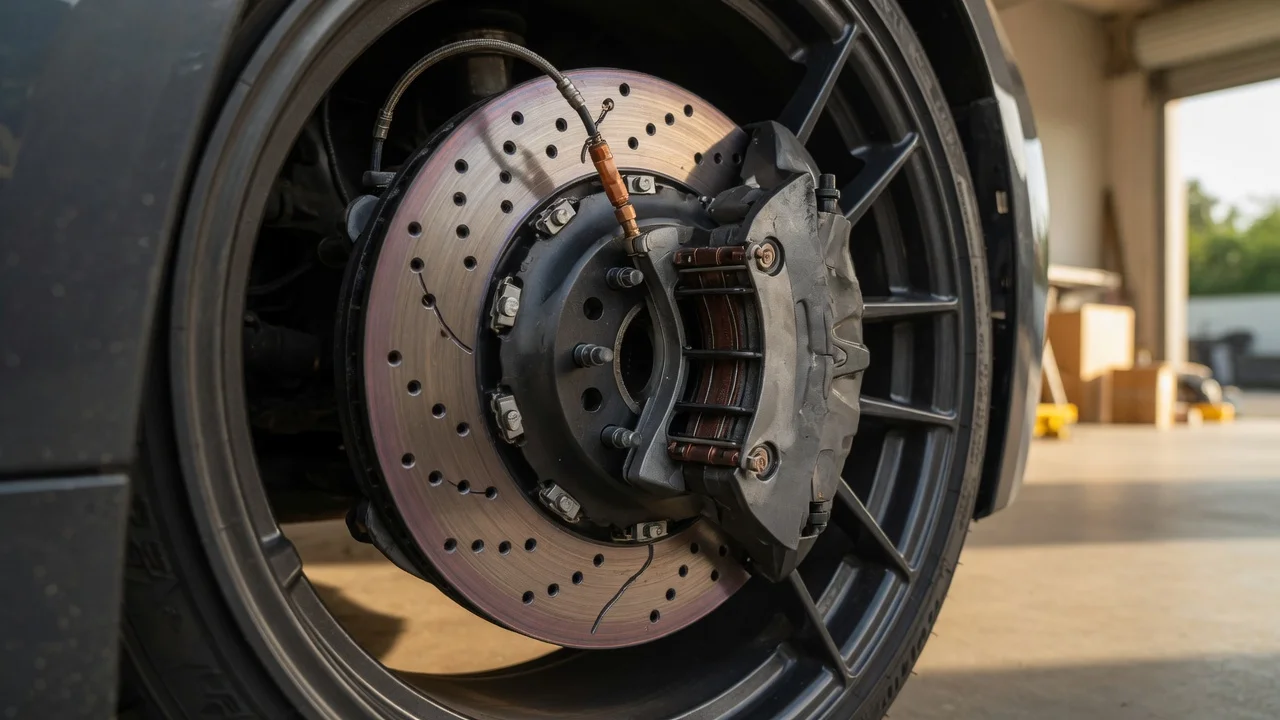
Replacement discs (rotors): direct swaps for the original discs, often with grooves or slots machined into the friction surface. Grooves help clear gas, dust and worn pad material from between the pad and disc, which can keep pedal feel more consistent under hard use. Brake pads: offered in different compounds. A compound is the friction material blend; road-focused compounds prioritise low noise and good cold bite, while track-focused compounds tolerate higher temperatures but may be noisier, dustier and less effective when cold. Caliper and disc upgrade kits: larger discs paired with multi-piston calipers, intended to increase heat capacity and clamping force. These are a bigger change than a disc-and-pad swap and carry more fitment considerations.
Conditions that change the answer
For a car used only for commuting and normal driving, a performance disc or pad may offer little practical benefit over a good-quality standard replacement, and some trade-offs, such as more noise, more dust or faster pad wear, can matter more than the gains. For regular hard road driving or track use, where repeated heavy stops build heat, upgraded discs, a higher-temperature pad compound or a full caliper kit become easier to justify.
Larger caliper kits add another condition: wheel clearance. A bigger disc and caliper may not fit inside the wheels currently on the car, so the wheel size and design need to be checked against the kit's stated requirements before purchase.
Confirming fitment for your vehicle
Brake components are rarely universal across a model name. The same car can use different disc diameters, disc thicknesses, caliper types or hub designs depending on model year, engine, trim level, market and whether it has a factory performance package. Treat any compatibility listing as valid only for the specific variant it names.
Check the vehicle identification details or build information to confirm the exact variant. Measure or verify the existing disc diameter and thickness, and whether the disc is vented or solid. Confirm the existing caliper type, since some trims use different factory calipers. For caliper kits, check minimum wheel size and clearance requirements. Match pads to the disc and intended use rather than choosing them separately at random. If a listing does not state your model year, market or powertrain, ask the seller or distributor to confirm before ordering.
Ownership points to plan for
New discs and pads usually need bedding-in: a controlled sequence of stops that transfers an even layer of pad material onto the disc for consistent braking. Follow the procedure supplied with the parts. It is also worth replacing pads whenever discs are replaced, and replacing parts in axle pairs so both sides brake evenly. Brake work affects safety directly; if you are not confident doing it yourself, have it fitted and checked by a qualified technician.
What this guide cannot confirm
No pricing, availability, independent test results or vehicle-specific fitment data were available for this article, so it does not state how particular Tarox products compare on cost, wear rate, noise or stopping performance, or which parts fit a given car. Those details should come from the current product listing for your exact vehicle variant and, where possible, from the manufacturer or an authorised distributor.