Subaru Forester Brake Pads: How to Choose the Right Set
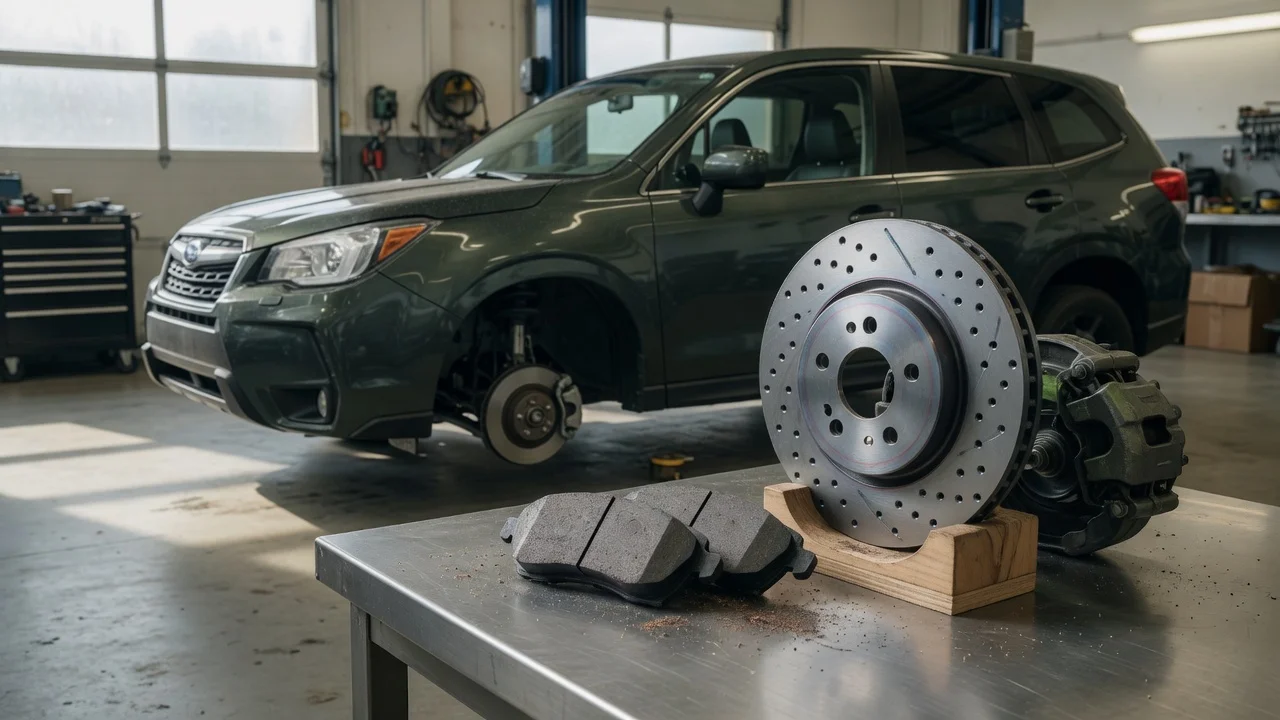
The short answer
There is no single brake pad that fits every Subaru Forester. The correct pad set depends on your Forester's model year, trim, powertrain and whether you are replacing the front or rear pads. Confirm fitment with your vehicle identification number (VIN) before you buy. Once fitment is confirmed, the main choice is pad compound: ceramic, semi-metallic or organic. The right compound depends on how and where you drive.
What decides whether a pad fits
Brake pads are shaped to match a specific caliper, which is the clamp that squeezes the pads against the rotor (the disc that turns with the wheel). Subaru has changed brake hardware across Forester generations. Calipers can also differ between trims or powertrains within the same generation. These are the details that affect fitment:
• Model year and generation. North American model years are commonly grouped as 1998–2002, 2003–2008, 2009–2013, 2014–2018, 2019–2024, and 2025 onward. • Trim and powertrain. Turbocharged, performance-oriented or hybrid versions may use different brake components from the standard model in the same year. • Front or rear axle. Front and rear pads are different parts and are sold separately. • Market. Vehicles built for different regions can use different parts even when the model name and year match.
The supplied material did not include part numbers, caliper specifications or a trim-by-trim fitment table, so this article cannot say which pad fits a particular Forester. A VIN-based lookup from a Subaru parts counter or a reputable parts retailer is the most reliable way to settle it. It accounts for production changes that the model year alone may not reveal.
Choosing a pad compound
Once you know which pad shape fits, you choose what the pad is made of. Each compound balances noise, dust, pad life and braking in demanding conditions differently. Exact performance varies by brand and product line, and no test results were supplied here.
Compound | Typical strengths | Typical trade-offs | Often suits; Ceramic | Quiet, low visible dust, consistent feel in everyday driving | Usually costs more; may be less suited to sustained heavy braking | Commuting and general daily use; Semi-metallic | Handles heat well; firm bite under repeated or heavy braking | More noise and dust; can wear rotors faster | Towing, mountain driving, heavier loads; Organic (non-asbestos organic) | Soft, quiet, gentle on rotors | Wears faster; more prone to fade under heat | Light-duty, low-mileage driving
Original-equipment (OE) pads, sold through Subaru dealers, are made to match the braking feel the vehicle was designed and tested with. Aftermarket pads range from basic replacements to premium lines with features such as shims (thin layers that reduce noise) or chamfered edges. If you are unsure, an OE pad or an aftermarket pad marketed as an OE-equivalent replacement is the conservative choice.
Points to check before you buy
• Replace pads in axle sets, meaning both front wheels or both rear wheels together, so braking stays even from side to side. • Check the rotors at the same time. Worn or uneven rotors can cause vibration and shorten the life of new pads. • Check whether the set includes new clips or other hardware. Reusing worn hardware can cause noise or uneven wear. • Look up the minimum pad thickness and the recommended inspection intervals in the owner's manual or service manual for your model year. Those figures were not supplied for this article.
Next step
Start with your VIN and confirm the exact front or rear pad listing for your Forester's model year, trim and powertrain. Then choose a compound that matches your driving: ceramic for quiet everyday use, semi-metallic for heavier or hotter braking, or OE pads to keep the factory feel. If you are not confident replacing pads yourself, a qualified technician can check the pads, rotors and hardware together and confirm the correct parts.