Snowblower Tire Bead Sealer
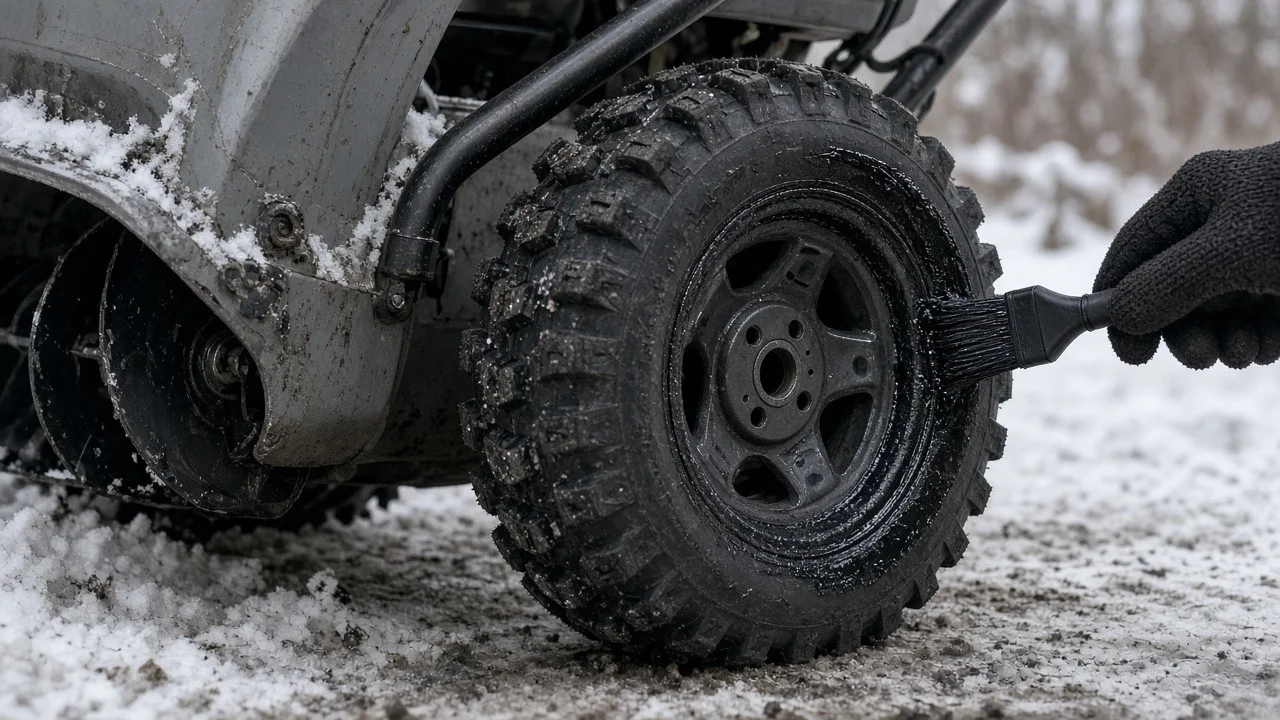
A snow blower tire bead sealer addresses one of the most frustrating small-machine problems: a wheel that loses air because the tire no longer seats tightly against the rim. Snow blowers often sit for months, and corrosion, moisture, or a minor pull away from the wheel can break that critical seal. This product is a liquid or paste applied between the tire bead and the rim to fill microscopic gaps and restore reliable inflation pressure. Understanding how it works helps owners choose the right fix without replacing a tire that may still have acceptable tread depth and structural condition.
Essential answer
Snow blower tire bead sealer is a coating applied to the contact area where the rubber tire bead meets the metal wheel. Its purpose is to close small leaks caused by rim corrosion, paint roughness, or a bead that no longer seats perfectly. On snow blowers, low inflation pressure and long storage periods can allow the tire to shift slightly, letting air escape even when no puncture exists. The sealer fills those irregular gaps and helps the tire hold air consistently.
This approach differs from a general tire sealant that sloshes inside the tire to plug punctures. Bead sealer belongs on the outside mating surface rather than in the air chamber. Before applying it, the tire must be deflated and the bead broken away from the wheel so the area can be cleaned. A wire brush or abrasive pad removes loose rust and old rubber residue. After the sealer is spread around the rim flange, the tire is reinflated to push the bead firmly back into position. The result works best when the tire size and wheel profile still match properly and the rubber is not cracked or dried beyond use.
Owners often notice the problem when a snow blower pulls to one side or sits lopsided after storage. A slow leak at the wheel lip can mimic a puncture and may not respond to adding air alone. In that case, the bead area should be inspected for rust, peeling paint, or rubber that has separated from the rim. If the tire is otherwise sound and the wheel is not bent, bead sealer is a practical first step. It does not repair cuts, damaged valve stems, or cracked rubber, so those conditions should be ruled out first.
Applying bead sealer is also useful when mounting a new or reused snow blower tire. During installation, the bead may not seat evenly, especially on narrow wheels or with stiff cold rubber. A light coating lubricates the bead during inflation and then dries to form a sealing layer. This can reduce the repeated reinflation that sometimes follows a fresh mount. The sealer is not a substitute for correct rim contour, proper tire dimensions, or the inflation pressure listed on the sidewall or equipment manual.
The product works by filling surface irregularities between the tire and wheel. Much of the air loss at the bead comes from tiny paths along corrosion pits or areas where old rubber has polished smooth. The sealer creates a flexible film that conforms to those surfaces as the inflated tire presses outward. This mechanical fill is different from a chemical repair inside the tire. Once the solvent or carrier dries, the remaining material should stay in place during normal rolling and seasonal use.
For snow blower owners, the main practical benefit is avoiding a full tire replacement when the leak is limited to the rim contact area. A tire with adequate tread depth and no sidewall damage can often be returned to service with this treatment. Still, the fix depends on preparing the wheel surface properly. Rushing the job without removing loose rust or old sealer can leave a weak bond. The wheel should be dry and clean before application, and the tire should be inspected for cuts or cracks that would continue leaking regardless of the bead coating.