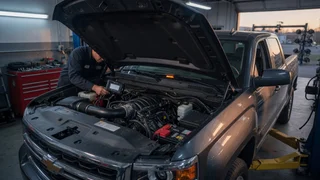
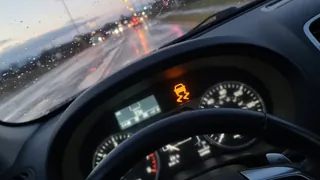
Silverado Reduced Engine Power with Service Traction Control and StabiliTrak: How to Diagnose It

When a Silverado or another GM vehicle shows Engine Power Is Reduced together with Service Traction Control and Service StabiliTrak, the engine computer has usually detected a fault that affects how it controls engine output. It has put the engine into a protective limited-power mode, often called limp mode. The traction and stability warnings are usually a side effect of that engine fault rather than a separate problem. Stability control needs to be able to reduce engine torque on command. When the engine side is compromised, those systems switch themselves off and post a service message. The most common place to look is the electronic throttle control system: the throttle body, the accelerator pedal position sensor and the wiring between them and the engine control module. Other causes are possible, though. Low or unstable system voltage, airflow sensor faults, communication errors between modules and some powertrain faults can all produce the same combination of messages. The stored diagnostic codes are the starting point, and they matter more than the dashboard text.
What the Warning Combination Means
GM vehicles of the drive-by-wire era have no mechanical cable between the gas pedal and the throttle. The pedal assembly contains position sensors that report how far it is pressed. The engine control module (ECM) then commands an electric motor in the throttle body to open the throttle plate, and sensors in the throttle body report its actual position back.
For safety, the pedal and the throttle each use more than one sensor, and the ECM constantly compares them. Sometimes the readings disagree, a circuit goes out of its expected range, or the throttle motor does not respond as commanded. In that case the ECM can no longer be confident that engine output matches what the driver is asking for. It responds by limiting throttle opening and engine power. That is the reduced engine power condition.
Traction control and StabiliTrak work by braking individual wheels and asking the engine to cut torque. If the engine module has flagged a fault in torque control, the brake control module cannot rely on that torque reduction, so it disables traction and stability functions and displays a service message. Seeing all three warnings at once therefore usually points back to the engine or throttle side first.
The reverse case also exists. A wheel speed sensor or steering angle sensor fault can trigger Service StabiliTrak or ABS warnings on their own, usually without reduced engine power. How the systems interact varies by model year, generation and powertrain, so treat these patterns as general guidance rather than a rule for every vehicle.
What to Do When the Message First Appears
Reduced engine power can limit acceleration sharply, sometimes to the point where merging or climbing a grade is unsafe. If it happens while driving:
Move to a safe location when traffic allows, and avoid situations that need strong acceleration. Check the instrument cluster for other warnings, especially a flashing check engine light, high temperature, low oil pressure or a charging system warning. Note the conditions: speed, engine temperature, weather, whether you had just hit a bump or puddle, and whether the engine stumbled or felt normal before power dropped. If it is safe, turn the engine off, wait a short time and restart. A fault that is intermittent may clear on restart, but the stored code remains and the cause has not been fixed.
Stop driving and arrange professional diagnosis or a tow if any of the following apply: • The check engine light is flashing, which usually indicates a misfire severe enough to damage the catalytic converter. • There are overheating, oil pressure or charging warnings. • You smell fuel or smoke. • The throttle response is erratic or surges. • The vehicle cannot keep up with traffic safely.
Step One: Read the Diagnostic Codes
The dashboard messages describe what the vehicle is doing, not why. The cause is recorded as one or more diagnostic trouble codes. A basic OBD-II scanner reads generic engine codes, while a scan tool with GM-specific coverage can also read codes from the brake, body and transmission modules. Many parts stores read engine codes at no charge, and repair shops can perform a full system scan.
Record every code, including any marked pending or history, before clearing anything. Clearing codes erases freeze-frame data, which is a snapshot of conditions when the fault set. A technician may need that snapshot.
A code identifies the circuit or comparison that failed, not necessarily the failed part. For example, a throttle position correlation code can be caused by the throttle body itself, by a corroded connector, by a chafed wire or by a voltage supply problem shared with other sensors. Treat the code as a direction for inspection, not a parts order.
Generic OBD-II codes often associated with this warning combination include:
Code | Generic definition | Where it points; P2135 | Throttle/Pedal Position Sensor A/B Voltage Correlation | Throttle body sensors, connector or wiring; P2138 | Throttle/Pedal Position Sensor D/E Voltage Correlation | Accelerator pedal sensors, connector or wiring; P2101 | Throttle Actuator Control Motor Circuit Range/Performance | Throttle motor, sticking throttle plate, wiring or power supply; P0121 to P0123 | Throttle/Pedal Position Sensor A circuit faults | Throttle position sensing circuit; P0101 | Mass Air Flow Circuit Range/Performance | Airflow sensor, intake leaks, air filter or ducting; P0606 | Control Module Processor fault | Engine control module internal fault or supply issue; U-codes | Lost or invalid communication between modules | Network wiring, connectors, grounds or a module fault
The table gives generic code definitions. GM-specific codes and exact descriptions can differ by vehicle, so confirm the meaning for your truck's model year and engine configuration with a scan tool or service information.
Likely Causes and How to Check Each
Electronic Throttle Body
The throttle body contains the throttle plate, its drive motor and the position sensors. Carbon buildup can make the plate stick or respond slowly. Worn internal sensor tracks or a weak motor can produce correlation or performance codes.
To inspect it, start with the engine off. Remove the intake duct and look for heavy deposits around the plate. Avoid forcing the plate open by hand on electronic throttle bodies, because that can damage the gear drive. Also check the electrical connector for corrosion, bent pins or a loose fit.
Cleaning the throttle body with a throttle-body-safe cleaner can help when deposits are the cause. After cleaning, some vehicles need a throttle relearn procedure, or idle quality may suffer. If correlation codes return after cleaning and the wiring checks good, the throttle body itself becomes a stronger suspect.
Accelerator Pedal Position Sensor
The pedal assembly holds the sensors that report driver demand. Wear or an internal fault can cause the sensor signals to disagree, especially at particular pedal positions. Pedal-related codes, or a fault that appears only at certain pedal angles, point here.
A scan tool that displays live data lets you watch both pedal sensor signals while slowly pressing and releasing the pedal. They should change smoothly and in a consistent relationship, without dropouts or jumps. Check the connector at the pedal as well.
Wiring, Connectors and Grounds
Connector corrosion, loose terminals and chafed harnesses are frequent causes of intermittent reduced power events. These faults often appear after rain, after washing the engine bay, on rough roads or when the engine is hot.
Inspect the harness routing near the throttle body, along the engine and around the pedal for rubbing or damage. Check engine and body ground straps for corrosion and tightness. A wiggle test can reveal a fault that comes and goes: gently move connectors and harness sections with the engine idling while watching live data or listening for changes.
Battery, Alternator and System Voltage
Electronic throttle control, sensors and control modules all depend on stable voltage. A weak battery, corroded terminals, a failing alternator or a poor ground can cause sensor readings to drift or modules to log faults. Several unrelated codes appearing at once, including communication codes, can suggest a voltage problem rather than several failed parts.
Clean and tighten the battery terminals, and inspect the cables for corrosion under the insulation. Have the battery and charging system tested. Many parts stores offer this, and it rules out a common and inexpensive cause before deeper diagnosis.
Airflow and Intake Problems
The engine computer compares measured airflow with what it expects for a given throttle opening and engine speed. A contaminated or failing mass airflow sensor, a torn intake duct, an unmetered air leak or a badly clogged air filter can upset that comparison. On some vehicles this contributes to reduced power.
Inspect the air filter, the ducting between the filter box and the throttle body, and the clamps. Airflow sensor codes suggest checking the sensor and its connector; a sensor-specific cleaner is sometimes used if contamination is suspected.
Module and Communication Faults
Communication codes mean modules are not hearing each other correctly. Causes include network wiring damage, connector problems, low voltage or, less often, a failing module. Software updates have also been released for some GM vehicles to address specific drivability or control logic issues. Whether one applies depends on the vehicle, so a dealer can check your vehicle identification number and service history for open updates or campaigns.
Other Powertrain Conditions
Depending on the engine and transmission, other faults can also trigger reduced power as a protective measure. These include certain transmission faults, overheating, severe misfires or exhaust restrictions. In these cases the codes and accompanying symptoms usually point away from the throttle system, which is another reason to read all modules rather than guess.
A Practical Diagnostic Order
Read and record all codes from all available modules, including freeze-frame data. Note the symptom conditions: cold or hot, wet or dry, idle or under load, steady or after a bump. Check the battery, terminals, grounds and charging system first, since voltage problems can mimic many other faults. Inspect connectors and wiring for the circuit named in the code, especially at the throttle body and pedal. Use live data to compare the paired throttle and pedal sensor signals. Inspect and, if appropriate, clean the throttle body, then perform any required relearn. Check the intake tract and airflow sensor if airflow codes are present. Ask a dealer to check for software updates or service campaigns relevant to your vehicle. Replace components only when testing points to them, and clear codes afterward to confirm the repair.
Clearing Codes and Interpreting a Return
Clearing codes or disconnecting the battery may restore normal power temporarily, and the traction control and StabiliTrak messages often clear with it. That does not mean the problem is solved.
If the warning returns quickly and consistently, the fault is likely a hard failure that should be easy to trace with testing. If it returns only occasionally, an intermittent connection or voltage issue is more likely, and careful notes about when it happens become valuable. If it never returns, the cause may have been a one-time event, but keep the recorded codes in case it reappears.
When to Hand It to a Professional
Basic checks such as reading codes, inspecting connectors, testing the battery and cleaning the throttle body are within reach of many owners. Professional diagnosis makes sense in these cases: • The codes point to module or network faults. • Live data needs specialized interpretation. • Multiple unrelated codes appear together. • The fault is intermittent and hard to reproduce. • Replacing a part requires programming or a relearn your tools cannot perform. A technician with GM-capable scan equipment and wiring diagrams can measure circuit voltages and resistance against manufacturer specifications. That is often the fastest way to separate a failed part from a wiring fault.
Key Takeaways
Engine Power Is Reduced with Service Traction Control and Service StabiliTrak usually means the engine computer has lost confidence in throttle or torque control. The stability systems have then shut down as a consequence. Start with the stored codes, rule out voltage and connection problems, and then test the throttle body and pedal sensors before replacing parts. Any flashing check engine light, overheating, charging warning or unsafe loss of power is a reason to stop driving and get the vehicle inspected.