How to Reset a Traction Control Light After Repair
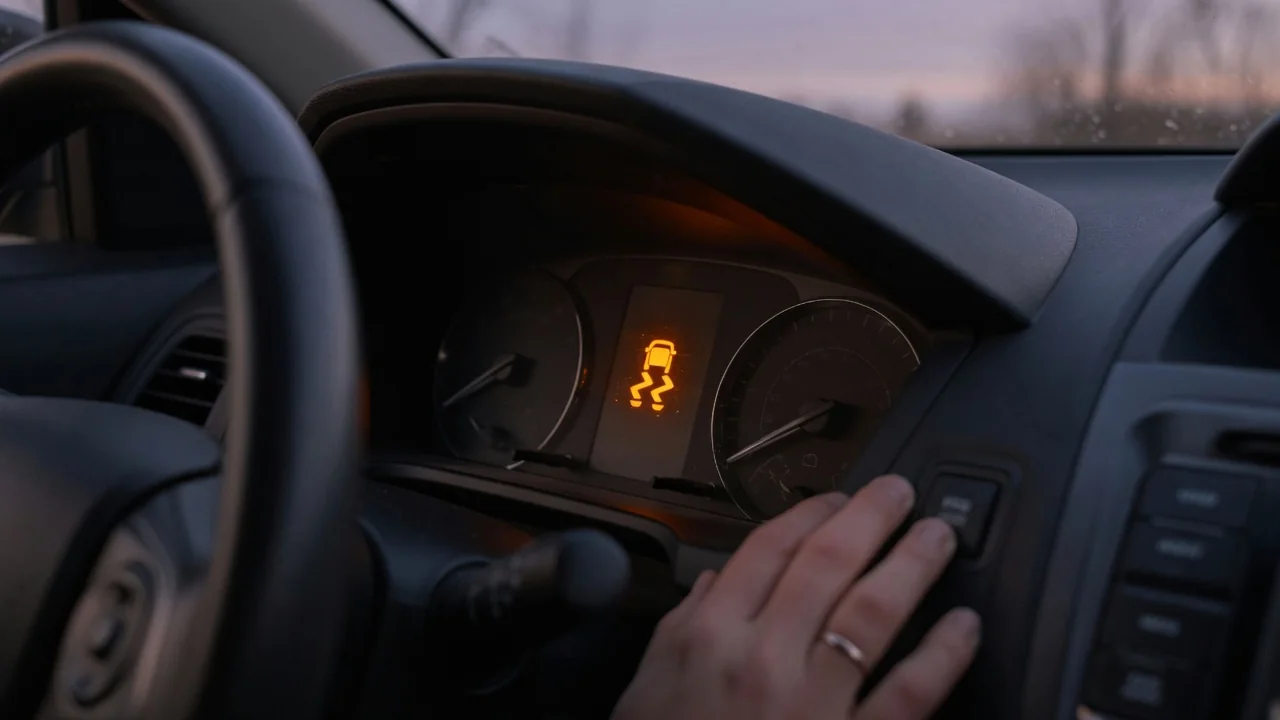
To reset a traction control light after a repair, first work out what the light is telling you. The same dashboard indicator can mean the system is working, that it has been switched off, or that a fault has disabled it. This guide covers how to turn off the traction control light the right way, why it sometimes won't turn off, and what's different on a Toyota or on a Kenworth or Peterbilt truck.
Turning Off the Light vs. Turning Off Traction Control
The traction control light can mean three different things. A quick flash while you accelerate on a slippery surface usually means the system is working: it's cutting engine power or braking a wheel that's spinning. A separate TCS off indicator comes on when the driver presses the traction control button to turn the system off. A steady warning light that stays on when nobody has pressed the button usually means there's a fault. On many vehicles that light also covers electronic stability control.
Pressing the button usually just turns the system on or off. It doesn't clear a stored fault. Button locations and labels vary a lot, so check the owner's manual to see what yours looks like and how it works. If the light stays on while the button is in its normal position, the system has most likely shut itself off rather than been switched off. Traction control is a safety feature, so keep it on for normal driving, especially on wet, icy or gravel roads.
How the Traction Control Light Usually Resets After a Repair
On many vehicles, the traction control light resets on its own. After a repair, the module runs self-checks when you restart the engine or during a short drive, and the light goes out once the readings look normal. The exact conditions, such as reaching a certain speed or turning the steering wheel, depend on the manufacturer. Other faults stay stored until someone clears them with a scan tool that can talk to the ABS or stability control module. A basic engine-code reader may not be able to reach that module.
Some repairs need extra steps. After replacing a steering angle sensor or doing an alignment, the sensor may need to be calibrated with the right equipment before the light will go out. Clearing traction control codes only helps once the cause is fixed. If the fault is still there, clearing the codes just hides it until the next self-check turns the light back on. Disconnecting the battery is a poor way to reset it. It may not erase stability system faults, and it can reset or upset other modules.
Why the Traction Control Light Won't Turn Off
When the traction control light won't turn off, the cause usually falls into one of a few groups. A failed wheel speed sensor, damaged wiring or a dirty tone ring can send the module bad readings. Traction control shares parts with ABS, so an ABS fault can shut it down too. Steering angle or yaw sensor problems can turn off electronic stability control, and some engine or throttle faults shut the system down as a precaution. Tires matter too. Mismatched tire sizes, uneven tread wear or wrong pressures can make the wheel speeds disagree.
A few safe checks can help you work out why the light stays on. Note whether the ABS warning light or check engine light is also on. That points toward the shared brake system or an engine problem. Think about timing too. If the light came on right after brake, suspension or wheel work, a sensor connector may have been knocked loose. Compare your tire sizes and pressures with the sticker on the driver's door frame. These checks help, but the light alone can't tell you which part failed. The next step is reading the stored codes from the right module.
Resetting the Traction Control Light on a Toyota
To reset the traction control light on a Toyota, start by identifying exactly which light is on. Depending on model and year, Toyota may label its traction control, stability control and slip indicators differently, so match the symbol to your owner's manual before doing anything. The same rules apply as on any other vehicle. Make sure the button is in its normal position, fix the underlying fault, then let the system recheck itself or clear the codes with a tool that can reach the right module.
If a Toyota's traction light stays on together with the check engine light, the cause may be on the engine side. The stability system can shut itself off when it can't trust the engine readings. In that case, read and fix the engine fault first, then see whether the traction light goes out on its own. Button combinations and hidden reset tricks circulate online, but they vary by model and may not work on yours. Check the procedure for your exact vehicle in Toyota service information or with a dealer.
Traction Control Light Resets on Kenworth and Peterbilt Trucks
Resetting the traction control light on a Kenworth or Peterbilt works differently than on a car. Heavy trucks often use automatic traction control built into the air brake ABS. How the light, switch and fault display behave depends on who made the ABS and how the truck is set up. On some trucks the light means a deep snow or mud mode is selected, which allows more wheel spin. It may also flash during normal traction control activity. The operator manual explains what the light means on your truck.
On these systems, fault codes may be read on the dashboard display, as blink codes from the ABS controller, or with diagnostic software on a laptop. What each code means depends on the system's maker, so check it against that maker's documentation before deciding what it means. A fault in this system involves the air brakes, so diagnosis and repair should be left to a qualified heavy-duty technician. Drivers should report the light, note when it comes on, and stay away from air brake components.
When to Stop Trying to Reset It and Get Professional Testing
Stop trying to reset the light and have the vehicle checked promptly if the traction control light comes on with the ABS or brake warning light. The same goes if the brake pedal feels different, the vehicle pulls to one side, or it takes longer to stop. If the light comes back after a reset, the fault is still there and needs to be diagnosed, not cleared again. A shop can read live wheel speed data on a test drive, run module self-tests and do calibrations that a basic code reader can't.
Until the repair is done, assume traction and stability control may not be working. Accelerate gently on slippery roads, leave more room to the car ahead and slow down earlier for curves. The vehicle may not cut power to a spinning wheel or brake individual wheels to stop a skid. If ABS is also off, the wheels may lock up under hard braking. Treat the light as a reason to drive carefully, not as something to switch off before you know what caused it.