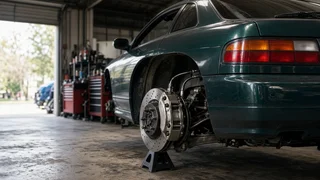
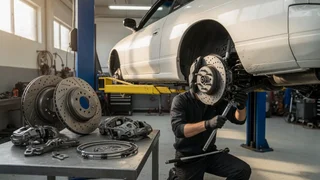
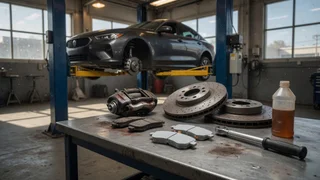
Service 240SX rear brakes
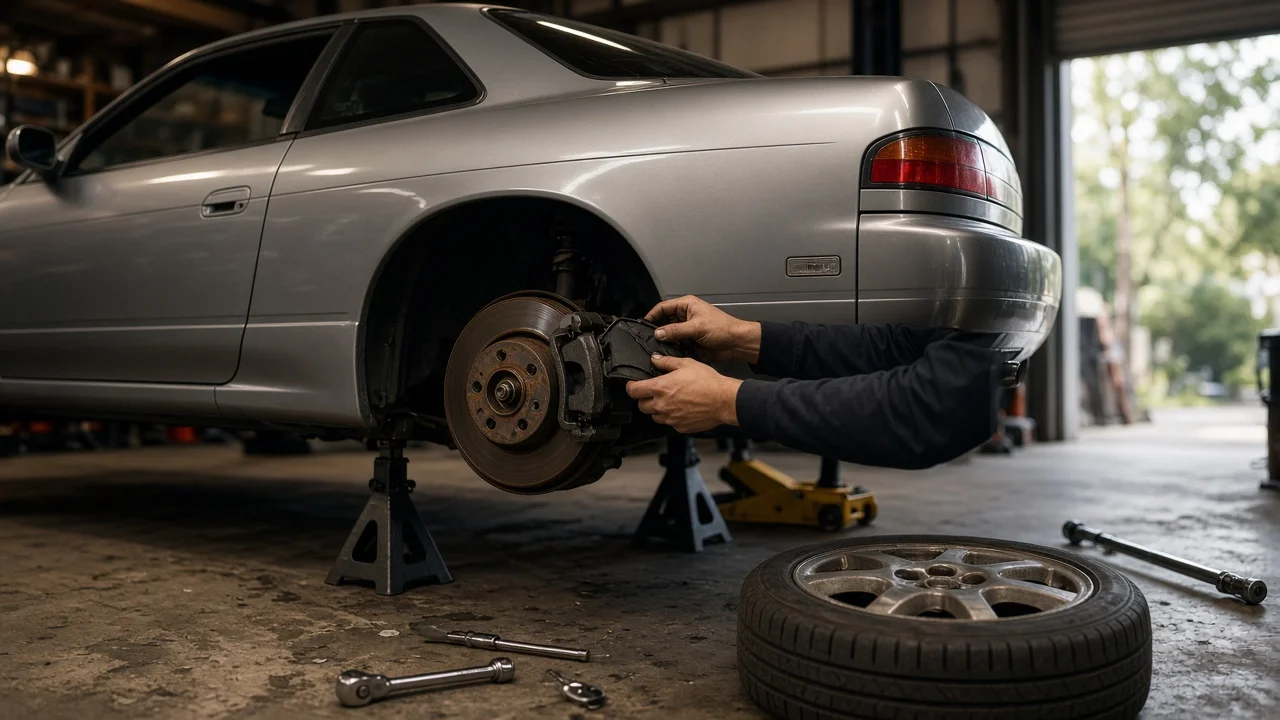
Servicing the rear brakes on a 240SX means restoring the caliper, pads, rotors, and hydraulic system to dependable condition, not simply swapping the most obvious component. Over time heat cycles, corrosion, and wear change pedal feel, pad contact, and parking brake behavior. The rear brake caliper is a common focus because its sliding surfaces and piston can stick while the front brakes continue working hard. A balanced service routine helps preserve proportioning, reduce noise, and keep the rear axle from locking or dragging.
Essential answer
The essential answer is that a 240SX rear brake service should treat the caliper, brake pads, brake rotors, and brake fluid as one connected system. The rear brake caliper needs clean slide pins, a functioning piston seal, and a bleeder that opens cleanly. Brake pads must have enough friction material above wear limits, and rotors need a surface that allows the pads to bed in evenly. If the caliper moves unevenly, new pads can wear at an angle and the parking brake may not hold consistently.
Vehicle fitment matters because some 240SX models use different rear brake arrangements, so a caliper that fits one year or trim may not suit another. Before replacement, compare the caliper position, hose inlet, and bracket profile rather than assuming interchangeability. Verify whether the axle originally used a separate drum-in-disc parking brake or a caliper-integrated mechanism. The purpose of the service is not to change specifications, but to remove friction, seal leaks, restore clean fluid movement, and confirm that the rear brakes release fully after braking.