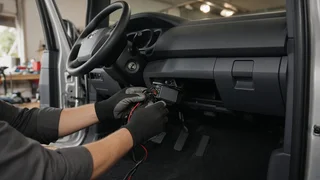
Convert 240SX rear brakes to Z32
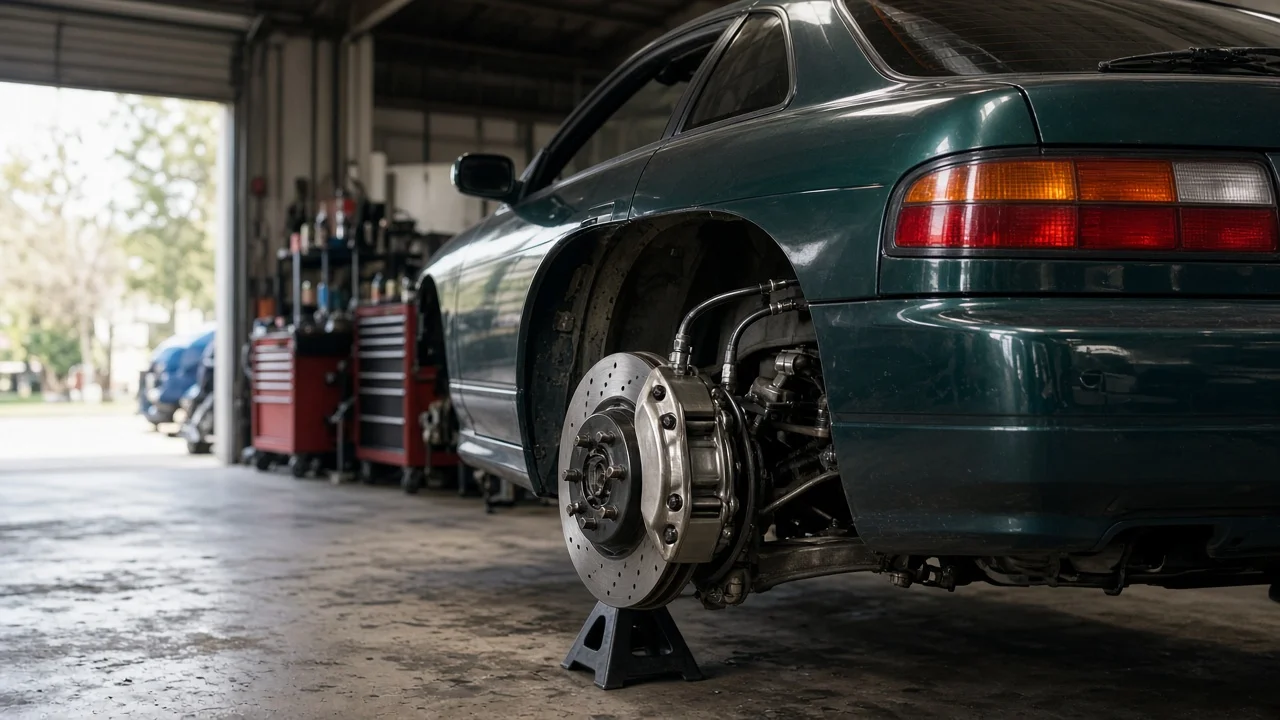
A 240SX rear brake conversion to Z32 specification replaces the smaller factory rear hardware with rear calipers, pads, and rotors originally fitted to the Nissan 300ZX Z32. Owners typically pursue this swap to restore front-to-rear bias when larger front brakes are installed, or to reduce rear pad taper and improve heat capacity. This overview explains what the conversion changes and the general sequence used to complete it, while identifying key fitment and hydraulic considerations that affect the outcome.
Essential answer
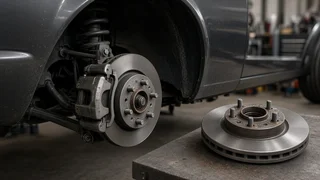
The essential answer is that a Z32 rear brake conversion adapts larger vented rotors and aluminum calipers from a 300ZX Z32 onto the rear spindles of a Nissan 240SX. The goal is not simply more clamping force but a better match between front and rear brake torque, especially after installing larger front brake kits. The upgrade also changes parking brake requirements because the Z32 rear rotor contains an internal drum surface for the handbrake shoe.
Vehicle fitment details matter before ordering parts. The swap generally requires Z32 rear calipers, compatible rotors, adapter brackets or modified backing plates, and a mechanical parking brake solution that works with the existing 240SX cables. Because the caliper position and rotor offset affect wheel clearance and brake fluid displacement, the conversion should be treated as a complete system change rather than a simple rotor and pad replacement.
Procedure
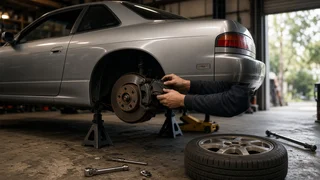
Preparation begins with safely supporting the vehicle and inspecting the current rear brake lines, caliper mounting points, and parking brake cables. The original rear caliper, brake rotor, and dust shield are removed to provide access to the spindle. Before final assembly, mounting surfaces should be cleaned and the adapter bracket or modified backing plate should be test-fitted to confirm that the Z32 caliper centers over the rotor with the brake pads fully seated.
Assembly proceeds by installing the Z32 rotor and caliper, then connecting the hydraulic line with fresh crush washers and brake fluid bleeding. The parking brake assembly requires careful adjustment so the internal drum shoes engage without dragging against the rotor. After installation, brake pedal travel and handbrake lever effort should be checked at low speed. Friction material and rotor wear limits must be verified before road use, and any spongy pedal or fluid leak indicates the hydraulic circuit needs further attention.