Convert a 4-lug Mustang to disc brakes
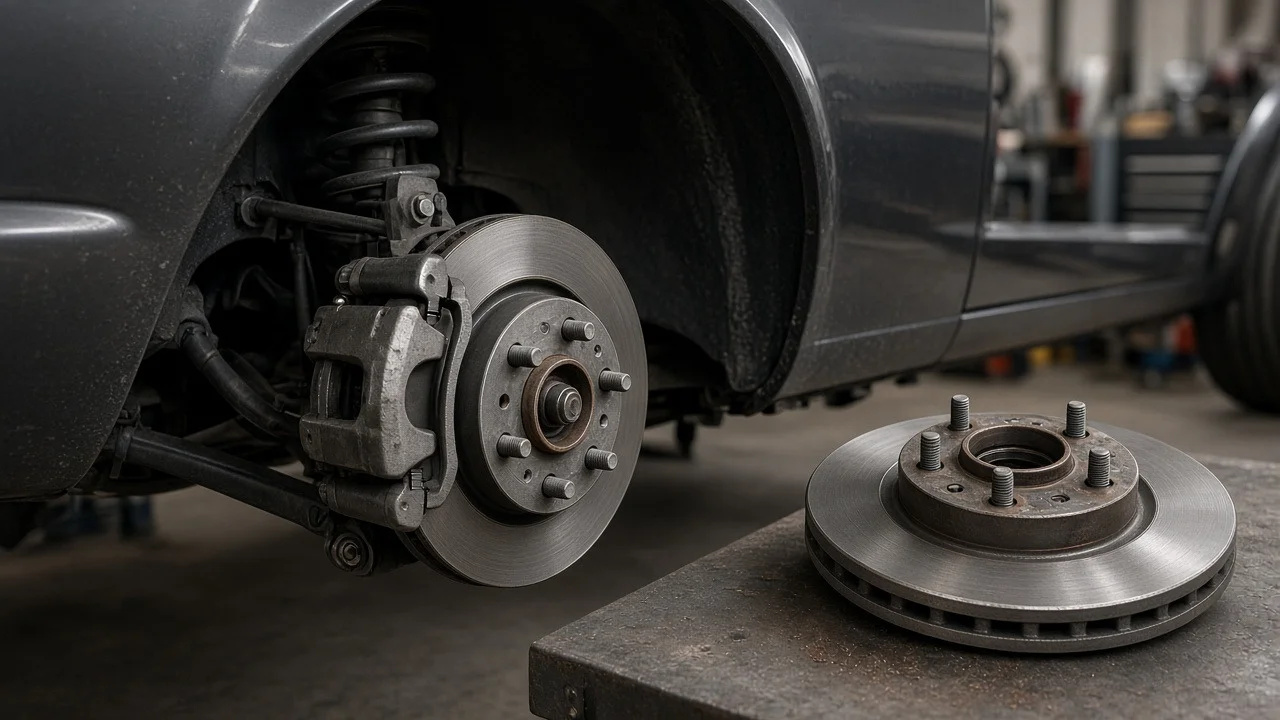
Swapping a four-lug Mustang from drum brakes to a disc brake setup changes how the front axle behaves during hard stops and repeated braking. The conversion question usually comes from owners of early four-lug cars who want stronger, more consistent stopping without changing to a five-lug wheel pattern. Since brake rotors, calipers, and brake pads all affect pedal feel and heat capacity, the project requires matching the new parts to the existing spindle, wheel clearance, and brake fluid routing. Understanding those mechanical relationships helps separate a practical upgrade from a collection of parts that will not fit under the car.
Essential answer
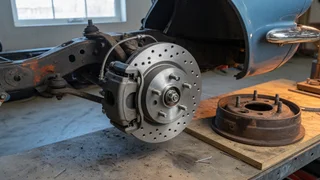
The essential answer is that converting a four-lug Mustang to disc brakes is possible, but the scope depends on the model year and the existing suspension components. A four-lug disc brake conversion Mustang setup typically replaces the drum assembly with a brake rotor, a caliper, and new friction material. The four-lug wheel pattern can remain unchanged if the chosen rotor is drilled for that bolt circle. Because the rotor must fit the spindle, the hub, and the caliper bracket, vehicle fitment is the main limiting factor rather than the caliper itself. Some conversion kits are designed around factory spindles, while others require different hubs or brackets.
The reason this swap is desirable is thermal behavior. Drum brakes trap hot gas and brake dust inside the drum, and repeated stops can make the pedal longer as heat builds. A disc brake system exposes the rotor to outside air and squeezes the rotor with a caliper, which generally produces more stable friction as temperatures rise. For a light four-lug Mustang driven on the street, that extra consistency can be more useful than a huge increase in rotor diameter. The effectiveness still depends on matching brake pads, fresh brake fluid, and parts that are within wear limits or are new.
Procedure
A conversion begins with confirming that the replacement disc brake components match the spindle centerline and the four-lug wheel pattern. The old drum, hub, and backing plate are removed first, followed by a careful inspection of the spindle threads, bearing seats, and brake hose condition. If the new rotor and hub assembly uses tapered wheel bearings, they must be packed and adjusted according to the applicable procedure rather than simply torqued like a sealed unit. The caliper bracket then locates the caliper over the rotor, and any spacer or shim arrangement must center the caliper so the pads do not drag or strike the rotor edge.
After the rotor and caliper are installed, the brake line routing and fluid path need attention. A drum brake hose may not have the correct end fitting or length for a caliper that moves slightly with pad wear, so the correct replacement hose should be verified for the specific vehicle. Once the system is closed, the brake fluid is bled until clean, air-free fluid reaches each caliper bleed screw. Before driving, the pedal should be firm, the wheels should rotate without heavy drag, and the bolt circle should be rechecked with the wheel seated flat against the rotor hat. Manufacturer-specific bracket torque and any vehicle-specific clearance checks should be confirmed against the applicable service information for that Mustang.