San Ramon Hydrogen Station: What It Is, How It Works and What to Check Before You Go
If you searched for the San Ramon hydrogen station, you most likely drive a fuel cell electric vehicle or are considering one, and you want to know whether this East Bay location is a dependable place to refuel. In short, it is a retail hydrogen fueling station serving hydrogen cars in the San Ramon area of California's Tri-Valley. It does not supply gasoline-style fuel or plug-in charging. One qualification matters more than anything else: hydrogen station availability in California changes often. Before you rely on any single station, including this one, check its live status.
The Essential Answer
A hydrogen station in San Ramon refuels fuel cell electric vehicles (FCEVs) with compressed hydrogen gas. These vehicles use an onboard fuel cell to turn hydrogen into electricity, and that electricity drives an electric motor. The station is not useful for battery electric vehicles, plug-in hybrids or combustion-engine cars. This article does not list confirmed operating hours, prices, operator details or current dispenser status, because those details were not verified and change over time. Treat any fixed listing you find elsewhere as a starting point rather than a guarantee.
Who the Station Serves
Retail hydrogen stations in California serve light-duty fuel cell passenger vehicles. Models sold or leased in the state over the past decade include the Toyota Mirai, the Hyundai Nexo, the Honda Clarity Fuel Cell and the Honda CR-V e:FCEV. Availability of each model depends on the model year and market. Owners of these vehicles typically fuel at a small network of stations clustered in the San Francisco Bay Area, the Los Angeles basin and a few other California corridors. For drivers in the Tri-Valley, a San Ramon location can be an important part of that network, especially when other nearby stations are offline.
How Hydrogen Fueling Differs From Gasoline and EV Charging
Hydrogen fueling resembles a gas station visit more than an EV charging session, but the fuel and hardware are very different.
Aspect | Hydrogen station | Gasoline station | EV charger; Fuel or energy | Compressed hydrogen gas | Liquid gasoline | Electricity from the grid; Vehicle type | Fuel cell electric vehicles | Combustion and hybrid vehicles | Battery electric and plug-in hybrid vehicles; Typical session length | A few minutes for a full fill under normal conditions | A few minutes | From tens of minutes to many hours, depending on charger and vehicle; Unit of sale | Kilogram of hydrogen | Gallon | Kilowatt-hour or session or time-based; Connection | Sealed, locking high-pressure nozzle | Open-fill nozzle | Electrical plug standard such as CCS, NACS or J1772; Tailpipe output of the vehicle | Water vapor | Combustion exhaust | None
Network size is the practical difference that matters most. Gasoline stations are everywhere, and public charging is widespread. Retail hydrogen stations are few, so a single station being offline can noticeably affect drivers in the surrounding area.
Storage Pressure and Connection Specifications
Hydrogen has very low density as a gas. To fit a useful amount into a vehicle tank, both the vehicle and the station store it at high pressure. Modern passenger FCEVs use a nominal storage pressure of 70 MPa, commonly called 700 bar or H70. Some dispensers, mainly those meant for buses or older vehicles, also offer 35 MPa (350 bar or H35). Passenger car drivers should use the H70 nozzle when one is available, because a 350-bar fill leaves the tank only partly full.
The connection specification is standardized so that any compliant vehicle can fuel at any compliant dispenser. In North America, SAE J2600 governs the nozzle and receptacle design. SAE J2601 defines the fueling protocol, meaning how fast the station may add hydrogen as tank temperature and pressure change. SAE J2799 covers the communication link that lets the vehicle report tank conditions to the dispenser. Many stations pre-cool hydrogen before it enters the car, because fast compression heats the tank and the protocol limits temperature.
What a Typical Fueling Session Looks Like
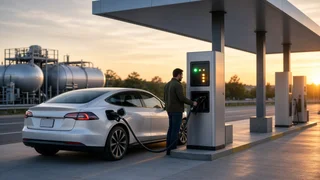
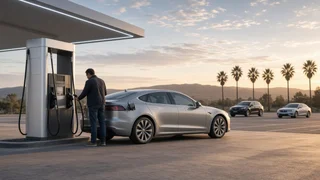
Park so the vehicle's fuel door lines up with the dispenser. Authorize payment using the method the station accepts, which may be a card at the dispenser, an operator app or a fuel card supplied with the vehicle. Select the correct pressure, usually H70 for passenger cars. Attach the nozzle to the receptacle and lock it in place; it creates a sealed connection. Start fueling and wait while the dispenser runs its protocol, which may pause briefly for leak and pressure checks. When fueling stops, unlock and return the nozzle, then close the fuel door.
Occasionally the dispenser will stop before the tank reads full. It may also deliver less than expected. This can happen when station storage pressure is low after heavy use or when the cooling system is limited. Waiting for the station to recover, or trying again later, sometimes allows a more complete fill.
Safety Design: Ventilation, Pressure Relief and Standards
Hydrogen is flammable, but it is also the lightest gas, and it disperses upward very quickly in open air. Retail stations are designed to take advantage of this. Dispensers usually sit outdoors or under open canopies with good ventilation, so any released gas rises and dilutes rather than pooling at ground level.
Several layers of protection are standard on both station and vehicle equipment. These include hydrogen leak sensors, automatic shutoff valves, breakaway hoses that seal if a car drives off while connected, and emergency stop buttons. Pressure relief devices vent gas safely if pressure or temperature rises beyond design limits. The applicable safety standards in the United States include fire codes such as NFPA 2, the Hydrogen Technologies Code, along with the SAE fueling standards above and local permitting requirements. Drivers do not need to manage any of this, but they should follow posted instructions. As at any fueling station, they should avoid smoking or open flames nearby.
Check Availability Before You Drive
California's retail hydrogen network has had recurring supply interruptions, equipment outages and station closures, and some operators have withdrawn from the light-duty market entirely. Because of this, the most useful step for a San Ramon trip is to confirm the station's current status shortly before you leave.
Check the real-time station status map maintained by the Hydrogen Fuel Cell Partnership, which reports whether stations are online, limited or offline and which pressures are available. Check the station operator's app or customer service channel, if you know who operates the location. Check your vehicle's built-in navigation or manufacturer app, which in some models shows hydrogen station status. Identify at least one backup station within your remaining range before you arrive.
Ownership Considerations for Tri-Valley Drivers
A nearby station can make daily FCEV ownership far more practical. Still, it is wise to judge convenience by the reliability of the local network as a whole, not by a single location. Anyone considering a fuel cell vehicle in the San Ramon area should ask a few questions. How many stations are within comfortable range of home and work? How often have those stations been offline recently? Does the vehicle offer include a fuel card or complimentary fuel allowance, and what are its terms? Those factors usually shape the ownership experience more than any one station's features.
Bottom Line
The San Ramon hydrogen station is a fueling point for fuel cell electric vehicles. It dispenses compressed hydrogen through standardized high-pressure nozzles in a refill that takes minutes. It differs from gasoline stations and EV chargers in fuel, hardware and network density. Its usefulness on any given day depends on real-time availability, so confirm its status through a live station map or operator app before you go, and keep a backup station in mind.