Hydrogen Fuel Station Status: What It Means and How to Check It
The Short Answer
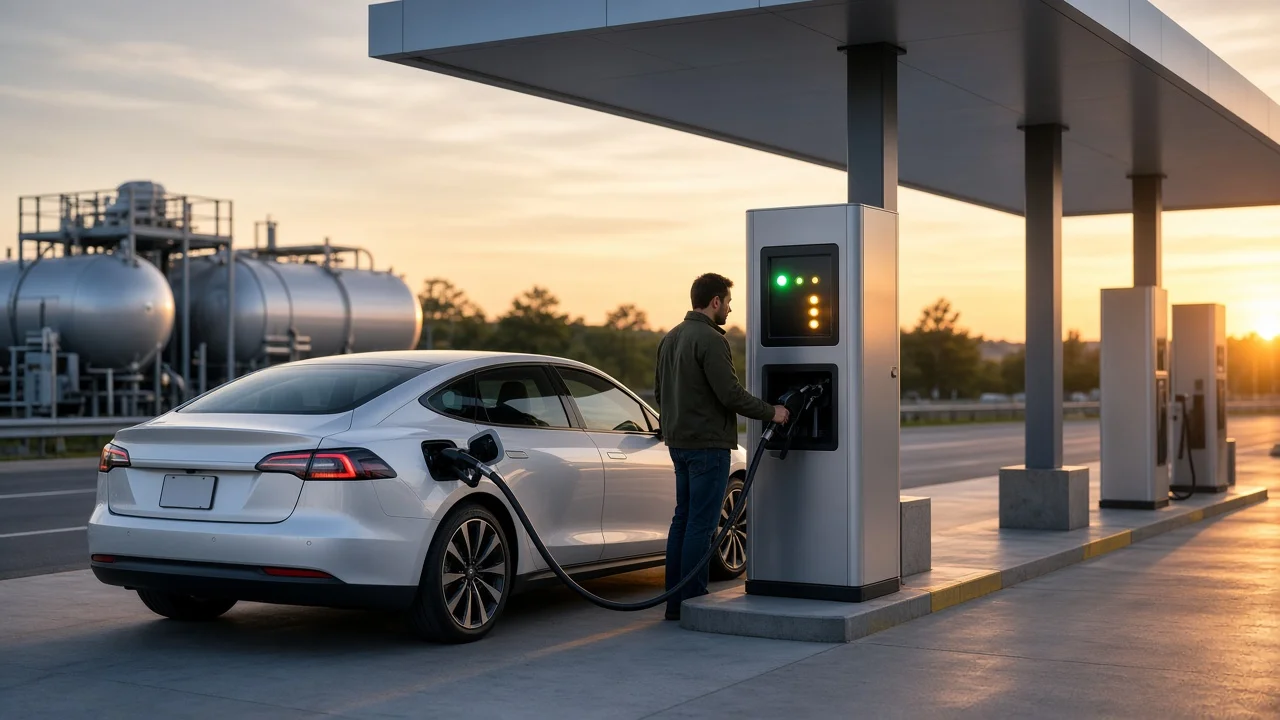
Hydrogen fuel station status is the live or near-live condition of a hydrogen refueling station. It shows whether the station is open, whether it has fuel, and which pressure it can dispense. It differs from a station listing, which only tells you that a station exists at a location. For fuel cell electric vehicle (FCEV) drivers in the US, status matters more than location. A station that appears on a map may be offline, short on supply, or limited to a pressure that does not suit the vehicle.
The key qualification is that any status is a snapshot. Hydrogen stations can change from available to unavailable within hours, so a status checked the day before a trip is not a reliable guarantee. Check again shortly before you leave.
Scope: Where This Applies in the US
Public hydrogen refueling for passenger cars in the US is limited. Retail stations are concentrated mainly in California, and few exist elsewhere. Most status information therefore concerns California stations, and most drivers who need it own or lease an FCEV there.
No current figures were available for this article. That includes the number of open stations, recent closures, outage rates and fuel prices. Readers who need those details should consult current station operator or state-level information rather than rely on older totals.
What a Station Status Typically Indicates
Status services and operator apps label stations in different ways. The underlying information usually falls into a few categories:
Available or online: the station reports that it is operating and can dispense fuel. Limited: the station is operating with a restriction, such as reduced supply, lower dispensing pressure, or only some dispensers in service. Offline or unavailable: the station cannot fuel vehicles, often because of maintenance, equipment faults or supply delivery problems. Unknown or not reporting: the station has not sent a recent update, so its condition cannot be confirmed.
Why Dispensing Pressure Matters
Hydrogen is dispensed as a compressed gas. Station dispensers are commonly labeled H70 or H35, which refer to nominal pressures of 70 or 35 megapascals. Passenger FCEVs are generally designed to fill at H70. A station that reports only H35 availability may give a partial fill or may not suit the vehicle at all. Check your owner's manual for the pressure your model, model year and market require. Then confirm that the station status lists that pressure as available.
Why Status Changes So Often
Several general factors make hydrogen station availability less predictable than gasoline or many electric charging options:
Supply logistics: many stations depend on hydrogen delivered by truck, so a delayed delivery can leave a station without fuel. Equipment complexity: compressors, cooling systems and high-pressure dispensers need regular maintenance and can fault. Small networks: with few stations in an area, one outage can leave drivers with few or no nearby alternatives. Demand peaks: when nearby stations go offline, demand moves to those still running, which can deplete their supply faster.
How to Use Status Information Practically
Check status shortly before departing, not only when planning a trip. Confirm that the pressure your vehicle needs is listed as available, not just that the station is open. Identify at least one backup station within your remaining range before your tank gets low. Treat stations that are not reporting as unconfirmed rather than available. Use the vehicle manufacturer's app or in-car navigation if it shows hydrogen station status, and compare it with the station operator's own information.
Information Gaps to Keep in Mind
This overview covers what station status means and how to read it. It does not provide current station counts, specific outage histories, network expansion or closure plans, prices, or comparisons between particular operators, because no verified data on those points was available. Before deciding on an FCEV purchase or lease, look for up-to-date information on station reliability in the area where you will drive most often.